
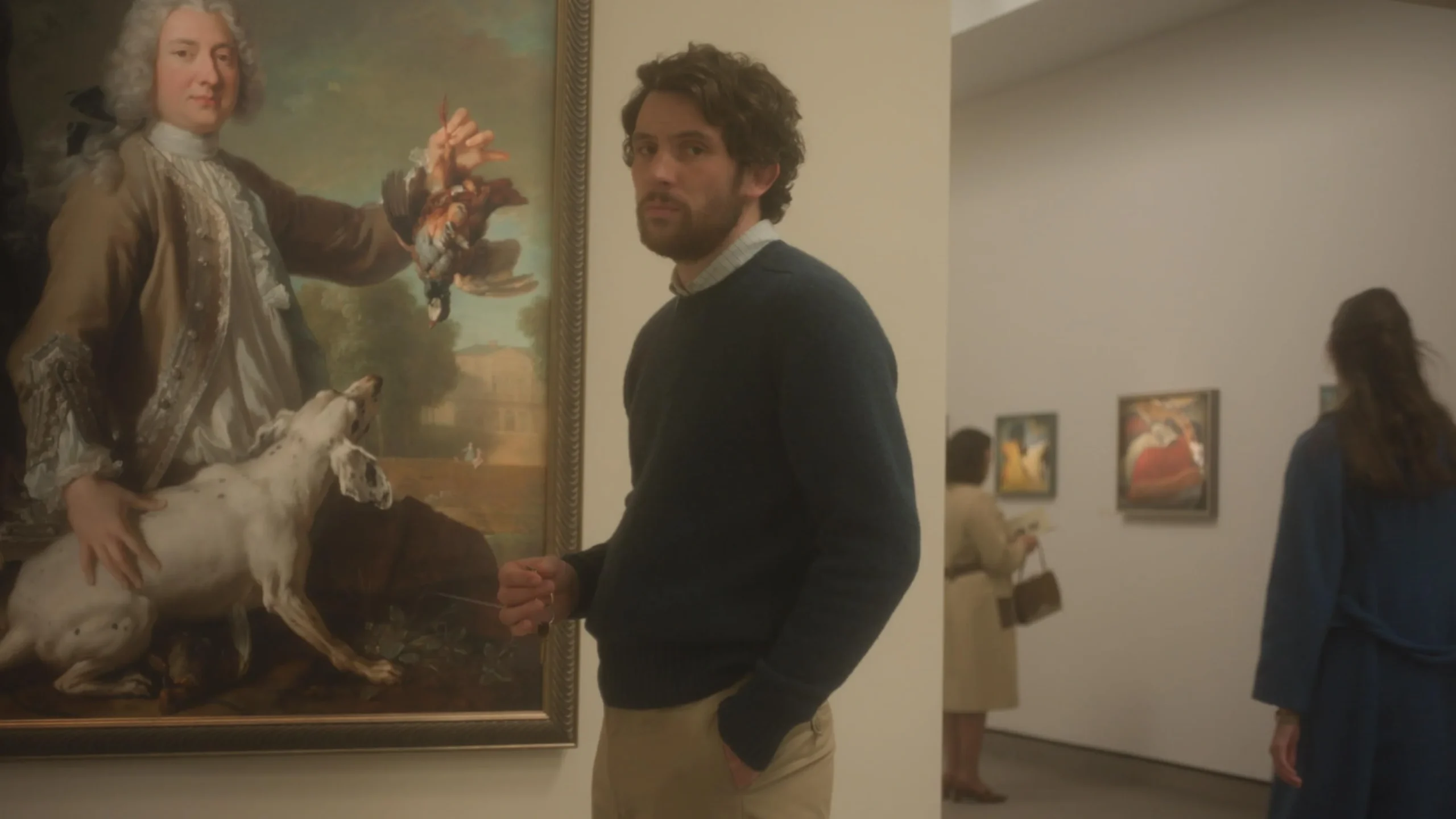

Art theft stories often blur the line between documented crime and cinematic invention, especially when they focus on a single mastermind figure.
The Mastermind (2025) presents a carefully planned museum robbery in the 1970s, a setting that naturally invites comparisons to real historical cases. Because the film feels grounded in real procedures and period detail, many viewers assume it must closely follow an actual event.
A Fictional Heist Narrative Rooted in Real 1970s Art Theft History
The film depicts a calculated museum robbery carried out by a small group under the direction of a central planner. The tone emphasizes preparation, surveillance, and the vulnerability of cultural institutions at the time. While the characters and specific sequence of events are fictionalized, the scenario reflects a broader wave of art thefts that occurred internationally during the late 1960s and 1970s.
Museums in that era often had limited electronic security compared to modern standards. Motion detectors, alarm systems, and coordinated police responses were less advanced, making institutions attractive targets. The film’s depiction of a high-value collection protected by relatively modest safeguards mirrors historical realities, even though the particular crime shown is not a direct recreation of a single documented case.
The 1972 Worcester Art Museum Robbery That Inspired the Film’s Central Crime
One specific event tied to the film’s inspiration is the 1972 theft at the Worcester Art Museum in Massachusetts. In that incident, thieves broke into the museum and stole several valuable works, including pieces by major artists. Reports at the time indicated that the robbery was executed with planning but without the elaborate theatrics often portrayed in fiction.
The stolen artworks were not immediately recovered, and the case attracted attention due to the cultural significance of the losses. While the film does not reproduce the exact details of this crime, it draws on the general outline of a museum heist targeting high-profile art objects. The connection lies more in atmosphere and context than in precise historical reconstruction.
How the Protagonist Draws from Real Perpetrators Without Portraying One Specific Person
The central character, portrayed as a solitary planner with a detailed understanding of security systems, is not based on a single identified criminal. Instead, the character appears to synthesize traits associated with various real art thieves. Historical cases often involve individuals with technical knowledge, insider assistance, or connections to black-market buyers.
By avoiding a direct portrayal of a known perpetrator, the film gains freedom to explore psychological motivations without being constrained by documented biography. This approach also prevents the narrative from becoming a strict true-crime retelling. The protagonist functions as a fictional embodiment of the “mastermind” archetype rather than a portrait of a real individual.
Period Details and Planning Methods That Reflect Documented Museum Security of the Era
The film pays close attention to period-accurate technology and procedures. Scenes showing manual alarm systems, limited camera coverage, and reliance on human guards align with historical accounts of museum security in the early 1970s. Access to architectural plans, timed patrol routes, and simple lock mechanisms were genuine vulnerabilities exploited in several real thefts.
These details contribute to the sense of authenticity. They demonstrate how such crimes could plausibly occur without sophisticated hacking or advanced tools. However, the film condenses timelines and simplifies logistical challenges to maintain narrative clarity. Real investigations into security weaknesses often unfold over months or years rather than the compressed timeframe depicted on screen.
Where the Film Expands the Personal Life and Motives Beyond Known Facts
Because the story does not follow a specific historical figure, the protagonist’s personal life is largely fictional. Relationships, backstory, and emotional motivations are constructed to support the narrative arc. Real art theft cases rarely provide detailed insight into perpetrators’ inner lives, especially when suspects are unidentified or apprehended without extensive public documentation.
The film uses these invented elements to frame the crime as a personal quest rather than purely financial opportunism. This emphasis on character psychology distinguishes it from documentary-style storytelling. It also allows the narrative to explore themes such as obsession, alienation, or ambition that may not be verifiable in real cases.
Elements of the Heist That Mirror the Worcester Case Versus Invented Storylines
Certain aspects of the on-screen robbery resemble known details from the Worcester theft, including the focus on high-value paintings and the use of stealth rather than overt violence. The absence of dramatic confrontations with law enforcement during the theft itself aligns with historical reports that many art heists occur quickly and quietly.
Other elements are clearly fictional. Elaborate timing sequences, coordinated diversions, and personalized interactions between thieves and museum staff are narrative devices designed to heighten tension. These additions create a more engaging story but do not reflect documented events from the actual case.
Why the Investigation and Aftermath Differ from Historical Records
After the theft, the film portrays a streamlined investigation that centers on a few key suspects and developments. Real-world art crime investigations are typically far more complex, involving multiple agencies, international cooperation, and long-term tracking of stolen works through underground markets.
In the Worcester case, the recovery process extended over years, and some pieces remained missing for extended periods. The film compresses these developments into a shorter timeline and focuses on personal consequences rather than procedural detail. This choice shifts attention from institutional response to individual drama.
Verdict: A Dramatized Character Study Loosely Inspired by a Real Art Theft
The Mastermind (2025) is not a direct retelling of the 1972 Worcester Art Museum robbery or any single documented crime. It uses that event as a historical backdrop while inventing characters, motives, and specific actions to build a cohesive narrative. The depiction of museum security, planning methods, and cultural context reflects real conditions of the era, but the central story remains fictional.
The film should therefore be understood as a dramatized interpretation of art theft culture in the 1970s rather than a factual reconstruction. Its connection to real events lies in inspiration and atmosphere, not in precise historical accuracy.
