
Time travel stories can do a lot more than send a hero back to fix one bad decision. In science fiction, the idea becomes a testing ground for memory, causality, grief, destiny, bureaucracy, and even comedy. Some movies treat time travel like a puzzle box, where every detail matters. Others use it as a way to explore what happens when people can’t trust their own timelines, their own pasts, or their own futures. The results can feel wildly different even when the central gimmick is the same.
This list focuses on movies and one series that each approach time travel in a distinct way. Some are built around paradoxes, some around emotional consequences, and some around strange rules that make the whole story feel unlike anything else. Rather than repeating the same “what if you changed the past?” setup, these picks show how flexible time travel can be as a storytelling tool. If you want a set of recommendations that covers the breadth of the genre without blurring everything into one shape, these are strong places to start.
back to the future: time travel as a fast-moving chain reaction
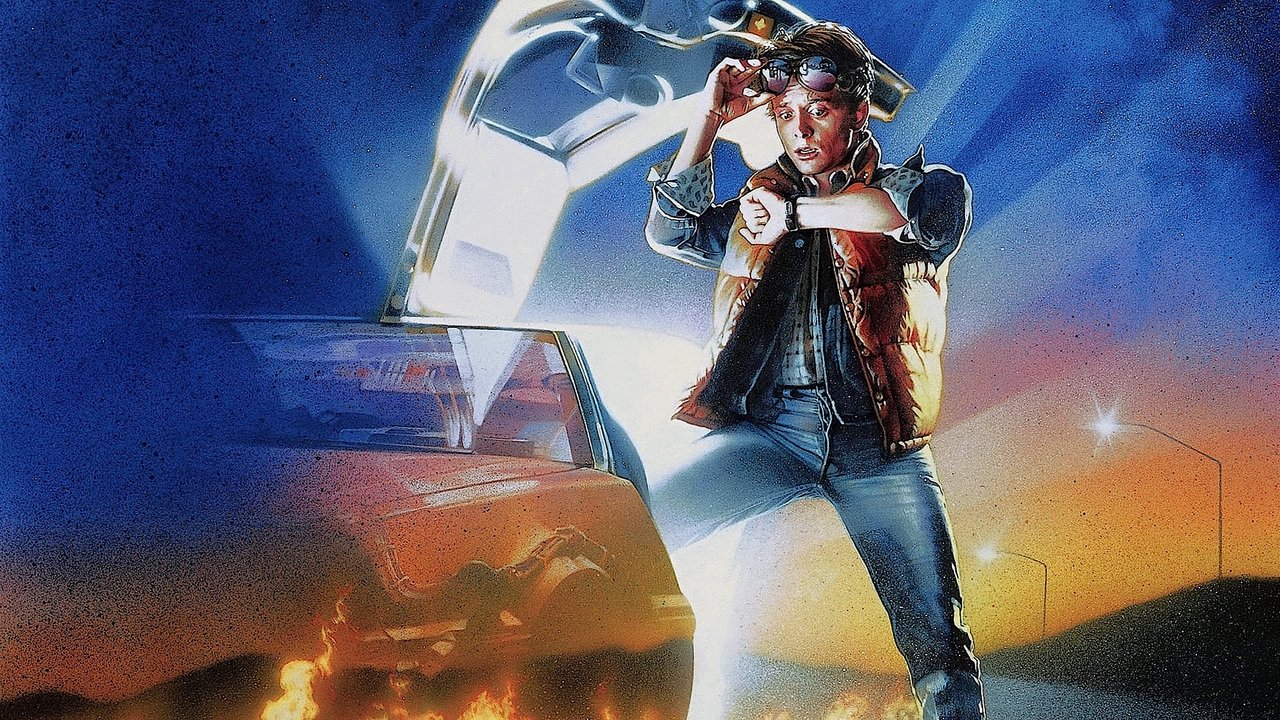
Back to the Future remains one of the clearest examples of time travel used for momentum, comedy, and escalating consequences. The movie sends Marty McFly into the past, but the fun is not just the trip itself; it is the way one small disruption spreads through family history and threatens his own existence. The rules are easy to grasp, which lets the film focus on timing, identity, and the pressure of keeping a timeline from collapsing.
What makes it distinct is its tone. This is a time travel movie that plays like an adventure with deadlines, misunderstandings, and repeated collisions between eras. It is a great entry point because it makes the concept feel readable without making it simplistic. The sci-fi premise is still doing real work, but it is wrapped in energy and charm rather than dense explanation.
12 monkeys: time travel as uncertainty and fatalism
12 Monkeys takes a much darker approach, using time travel as a way to make certainty nearly impossible. Instead of presenting the future as something the characters can neatly correct, the story turns time into a destabilizing force that makes memory, sanity, and prediction all feel unreliable. The movement between eras is part of the mystery, but the real tension comes from not knowing whether the characters are trapped in a loop or simply chasing a truth they can never fully pin down.
This is one of the best examples of time travel as psychological pressure. The movie is less interested in clean cause-and-effect than in the emotional damage of living with fractured time. It rewards attention because the structure itself becomes part of the experience. If you want a time travel film that feels tense, disorienting, and morally uneasy, this one goes in a very different direction from the usual wish-fulfillment model.
primer: time travel as a technical accident
Primer is famous for treating time travel like a complicated engineering problem rather than a cinematic spectacle. The movie follows a pair of inventors who discover something extraordinary almost by accident, and the story becomes a study in how quickly a clever idea can turn into a maze of competing versions, hidden agendas, and unintended consequences. It is precise, compressed, and deliberately difficult, with almost no interest in explaining itself for the audience’s convenience.
What sets it apart is its realism of process. The time travel is not magical, glamorous, or even especially comprehensible on first viewing; it feels built out of procedure, improvisation, and escalating control issues. That makes Primer unlike most films in the subgenre. It is the sort of movie where the mechanics are the drama, and the emotional cost comes from watching human relationships buckle under the weight of something they barely understand.
predestination: time travel as identity collapse
Predestination uses time travel to ask what happens when a person’s sense of self is inseparable from the loop they inhabit. Based on a classic short story, the film builds around a temporal structure that is less about changing events than about revealing how deeply entangled cause and effect can become. The story keeps folding back on itself, and that structure is essential to the movie’s appeal.
Unlike more straightforward action-oriented time travel films, this one is interested in identity, destiny, and the emotional strain of a life shaped by paradox. It is a good fit for viewers who want a story where the concept is not just a device but the entire point. The film is also notable for how carefully it aligns its twists with its time-travel logic, making the eventual shape of the story feel like a mechanism snapping into place.
looper: time travel as a criminal underworld tool
Looper imagines time travel as something illegal, transactional, and morally corrosive. Rather than centering on scientists or accidental discovery, the film places temporal technology inside a criminal economy, where the future and the past are connected through violence and exploitation. That setup gives the movie an unusually gritty texture. Time travel is not a wonder here; it is infrastructure for organized crime.
The result is a film that blends sci-fi ideas with hard-edged genre storytelling. It is still thinking about paradox and self-knowledge, but it does so through a bruising emotional framework. The most interesting part is how the movie uses the mechanics of time travel to sharpen its characters’ fears about age, responsibility, and the lives they are trying to outrun. It feels very different from the polished, playful approach of more classic time travel adventures.
arrival: time travel as a language problem
Arrival is not a conventional time travel movie, but it belongs on this list because it explores time through perception rather than through a machine or a chase. The film’s central idea is that learning a new language can alter the way a person experiences time itself. That premise gives the story a quiet, meditative quality, even as the larger stakes remain enormous.
What makes Arrival distinctive is that it treats time not as something to escape, but as something to understand differently. The emotional weight comes from acceptance, foresight, and the painful beauty of knowing what is coming. It is a science fiction film that uses temporal structure to deepen character rather than to create an action puzzle. Few movies make time feel this intimate.
the time traveler’s wife: time travel as a relationship condition
The Time Traveler’s Wife turns time travel into an unstable condition that shapes a marriage from the inside. Instead of building suspense around saving the world or altering history, the story focuses on the complications of loving someone whose presence in time is unpredictable. That means the emotional stakes are personal from the start, and the sci-fi concept works as a constant source of absence, interruption, and fragile hope.
This adaptation stands out because it treats time travel as something that affects ordinary life in extraordinary ways. The power of the premise lies in the contrast between intimate domestic moments and the uncontrollable nature of the protagonist’s condition. If you want time travel fiction that is less about paradox mechanics and more about the difficulty of sustaining a relationship across disjointed moments, this is a particularly direct example.
dark: time travel as a multigenerational knot
Dark is a series, not a movie, but it earns its place here because it explores time travel in one of the most intricate ways ever put on screen. The story starts with a missing-child mystery and expands into a densely connected web of families, eras, and repeating patterns. Time travel is not a side element; it is the central architecture of the show, shaping how every character fits into the larger whole.
What makes Dark so different is the scale of its design. The series uses time travel to connect generations, reshape motives, and blur the line between fate and choice. It is demanding, but it is never random. Every reveal feels tied to the show’s core belief that history is not a straight line, and that people are often caught inside systems larger than themselves. For viewers who want a time travel story that keeps widening until it becomes almost operatic, this is a standout pick.
tenet: time travel as reversed causality
Tenet pushes time travel into a form that feels closer to physics experimentation than to conventional narrative movement. Instead of characters simply moving backward or forward in time, the film plays with inversion, where action, motion, and cause-and-effect can all operate in opposition to what seems normal. The result is a movie that asks the viewer to think spatially and temporally at the same time.
This is time travel as spectacle and structure. The plot is complicated, but that complexity is the point: the film wants you to feel how disorienting it would be to live inside an inverted system. Compared with emotional time travel stories, Tenet is colder and more abstract, but that is exactly why it belongs on a list like this. It shows how far the concept can be stretched while still remaining recognizably time travel science fiction.