
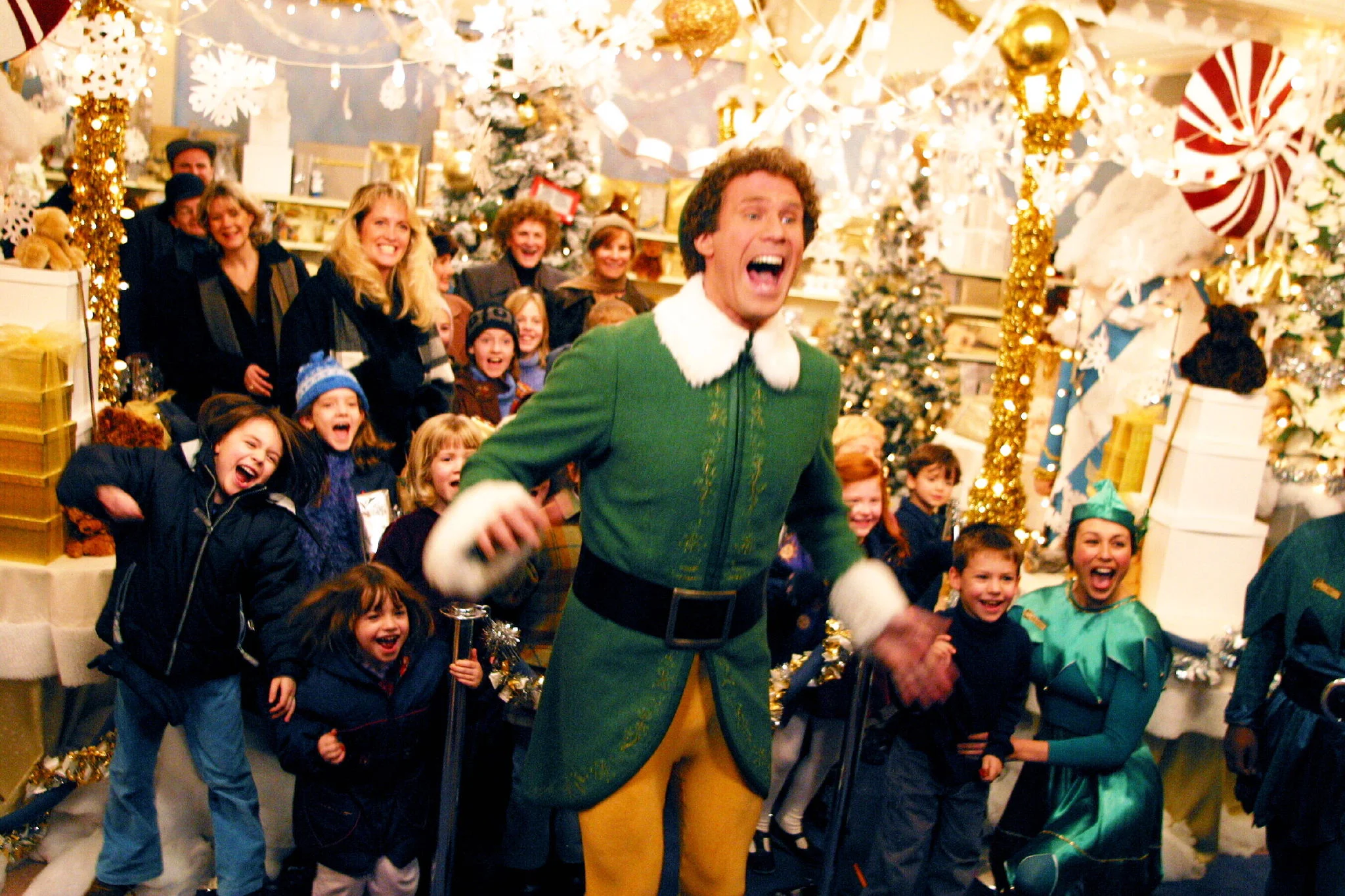

Choosing holiday movies for children often means thinking about tone as much as story. Elf (2003) is widely known as a cheerful Christmas comedy, but parents may still want to understand how its humor, energy, and emotional moments might feel for different ages.
The film centers on Buddy, a human raised by Santa’s elves, whose childlike enthusiasm creates both joyful and chaotic situations once he travels to New York City.
Considering Elf (2003) as a holiday comedy families often watch together
Elf (2003) presents a lighthearted Christmas story built around humor, holiday traditions, and family relationships. The main character, Buddy, has been raised in the North Pole by elves and believes he belongs there until he learns that he is actually human. After discovering the truth, he travels to New York City to find his biological father.
From a child’s perspective, the movie often feels bright and playful. Much of the film focuses on Buddy’s excitement about ordinary things—food, decorations, and Christmas traditions—that he experiences with exaggerated enthusiasm. His reactions create many comedic moments that younger viewers tend to find amusing.
The overall tone stays upbeat for most of the story. Scenes take place in colorful settings like the North Pole workshop, department stores decorated for Christmas, and snowy city streets. Because of this cheerful atmosphere, the film generally feels less intense than many modern family movies that rely on large action sequences.
Buddy the Elf’s childlike behavior and why younger kids often connect with his character
Buddy behaves very differently from the adults around him. Even though he is physically an adult, he acts with the innocence and excitement of a child. He speaks loudly, expresses emotions openly, and reacts to everyday situations with curiosity.
Many children relate easily to this behavior because Buddy often responds to the world the way young kids might. He celebrates small things, such as decorating a Christmas tree or discovering sweets. The film even highlights his unusual eating habits, including his love for sugary foods like candy and syrup.
This exaggerated enthusiasm creates many of the film’s jokes. Buddy sings loudly in public places, greets strangers as if they are friends, and struggles to understand everyday social rules in New York City. Younger viewers often find these moments funny because the character behaves in unexpected ways.
At the same time, Buddy’s innocence may cause confusion for some children when other characters react with frustration. Adults in the story sometimes see him as strange or disruptive, which can lead to awkward situations that the character does not immediately understand.
The playful North Pole opening and how the movie introduces Santa’s world
The beginning of Elf takes place at the North Pole, where Buddy grows up among Santa’s elves. These early scenes establish the fantasy elements of the story. The workshop is filled with toy-making machines, colorful decorations, and cheerful music.
Children often respond positively to these sequences because they closely resemble traditional Christmas imagery. Santa appears as a kind, familiar figure who oversees the toy workshop and treats Buddy with patience even when he struggles to keep up with the elves.
The North Pole scenes also introduce the central conflict. Buddy eventually learns that he is not an elf but a human child who accidentally arrived in Santa’s toy sack as a baby. This discovery explains why he is much larger than the other elves and cannot perform the same tasks.
For younger viewers, these moments are usually easy to follow. The setting feels magical rather than frightening, and the characters treat Buddy with kindness. The tone during this opening portion is playful and warm.
Fish-out-of-water humor in New York City and whether kids understand the jokes
Once Buddy leaves the North Pole, the story shifts to New York City. This change creates the “fish-out-of-water” aspect of the film. Buddy approaches city life with the same excitement he showed at the North Pole, but the environment is much busier and less welcoming.
Much of the humor comes from Buddy misunderstanding everyday situations. For example, he treats department store decorations as if they were genuine North Pole traditions and reacts with excitement when he believes Santa is about to arrive.
Children usually find these moments funny because they involve exaggerated misunderstandings rather than complicated jokes. Buddy’s cheerful responses to ordinary things—such as escalators or office work—are simple and visual, making them easy for younger viewers to follow.
Some jokes, however, rely on adults recognizing how unusual Buddy’s behavior is in a city environment. Younger children may simply see him acting silly, while older kids may understand why other characters feel confused or embarrassed by his behavior.
Light moments of conflict between Buddy and his father that shape the story
A central part of the story involves Buddy meeting his biological father, Walter Hobbs. Walter is a busy publishing executive who initially struggles to accept Buddy as part of his life. Their relationship begins with frustration because Walter sees Buddy’s behavior as disruptive and unrealistic.
Children watching the movie will notice that Buddy tries very hard to connect with his father. He shows excitement about spending time together and wants to be accepted as part of the family. Walter, however, reacts with impatience and embarrassment in several early scenes.
These conflicts are presented in a mild and comedic way rather than as intense family drama. The disagreements mostly involve misunderstandings rather than harsh arguments. As the story progresses, Walter gradually becomes more understanding of Buddy’s personality.
For young viewers, this storyline introduces the idea that family relationships sometimes require patience and effort. The emotional moments are gentle and are resolved in a positive direction by the end of the story.
Scenes that might feel loud, chaotic, or slightly stressful for very young viewers
Although the overall tone of Elf remains light, a few scenes contain loud or chaotic moments that could surprise very young children. Buddy’s energetic personality sometimes leads to situations where characters argue or react with frustration.
For example, when Buddy causes disruptions at his father’s workplace, the reactions from coworkers include shouting and confusion. The fast pace of the city scenes can also feel overwhelming compared with the calm setting of the North Pole.
Another moment that may feel tense involves Buddy encountering people who do not believe in Santa Claus. The emotional reaction he has to these comments can feel dramatic, even though the scene quickly moves back toward humor.
These moments are brief and do not involve violence or frightening imagery. However, very young viewers who prefer calm storytelling may find the louder scenes slightly overwhelming.
The positive themes about family, kindness, and believing in Christmas spirit
At its core, Elf focuses on positive messages that are easy for children to understand. Buddy’s main goal is to connect with his father and bring happiness to the people around him. His kindness and optimism influence other characters over the course of the story.
One of the key ideas in the film is the importance of believing in the spirit of Christmas. Characters who begin the story feeling cynical or distracted by work eventually rediscover the value of family, generosity, and celebration.
Children watching the movie often respond to these themes because they are presented through clear actions rather than complicated dialogue. Buddy’s willingness to help others, decorate spaces, and spread holiday cheer becomes the driving force behind the story’s resolution.
These positive elements help balance the small conflicts and misunderstandings that appear earlier in the film.
Where Elf (2003) tends to land best for children and the age when most kids enjoy it comfortably
The tone of Elf (2003) stays cheerful and family-oriented for most of its running time. The story includes playful fantasy elements, bright holiday settings, and humor built around Buddy’s exaggerated personality. While there are occasional loud or awkward moments, the film avoids frightening imagery and serious violence.
Most children who enjoy Christmas stories and silly character comedy tend to respond well to the film. The emotional conflicts are gentle and easy to understand, and the story moves toward a warm family resolution.
A practical viewing recommendation for Elf (2003) is around 8+. At that age, most children can understand Buddy’s unusual situation, follow the humor in his interactions with city life, and appreciate the positive themes about kindness and family. Younger children may still enjoy the colorful visuals and North Pole scenes, but some may find the louder city sequences confusing or overstimulating without guidance.
