
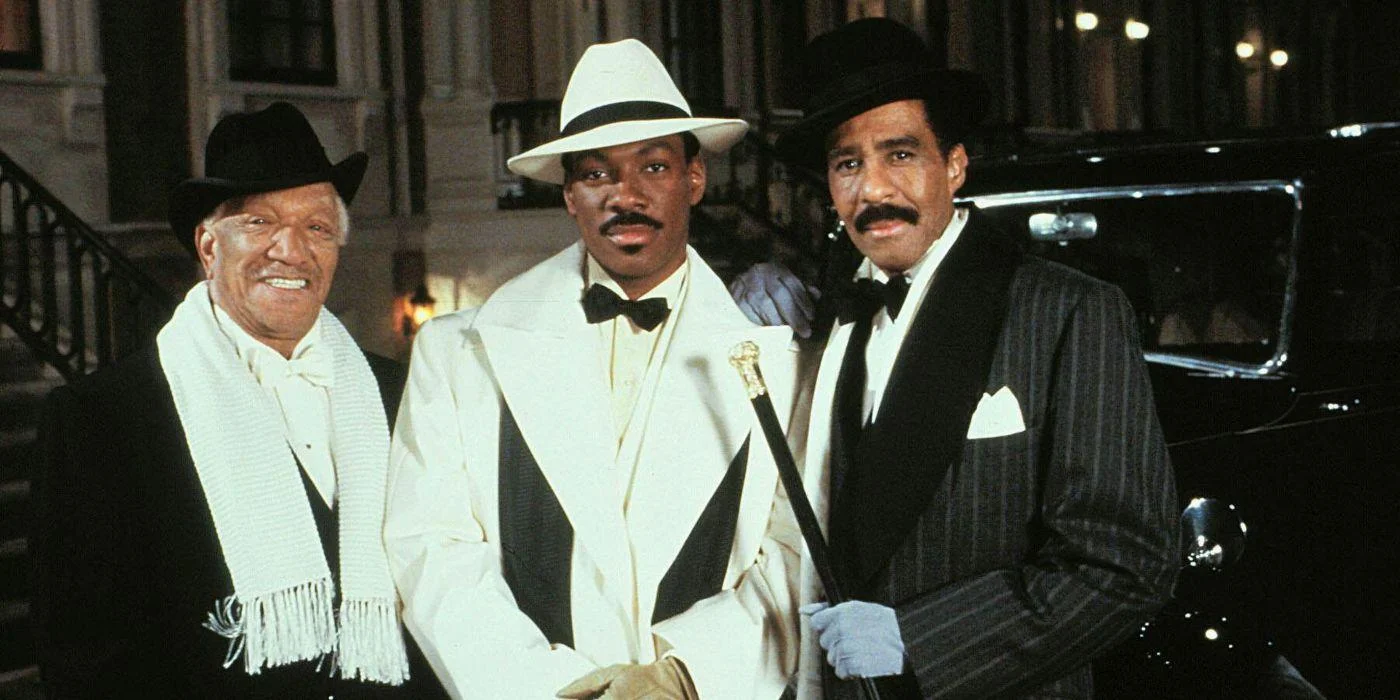

Harlem in the 1930s has long been associated with nightclubs, organized crime, and intense competition between rival groups trying to control the neighborhood’s lucrative entertainment scene.
Harlem Nights (1989) places its story right in the middle of that environment, following club owners and gangsters navigating threats from powerful mob figures.
Because the setting reflects a real era in New York’s history, many viewers assume the story might be drawn directly from true events, even though the film blends history with fiction.
The Harlem nightclub world portrayed in Harlem Nights and why it feels connected to real history
Harlem Nights takes place in late-1930s Harlem, a period when the neighborhood was known for vibrant nightlife and an expanding entertainment industry. The story centers on a nightclub and gambling operation run by Sugar Ray, a respected figure in the local community, and his adopted son Quick. Their club serves as a gathering place where music, gambling, and business intersect.
This setting closely resembles the real nightlife culture that developed in Harlem during the early twentieth century. Clubs and entertainment venues were central to the neighborhood’s social life, attracting both local residents and visitors from other parts of New York City. Many establishments combined live music, gambling, and alcohol, especially during and after the Prohibition era.
The film recreates this environment with crowded gaming tables, performers, and backroom deals. That depiction aligns with documented descriptions of Harlem nightlife from the time, when clubs operated as both entertainment spaces and centers for organized crime activity. Because these elements reflect real historical circumstances, the fictional story can easily feel connected to authentic events.
The real 1930s Harlem underworld and the clashes between Black gangsters and white mob organizations
During the 1930s, Harlem’s criminal underworld was shaped by tension between local Black gang leaders and larger white mob organizations from other parts of New York. Historical accounts describe conflicts over control of illegal gambling operations, lotteries, and nightclub profits.
One of the most famous examples involved numbers rackets, which were informal gambling systems run within the community. These operations were often controlled by Black crime figures who had strong local support. At the same time, established Italian-American mob groups sought to expand their influence into Harlem because of the money generated by these activities.
The result was a series of confrontations and power struggles. While the details varied, the underlying dynamic—local operators defending their territory against outside mob control—became a defining feature of Harlem’s underworld during that era.
This historical conflict forms the background for the story told in Harlem Nights. The film’s central tension involves a local club operation facing pressure from a powerful white gangster who wants to take control of the business.
Sugar Ray and the Harlem club operation as fictional characters shaped by a historical setting
Although the environment portrayed in Harlem Nights resembles real Harlem history, the main characters themselves are fictional. Sugar Ray, the nightclub owner played by Richard Pryor, does not correspond directly to a documented historical figure.
In the film, Sugar Ray runs a successful club that includes gambling tables and other underground operations. He maintains authority over the business while trying to protect it from outside threats. His adopted son Quick, played by Eddie Murphy, works closely with him and eventually becomes central to the effort to resist rival gangsters.
These characters represent archetypes that existed in Harlem’s real underworld rather than specific individuals. Many club owners and gambling operators during the period held positions similar to Sugar Ray’s, balancing community influence with the risks of organized crime competition.
By creating fictional characters in a historically recognizable setting, the film is able to reference the broader reality of Harlem’s nightlife without attempting to dramatize the biography of any one real person.
The influence of Harlem crime figures such as Stephanie St. Clair and Ellsworth “Bumpy” Johnson
While the characters in Harlem Nights are invented, the film’s background reflects the influence of real crime figures who operated in Harlem during the early twentieth century. Two of the most widely documented individuals were Stephanie St. Clair and Ellsworth “Bumpy” Johnson.
Stephanie St. Clair was known as a powerful leader in Harlem’s numbers racket during the 1920s and 1930s. She controlled a large portion of the illegal lottery system and openly resisted attempts by outside mob groups to take over her business. Historical records describe her as a major figure in the neighborhood’s underworld.
Ellsworth “Bumpy” Johnson later became another influential crime boss in Harlem. He rose to prominence in part through connections with organized crime networks while maintaining influence within the community.
Neither St. Clair nor Johnson appears directly in Harlem Nights, and the film does not present their life stories. However, the idea of a Harlem-based operation defending its territory against outside mob pressure reflects situations documented during their era.
How the film’s conflict between local Harlem operators and outside mob control reflects real tensions of the era
The central conflict in Harlem Nights revolves around a powerful gangster named Bugsy Calhoune who attempts to take control of Sugar Ray’s club and gambling operation. Calhoune represents an external mob force trying to dominate a profitable Harlem business.
Historically, similar tensions existed between Harlem’s local operators and organized crime groups from other parts of New York. White mob syndicates often attempted to expand their influence into Harlem’s lucrative gambling networks. These efforts sometimes led to intimidation, violence, and negotiations between rival groups.
The film transforms these historical tensions into a single storyline involving Sugar Ray’s resistance against Calhoune. While the details are fictional, the underlying situation reflects documented power struggles over control of gambling and nightclub revenue.
This connection to real historical patterns is one reason the story can feel authentic, even though the specific characters and events are invented.
Where Harlem Nights invents characters, events, and relationships for its comedy-crime storyline
Despite drawing from historical circumstances, the narrative events of Harlem Nights are largely fictional. The relationships between the characters, the specific confrontations with Bugsy Calhoune, and the dramatic plot twists were created for the film’s storyline.
The film also blends crime drama with comedy, which further separates it from historical accounts. Many scenes focus on humorous arguments between characters or exaggerated situations designed for entertainment. These elements are not intended to represent real incidents from Harlem’s past.
For example, the elaborate schemes used by the characters to protect their club or trick their rivals are storytelling devices rather than documented historical strategies. The personalities of the characters are also shaped by comedic timing and dramatic tension rather than historical accuracy.
Because of these creative choices, the film uses Harlem’s history as a backdrop while allowing the plot to develop freely in a fictional direction.
The historical backdrop of Harlem nightlife during the Prohibition and post-Prohibition years
The broader environment depicted in Harlem Nights is rooted in the transformation of Harlem during the early twentieth century. The neighborhood became a major cultural center during the Harlem Renaissance, attracting musicians, performers, and entrepreneurs.
Nightclubs flourished during Prohibition in the 1920s and continued to operate after alcohol became legal again in 1933. These venues offered live jazz music, dancing, and gambling, drawing crowds from across New York City.
Alongside legitimate entertainment, many clubs also became connected to illegal activities such as gambling operations and numbers games. Organized crime groups recognized the economic potential of these businesses, leading to competition over control.
The film reflects this environment by showing crowded clubs, gambling rooms, and deals taking place behind the scenes. While the specific establishments in the story are fictional, the atmosphere closely resembles descriptions of Harlem nightlife from the period.
Harlem Nights as a fictional story loosely inspired by real 1930s Harlem gangland rivalries
Taken as a whole, Harlem Nights (1989) does not tell the true story of a specific historical event or individual. The characters, plot developments, and personal relationships in the film were created for its narrative.
At the same time, the setting and central conflict draw inspiration from documented realities of Harlem in the 1930s. Historical records show that local Black crime figures often competed with outside mob organizations for control of gambling and nightlife businesses.
The film uses this historical background as a framework while inventing its own characters and storyline. As a result, Harlem Nights is best understood as a fictional story loosely inspired by real gangland tensions that existed in Harlem during that era.
