
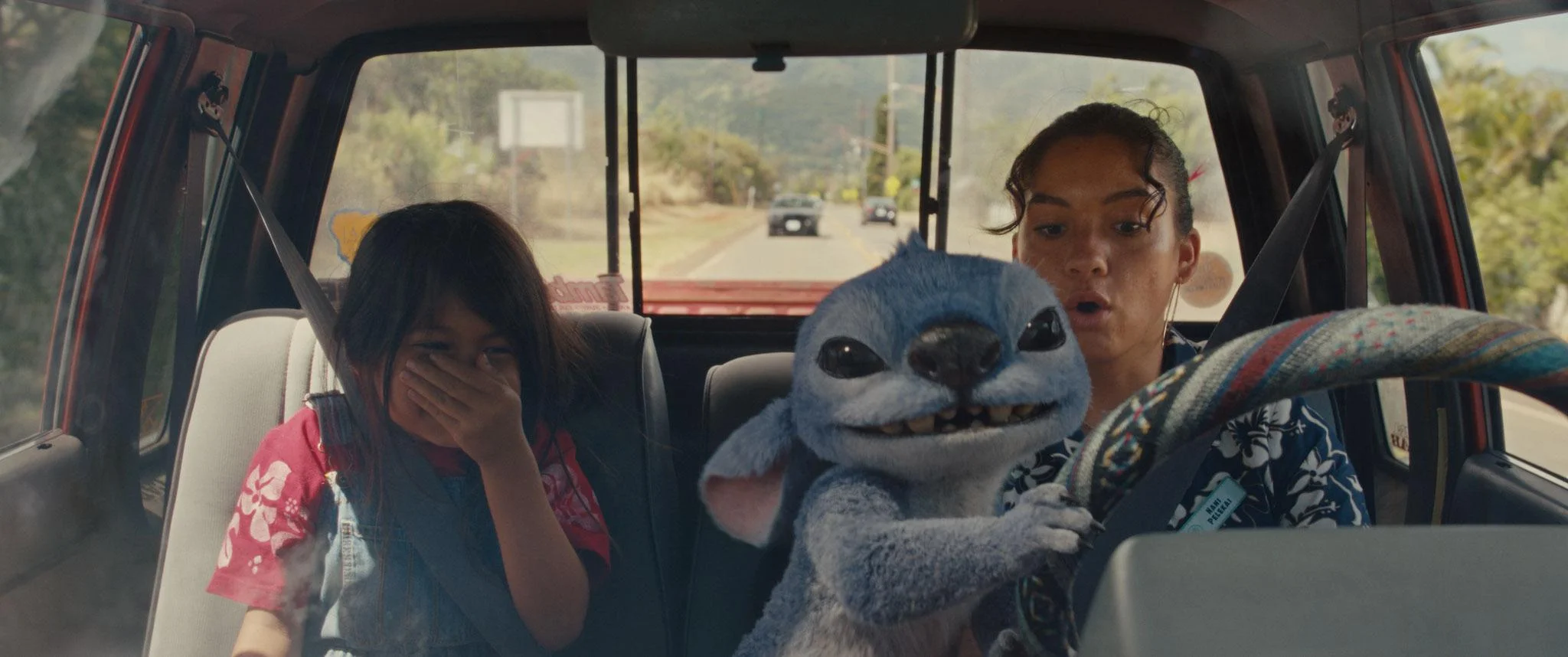

Figuring out if Lilo & Stitch (2025) feels comfortable for a child often comes down to how it blends playful chaos with more emotional moments. The story brings together a mischievous alien and a young girl coping with family loss, creating scenes that can quickly shift from lighthearted to serious. That contrast is usually what raises the most questions about how suitable the experience is for younger viewers.
A familiar family story with updated visuals and tone for a new generation
The 2025 version of Lilo & Stitch follows the same core setup: a lonely Hawaiian girl, Lilo, forms a bond with Stitch, a genetically engineered alien who escapes to Earth. The story centers on their relationship, with Lilo living under the care of her older sister Nani after the loss of their parents.
Visually, the film presents this world in a more realistic and detailed way compared to earlier versions, which can make both the warm and intense moments feel stronger. While the overall structure remains family-oriented, the updated tone may feel slightly more grounded, which can affect how younger children respond to emotional scenes or moments of conflict.
How the mix of comedy and emotional moments feels for younger viewers
Much of the film’s appeal comes from its humor, especially Stitch’s unpredictable behavior and Lilo’s quirky personality. These elements create a playful atmosphere that children often respond to quickly, particularly in the earlier parts of the story.
At the same time, the film includes several emotional moments tied to themes of loneliness and family struggle. Scenes showing Lilo feeling isolated or Nani dealing with adult responsibilities can carry a weight that younger children may not fully understand. The shift between humor and sadness can feel sudden, which may be confusing or slightly overwhelming for very young viewers.
Alien chaos and action scenes that may feel intense at times
Stitch is introduced as a destructive and energetic character, and many scenes involve him causing chaos, breaking objects, or escaping capture. There are also sequences where alien authorities pursue him, leading to fast-paced chases and confrontations.
These scenes are not graphic or violent in a realistic sense, but they are loud, fast, and sometimes visually intense. Younger children who are sensitive to noise or rapid movement may find these moments overstimulating. Older children, on the other hand, are more likely to interpret them as playful action rather than something threatening.
Themes of loss, family, and belonging that may need some explanation
A central part of the story involves Lilo and Nani coping with the loss of their parents. This situation is present from the beginning and influences many of their interactions. It is not presented in a heavy or detailed way, but it remains an emotional backdrop throughout the film.
The idea of “ohana,” or family, is emphasized repeatedly, highlighting the importance of staying together despite difficulties. For children, this message can be positive and reassuring, but it may also lead to questions about death, separation, or family roles. Younger viewers may need simple explanations to fully understand why the characters behave the way they do.
How Stitch’s behavior and mischief come across to kids
Stitch’s actions drive much of the film’s humor, but they also include behavior that could be interpreted as disruptive or aggressive. He breaks things, ignores rules, and initially shows little concern for others.
As the story progresses, his character changes, and he begins to understand connection and care. This development is clear, but younger children may focus more on his early actions than his later growth. For some, Stitch may appear funny and lovable, while others may imitate his mischief without fully grasping the consequences shown in the story.
Moments of conflict or danger and how strongly they are shown
The film includes several moments where characters are in danger, particularly during chase sequences or confrontations with authority figures. Lilo and Nani also face the possibility of being separated, which is presented as a serious emotional risk.
These situations are resolved within the story, and they are not prolonged in a way that creates sustained fear. However, the sense of tension is present, especially in scenes where Lilo is at risk of losing her home or being taken away. For sensitive children, these moments may feel unsettling even if they are brief.
What younger children might miss or find confusing in the story
Some parts of the story rely on emotional context rather than direct explanation. Lilo’s behavior, for example, is shaped by grief and isolation, which may not be immediately clear to younger viewers. Similarly, Nani’s stress as a guardian balancing work and responsibility can be difficult for children to fully understand.
The film also moves between different tones, from comedic alien scenes to grounded family struggles. Younger children may follow the surface action but miss the underlying reasons behind certain decisions or conflicts. This can make parts of the story feel uneven or harder to process without guidance.
Elements of humor and heart that many kids will enjoy
Despite its heavier themes, the film offers many moments that are engaging and accessible for children. Stitch’s playful behavior, visual comedy, and the bond that develops between him and Lilo provide a strong emotional core.
The setting, music, and interactions between characters create a warm atmosphere that balances the more serious elements. Many children will respond positively to the idea of an unusual friendship and the gradual sense of belonging that forms. These aspects help keep the film approachable, even when it touches on more complex topics.
Where the experience tends to feel comfortable for kids by age group
For most children, Lilo & Stitch (2025) tends to feel comfortable around the age of 7+, when they can better understand emotional shifts and follow character motivations. At this age, the mix of humor, action, and family themes is more likely to feel balanced rather than confusing.
Children under 6 may still enjoy the visual comedy and Stitch’s antics, but some scenes involving conflict, emotional stress, or the risk of separation could be unsettling or difficult to process without reassurance. Older kids, around 9 or 10 and above, are more likely to engage with both the humor and the emotional storyline, understanding the deeper themes without discomfort.
