
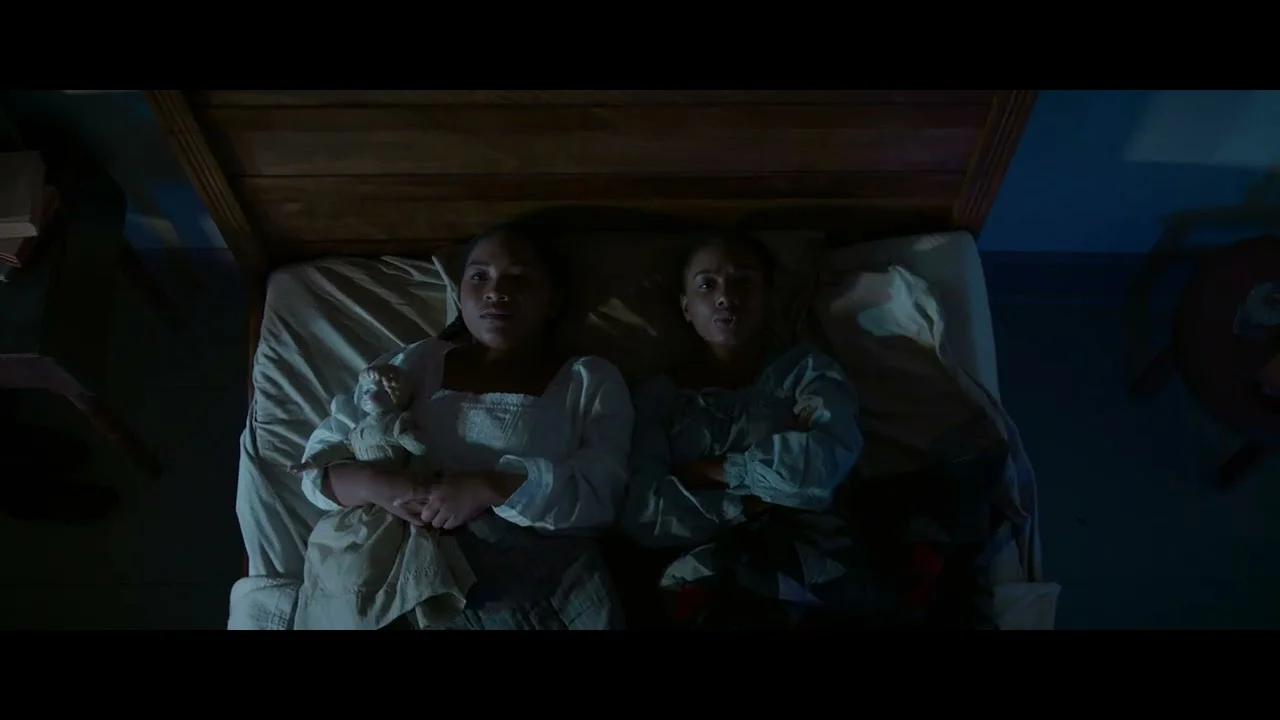

Something about the closing stretch of A Southern Haunting (2023) feels more direct than the rest of the film, as if the story finally stops hinting and starts revealing. What had been scattered through visions, strange behavior, and fragments of the past comes together inside the house itself. The last scenes answer several questions, but they also leave a lingering sense that not everything has been settled.
The final confrontation at the house and what is actually happening in those last moments
In the final sequence, the main character returns to the house after realizing that leaving has not stopped the disturbances. The environment inside is noticeably different—lights flicker, objects shift, and the atmosphere becomes more aggressive than in earlier scenes.
As the confrontation unfolds, the character moves through the house, following sounds that lead to a central room tied to earlier visions. The spirit makes its presence known physically, no longer limited to brief glimpses or indirect signs. Furniture moves, doors slam, and the character is forced into direct interaction with the entity.
This moment represents a shift from investigation to confrontation. The haunting is no longer something to observe or question. It becomes immediate and unavoidable, bringing the story to its central conflict.
What triggers the spirit’s full appearance and why it targets the main character
Just before the spirit fully manifests, the main character uncovers an object or piece of information connected to the house’s past. This discovery—often a personal item or document—acts as a trigger, linking the present to the unresolved event tied to the haunting.
The spirit’s focus on the main character is not random. Earlier scenes show that the character has a personal or emotional connection to the history of the house, even if it was not fully understood at the time. By the ending, it becomes clear that the spirit responds to that connection, treating the character as someone who can either resolve or repeat what happened.
The full appearance is therefore tied to recognition. Once the past is acknowledged, the spirit no longer remains hidden, and its intentions become direct.
The truth about the past event that connects the haunting to the property
During the confrontation, the film reveals the key event that caused the haunting. This is typically shown through a combination of flashbacks, visions, or discovered evidence that clarifies what occurred in the house years earlier.
The event involves a death or act of violence that was either concealed or misunderstood. The details become clear: who was involved, what led to the incident, and how it was left unresolved. This explanation ties together earlier clues that may have seemed disconnected.
By presenting this information at the climax, the film reframes the haunting as a consequence rather than a mystery. The house is not simply haunted; it holds the result of something that was never addressed properly.
How the main character responds when the haunting reaches its peak
When the spirit confronts the main character directly, there is a moment where escape is no longer an option. Instead of trying to leave, the character chooses to engage with the situation.
On screen, this often involves speaking to the spirit, acknowledging what happened, or physically interacting with the space where the past event occurred. The character’s response is deliberate rather than reactive, marking a change from earlier fear-driven behavior.
This decision is important because it determines how the confrontation ends. The character’s willingness to face the truth, rather than avoid it, becomes the central action that drives the resolution.
The outcome of the possession attempt and who ultimately survives
During the peak of the haunting, the spirit attempts to take control of the main character. This is shown through physical struggle, altered behavior, or moments where the character appears to lose awareness.
The attempt does not fully succeed. The character regains control, often after confronting the truth about the past event or rejecting the spirit’s influence. The scene resolves with the spirit losing its hold, either retreating or being forced out.
The main character survives the encounter, though visibly affected by what happened. There are no additional deaths in this final sequence, and the immediate threat ends once the possession attempt fails.
What the discovered evidence reveals about earlier unexplained incidents
After the confrontation, the film shows the significance of the evidence that was uncovered earlier. This may include documents, photographs, or physical objects that connect past and present events.
These items explain earlier disturbances that seemed random at the time. Strange noises, visions, or repeated patterns are now understood as attempts by the spirit to draw attention to the unresolved event.
By the end, the evidence serves as confirmation rather than mystery. It provides a clear link between the haunting and the history of the house, giving context to everything that has happened.
The meaning behind the final scene and whether the haunting is truly over
In the closing scene, the house appears calm. The main character either leaves or remains inside, but the environment no longer shows signs of immediate disturbance. Objects are still, and the tension present earlier has faded.
However, the film introduces a small detail that suggests uncertainty. This could be a brief sound, a subtle movement, or a final visual cue that echoes earlier events. It does not restart the haunting, but it prevents the ending from feeling completely resolved.
This final moment suggests that while the central conflict has been addressed, the presence tied to the house may not be entirely gone. The story ends with the situation under control, but not fully erased, leaving a lingering question about what remains.
