

A decision about Liar Liar (1997) often comes down to how comfortable a parent is with fast, exaggerated humor mixed with adult situations.
The film moves quickly, relying on constant jokes, physical comedy, and a central idea about a man suddenly unable to lie. While much of it appears playful on the surface, some moments carry language and themes that may not land the same way for children.
A fast-talking comedy about honesty that parents may want to preview first
At its core, the story follows Fletcher Reede, a lawyer who builds his career on bending the truth. His young son, Max, makes a birthday wish that forces him to tell the truth for an entire day. This setup creates a chain of situations where Fletcher blurts out whatever he thinks, no matter how inappropriate or embarrassing it may be.
For children, the idea of someone being unable to lie can feel funny and easy to understand. The connection between the father and son also gives the story a clear emotional center. At the same time, much of what Fletcher says involves adult concerns, especially related to his job and relationships, which may not fully register with younger viewers.
The exaggerated courtroom humor and jokes that younger kids may not fully understand
Several scenes take place in a courtroom, where Fletcher tries to navigate legal arguments while being unable to lie. These moments rely on quick dialogue, sarcasm, and references to legal situations that are not explained in simple terms.
Younger children may follow the general idea that Fletcher is getting into trouble because he cannot control what he says, but many of the specific jokes will likely go over their heads. The humor often depends on wordplay or adult context rather than visual action, which can make these scenes feel less engaging for kids who are used to more direct storytelling.
How Jim Carrey’s physical comedy can be funny but sometimes chaotic for sensitive viewers
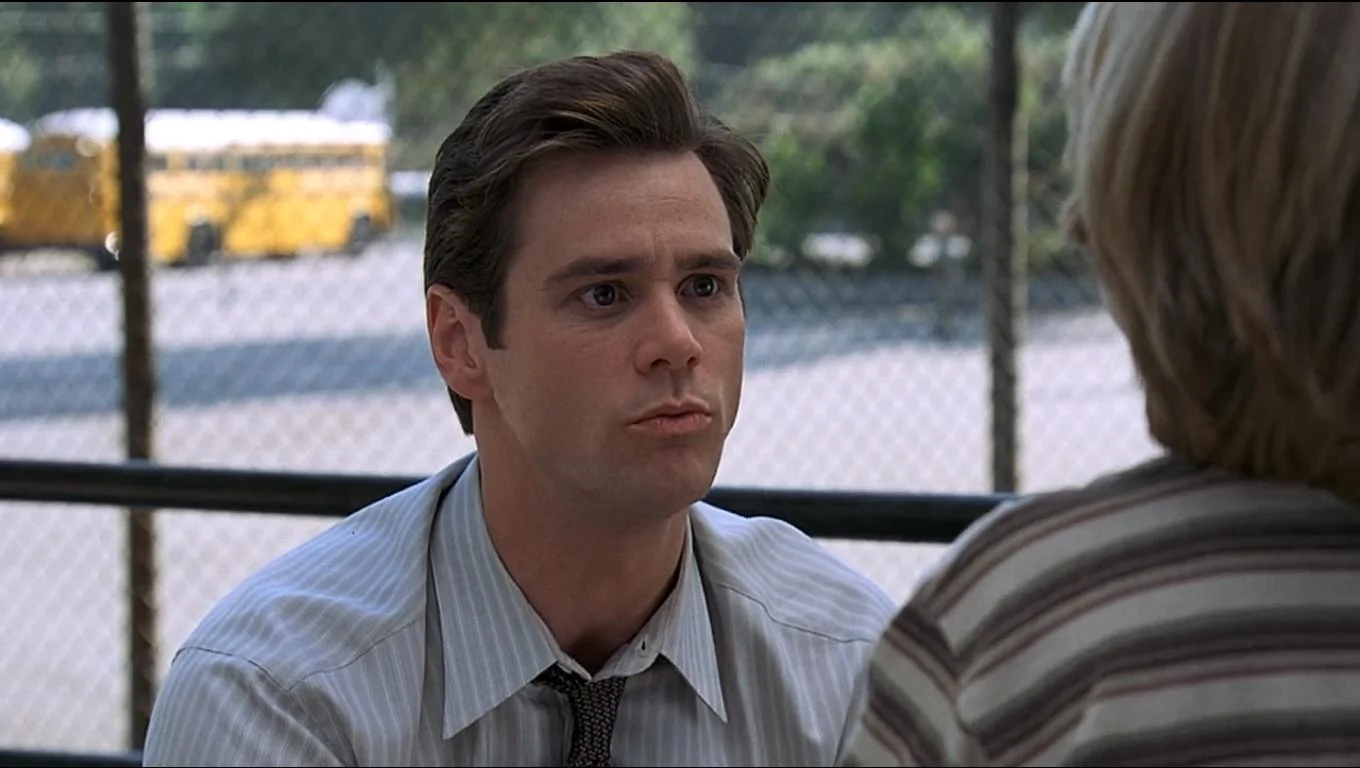
Jim Carrey’s performance is highly physical, with exaggerated facial expressions, sudden movements, and over-the-top reactions. He stretches scenes into loud, unpredictable bursts of energy, especially when Fletcher struggles to stop himself from telling the truth.
For many children, this kind of comedy can be immediately entertaining. The physical humor is easy to follow, and it creates moments that feel playful rather than serious. However, the intensity of his performance can also feel overwhelming, particularly for younger or more sensitive viewers who may find the shouting and rapid movement unsettling rather than funny.
Moments with strong language and adult situations that stand out in a family setting
Throughout the film, Fletcher’s inability to filter his thoughts leads to frequent use of strong or blunt language. While not constant, these moments are noticeable and sometimes tied to insults or personal remarks.
There are also situations involving divorce, romantic relationships, and workplace dynamics that are clearly aimed at an adult audience. Children may not fully understand these elements, but they will still hear and see them, which can create moments that feel out of place in a family viewing context.
The central father-son story and what kids can take from it
Despite its comedic focus, the film is built around Fletcher’s relationship with his son. Max is shown as patient and hopeful, even when his father repeatedly disappoints him. The story gradually shifts toward Fletcher recognizing his mistakes and trying to repair that bond.
Children are likely to connect with Max’s perspective, especially his desire for honesty and attention from his parent. The emotional moments are clear and direct, offering a simple message about keeping promises and being truthful. These scenes provide a calmer contrast to the louder comedic parts of the film.
Scenes that may feel awkward or confusing due to mature humor and themes
Some of the humor relies on situations that are meant to be uncomfortable, such as Fletcher revealing private thoughts about colleagues or discussing sensitive topics in public settings. These moments are played for laughs but can feel awkward rather than amusing to younger viewers.
There are also jokes that hint at adult relationships or personal behavior without explaining them in a way children can easily follow. This can lead to confusion, where kids recognize that something is meant to be funny but do not understand why.
Why older kids are more likely to enjoy the humor and follow the story
As children get older, they are more likely to understand both the structure of the story and the type of humor being used. The idea of a lawyer forced to tell the truth becomes more interesting when the viewer can grasp how his job depends on persuasion and selective honesty.
Older kids are also better equipped to handle the tone shifts between comedy and emotional moments. They can follow the dialogue-heavy scenes, understand the consequences of Fletcher’s actions, and appreciate the resolution of his character arc. This makes the experience feel more complete rather than fragmented.
What ages tend to handle Liar Liar best without missing the context
Liar Liar (1997) tends to work best for children around 12+, as they are more likely to understand the fast dialogue, courtroom situations, and the underlying themes about honesty and responsibility. At this age, the humor becomes clearer, and the emotional story between father and son feels more meaningful.
Younger children, especially under 10, may still enjoy the physical comedy but are more likely to miss key parts of the story and be confused by the adult-focused jokes and language. Some moments may also feel too loud or awkward without the context needed to process them comfortably.
