
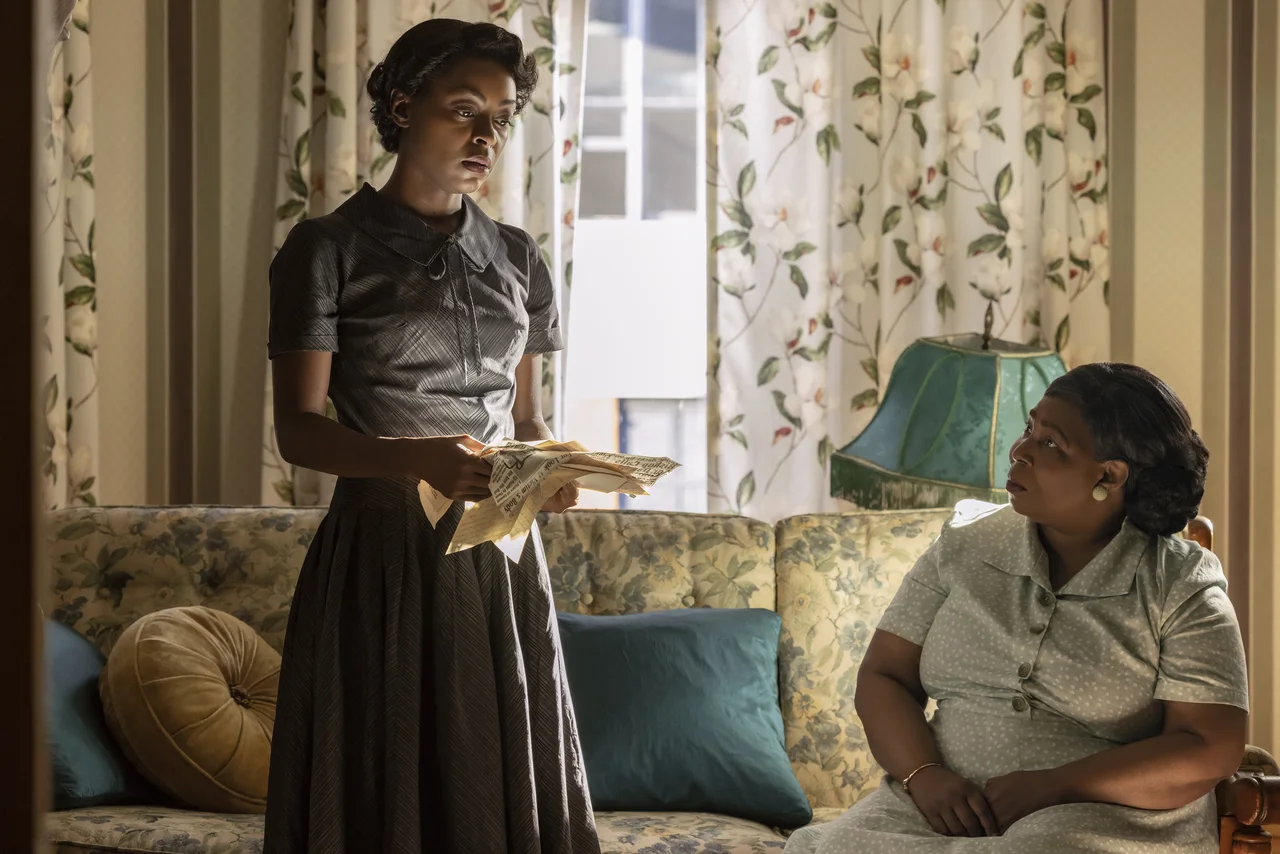

The story told in Till (2022) feels grounded in reality from its very first scenes, which is why many viewers look for confirmation about its origins.
The film centers on a mother’s response to a devastating crime, presented with a level of detail that suggests a real historical foundation. The connection between what is shown on screen and what actually happened is central to understanding its impact.
The real-life background behind Till (2022) and its focus on historical events
Till (2022) is rooted in a well-documented historical case from the United States during the 1950s. The film draws directly from the real events surrounding the death of Emmett Till and the actions taken by his mother, Mamie Till-Mobley, afterward. These events took place in a period marked by racial segregation and widespread discrimination, particularly in the American South.
The film’s narrative focuses less on reconstructing every aspect of the crime and more on the aftermath, especially the personal and public response led by Mamie. This approach reflects how the real case became a turning point in civil rights awareness. The foundation of the story is not fictional inspiration but a specific, documented tragedy with lasting historical consequences.
The 1955 murder of Emmett Till and how the film recreates it on screen
In August 1955, 14-year-old Emmett Till traveled from Chicago to Mississippi, where he was later abducted, tortured, and killed after being accused of offending a white woman. His body was found in the Tallahatchie River, and the brutality of the crime was widely reported at the time.
The film presents these events with restraint. Rather than depicting the violence in explicit detail, it conveys the impact through what is shown afterward, including the condition in which Emmett’s body is returned. This aligns with historical accounts, which describe how his death shocked the nation. The choice to avoid graphic depiction reflects a storytelling decision, but the core facts of the crime itself remain consistent with the historical record.
Mamie Till-Mobley’s fight for justice as portrayed in the film
After Emmett’s death, Mamie Till-Mobley made a series of decisions that would bring national attention to the case. One of the most significant was her insistence on an open-casket funeral, allowing the public to see the extent of the violence inflicted on her son. This moment is depicted in the film as a turning point, both personally and socially.
The portrayal of Mamie’s actions follows documented history closely. She became a central figure in the public response, speaking out and demanding accountability. The film emphasizes her role not only as a grieving mother but as someone who actively shaped how the case was perceived across the country. While the dialogue and specific scenes are dramatized, the sequence of her decisions and their consequences reflects what is known from historical sources.
The trial in Mississippi and its depiction compared to documented history
The trial of the men accused of killing Emmett Till took place in Mississippi later in 1955. Historical records show that the proceedings were brief and that the defendants were acquitted by an all-white jury, despite substantial evidence against them.
The film recreates key aspects of this trial, including the courtroom environment and Mamie Till-Mobley’s presence as she testifies. The outcome is presented as it occurred in reality, with the acquittal reflecting the systemic injustices of the time. While certain exchanges and courtroom moments are shaped for narrative clarity, the essential facts of the trial, including its verdict, align with documented history.
How the film reflects the public response and media coverage of the case
The public reaction to Emmett Till’s murder was significant, particularly after photographs from the open-casket funeral were published in magazines and newspapers. These images played a major role in bringing attention to racial violence in the United States.
The film incorporates this aspect by showing how Mamie’s decision led to widespread visibility and discussion. It captures the role of the press in spreading awareness, although it does so through selected moments rather than an exhaustive depiction of media coverage. Historically, the case became a catalyst for increased activism, and the film reflects this by emphasizing the shift from private grief to public awareness.
The involvement of the Till family in shaping the film’s narrative
The development of Till (2022) involved input and approval from members of the Till family. This connection influences how the story is told, particularly in its focus on Mamie Till-Mobley’s perspective and dignity.
This involvement contributes to the film’s emphasis on respectful representation rather than sensationalism. While the film remains a dramatized work, the presence of the family in its development process supports its alignment with the known facts of the case. It also helps explain why certain elements, such as the depiction of violence, are handled with restraint.
Moments in Till (2022) that stay closely aligned with historical records
Several key moments in the film correspond directly with documented events. The open-casket funeral, the courtroom testimony, and the eventual acquittal of the accused are all grounded in historical evidence. Mamie Till-Mobley’s public advocacy following the trial is also presented in a way that reflects her real-life actions.
These elements are not fictional additions but part of the established narrative surrounding the case. The film’s structure relies heavily on these known events, using them as anchor points to guide the story. This alignment with history is one of the defining characteristics of the film.
Where the film simplifies or dramatizes real events for storytelling
Despite its strong connection to real events, Till (2022) includes dramatized elements, particularly in dialogue and personal interactions. Conversations between characters, emotional exchanges, and certain sequences are constructed to provide narrative cohesion and emotional clarity.
In addition, the film condenses timelines and focuses on selected perspectives rather than presenting every detail of the historical record. This is common in dramatizations of real events, where the goal is to create a coherent story within a limited runtime. These changes do not alter the core facts but shape how those facts are presented on screen.
Till (2022) as a film closely based on real events and historical figures
Till (2022) is closely based on real events and centers on actual historical figures, particularly Emmett Till and Mamie Till-Mobley. The main events depicted in the film, including the murder, the trial, and the public response, are supported by historical records.
At the same time, the film uses dramatization to present these events in a structured narrative. Dialogue, pacing, and certain character interactions are adapted for storytelling purposes. The result is a work that remains firmly rooted in real history while using cinematic techniques to convey the emotional and social impact of those events.
