
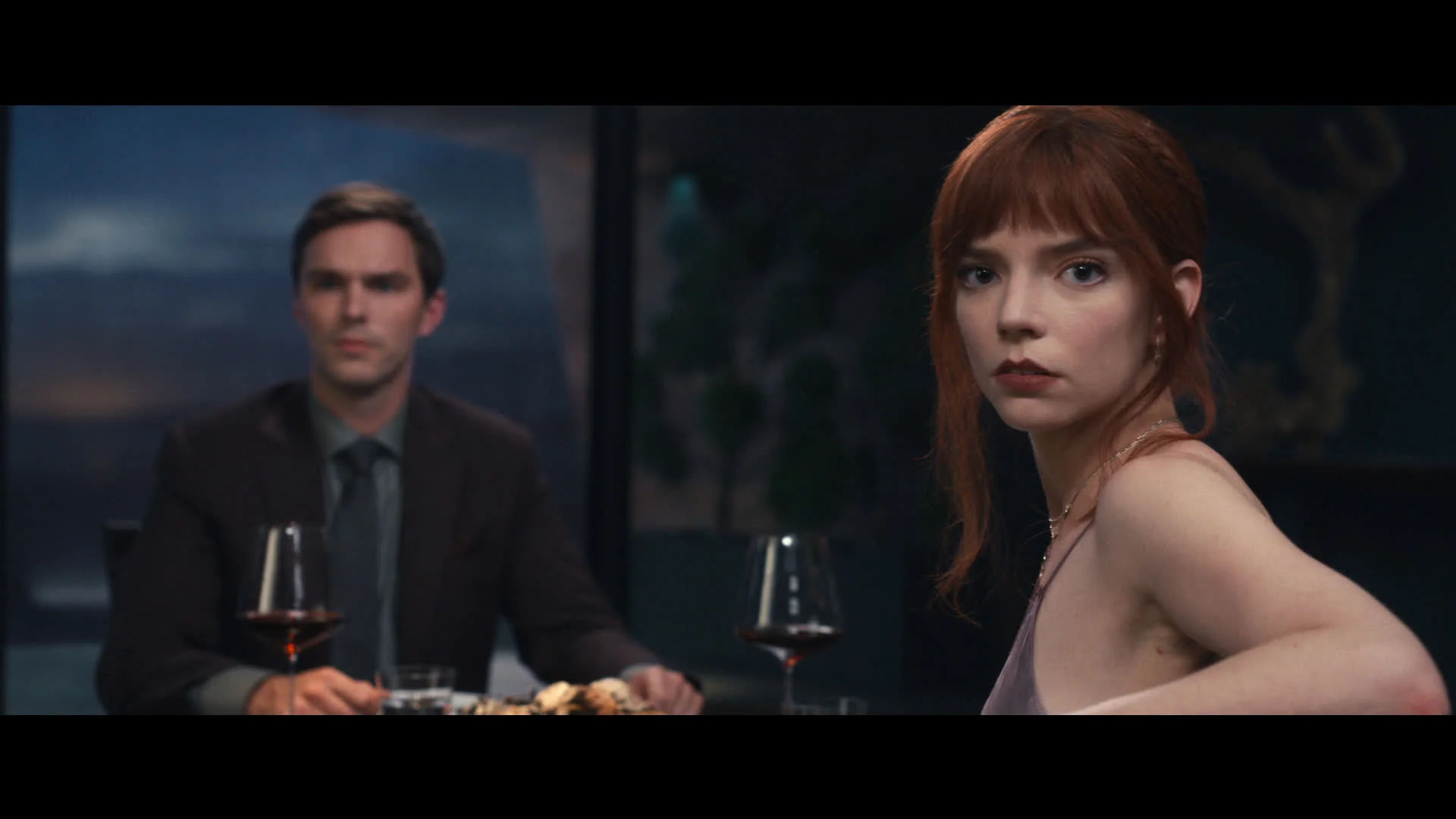

Choosing whether to watch The Menu (2022) often depends on how comfortable someone is with unusual stories that mix suspense and dark comedy.
The film follows a group of wealthy diners invited to an exclusive restaurant on a remote island, where a famous chef presents an elaborate tasting menu that slowly reveals a deeper plan behind the evening. The pacing begins calmly but gradually becomes more tense as each course introduces new surprises.
The uneasy dinner invitation that sets the tone for The Menu from the very first course
The story begins with a group of guests traveling by boat to a private island where an exclusive restaurant called Hawthorn operates. The diners include wealthy investors, a famous actor, a food critic, and a young couple named Tyler and Margot. Each person has paid a large amount of money to experience a once-in-a-lifetime meal prepared by the famous chef Julian Slowik.
From the beginning, the atmosphere feels slightly uncomfortable. The guests are welcomed by the restaurant staff, who behave with extreme discipline and formality. Every movement is carefully choreographed, and the diners are treated less like customers and more like participants in a controlled experience.
The first courses of the meal introduce the structure of the evening. Chef Slowik presents each dish with a speech explaining its concept and meaning. At first these explanations sound like artistic descriptions of gourmet cuisine, but the tone gradually becomes more intense.
This early setup is important for understanding the film’s viewing experience. Instead of moving quickly into action, the story builds tension through small details: the way the staff behave, the reactions of the guests, and the increasingly unusual presentations of each course.
The remote island restaurant and the mysterious chef who controls the entire evening
The central figure controlling the story is Chef Julian Slowik, the mastermind behind the restaurant. He leads a highly trained team of chefs and servers who follow his instructions without hesitation. Every part of the evening—from the arrival of the guests to the presentation of each dish—is directed by him.
Hawthorn, the restaurant itself, becomes a key part of the experience. It is isolated on an island with no easy way to leave. The building is sleek and modern, and the kitchen is visible from the dining room, allowing guests to watch the chefs work in perfect coordination.
As the meal continues, it becomes clear that Slowik is not simply preparing food. Each course seems designed to send a message to the diners about their lives and their behavior. The restaurant staff carry out his instructions with absolute loyalty, which adds to the sense that the guests are trapped in a carefully planned event.
Watching this environment unfold is one of the film’s strongest elements. The setting is simple—a dining room and kitchen—but the way the chef controls the space gives the story a constant feeling of tension.
Dark humor and escalating tension that keep the story unpredictable
One of the most distinctive parts of The Menu is its mix of suspense and dark humor. Many scenes begin as awkward or uncomfortable moments during the dinner but then shift into something surprising or unsettling.
For example, the speeches that introduce each dish often contain sharp observations about the guests. The chef comments on their careers, their wealth, and the way they treat art and creativity. These remarks sometimes produce nervous laughter from the diners.
As the evening progresses, the tension increases. The courses become more elaborate, and the chef’s explanations reveal that the dinner has a deeper purpose. The guests gradually realize that the event may not be just a luxury dining experience.
This combination of humor and suspense helps maintain engagement. The viewer is never entirely sure what will happen next during the next course of the meal.
Performances and character interactions that make the dinner guests interesting to watch
Much of the film’s entertainment comes from how the characters react to the strange situation. Each guest arrives with a different personality and social status, which creates a variety of interactions around the table.
Tyler, the food enthusiast, admires the chef’s work and treats the dinner almost like a sacred event. Margot, who accompanies him as a last-minute guest, approaches the evening with more skepticism. Her perspective often highlights how unusual the situation becomes.
Other guests respond differently as the night continues. Some try to maintain their confidence and wealth-driven attitudes, while others begin to panic as the chef’s intentions become clearer.
These reactions give the film energy even when the story remains mostly in one location. Watching how the diners interact with one another—and how they respond to Chef Slowik—adds tension and occasional humor throughout the evening.
Moments where the slow build and repeated restaurant rituals may test some viewers’ patience
The film’s structure is built around the courses of the dinner, and this design creates a deliberate pacing. Each new dish arrives with a speech, a pause, and a reaction from the guests.
For some viewers, this approach helps build suspense. The repeated pattern allows tension to increase gradually as the meaning behind the meal becomes clearer.
However, others may find the rhythm slower than expected. Several scenes involve long conversations at the table or extended moments in which the chef explains the concept behind a dish.
Because the film takes time to establish its themes, the early portions of the story may feel quiet compared with traditional thrillers. Viewers expecting fast action may notice the slow build before the story becomes more intense.
Why the film’s unsettling tone and satire of wealth and fine dining may not work for everyone
Another factor that influences the viewing experience is the film’s satirical tone. Much of the story critiques the culture surrounding luxury dining, wealth, and artistic prestige.
Chef Slowik’s speeches often target the guests’ attitudes toward food and status. He points out how some people treat fine dining as a symbol of wealth rather than as an appreciation of creativity.
This social commentary runs throughout the film. The humor and tension often come from watching the guests confront uncomfortable truths about themselves.
For viewers who enjoy satire, this aspect adds depth to the story. Others may find the tone overly harsh or uncomfortable, especially when the film criticizes the behavior of its characters so directly.
The kind of viewer who tends to appreciate The Menu’s mix of suspense and social commentary
The experience of watching The Menu tends to appeal most to viewers who enjoy unusual thrillers with strong dialogue and character interactions. The film focuses more on conversation, tension, and atmosphere than on action.
People interested in stories about power dynamics and social criticism may find the themes particularly engaging. The dinner setting allows the film to explore ideas about creativity, wealth, and personal responsibility.
At the same time, viewers looking for a traditional horror or action story may feel surprised by the slower, more controlled pace. Much of the suspense comes from anticipation rather than sudden events.
The film works best for audiences who enjoy stories that unfold through dialogue and gradual revelations rather than constant movement.
Why sitting through this strange dinner experience can feel surprisingly worthwhile
Watching The Menu (2022) is a distinctive experience. The story takes a simple premise—a group of diners attending a gourmet meal—and gradually turns it into something far more tense and thought-provoking.
The film benefits from strong performances, especially from the actors portraying Chef Slowik and the diners. Their reactions to the unfolding evening keep the narrative engaging even when the story remains in one location.
The pacing is slower than many thrillers, and the satirical tone may not appeal to everyone. However, the combination of suspense, dark humor, and social commentary creates a memorable atmosphere that holds attention through the final course.
Based on the way the story develops and the unique setting it uses, The Menu (2022) is worth watching.
Other suspenseful films about controlled environments and hidden agendas to try instead
- Ready or Not (2019) – A darkly comic thriller about a newlywed forced to survive a deadly game with her wealthy in-laws inside a secluded mansion.
- Get Out (2017) – A suspenseful story about a man visiting his girlfriend’s family, where polite hospitality slowly reveals a disturbing secret.
- The Platform (2019) – A tense film set in a vertical prison where food is distributed between levels, exposing social inequality in a confined environment.
- Glass Onion: A Knives Out Mystery (2022) – A mystery involving wealthy guests invited to a private island, where hidden motives begin to surface.
