
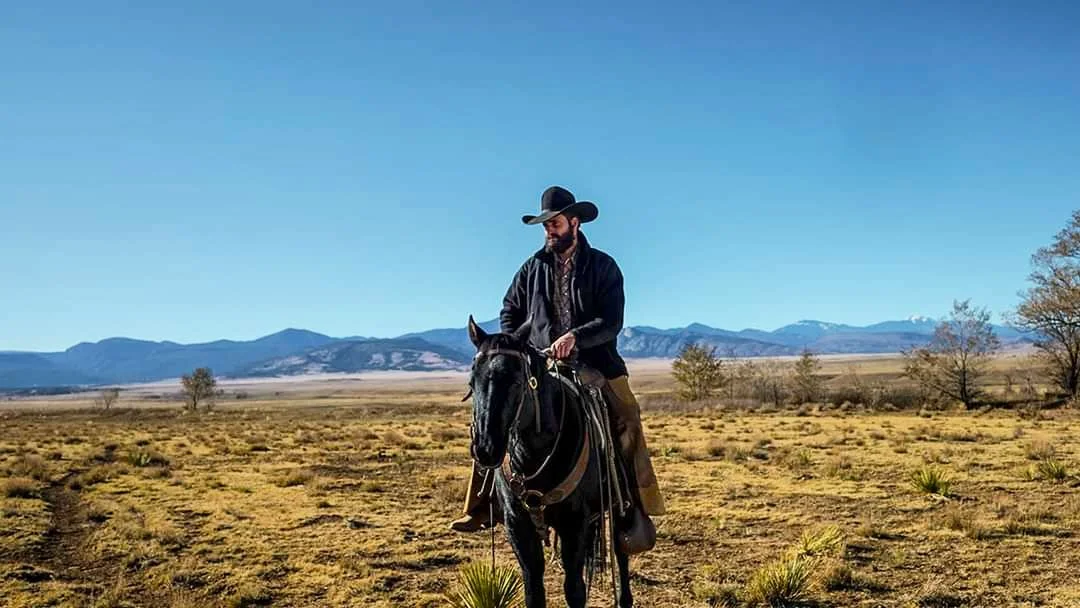

At first glance, Peace River presents itself with a quiet realism that naturally invites questions about its origins. The film’s grounded tone, restrained performances, and focus on personal struggle can make it feel closely tied to real life.
That sense of authenticity has led many viewers to wonder how much of what they see on screen actually happened, and where the line between fact and fiction truly lies.
Separating fact from fiction in Peace River
Peace River is not based on a single, documented true story, nor does it recount a specific real-life case in a direct way. Instead, the film is a fictional narrative designed to feel realistic, drawing inspiration from broader social and emotional realities rather than from one identifiable event. There are no official records, court cases, or biographies that directly correspond to the film’s plot.
That said, the story is intentionally grounded in circumstances that are recognizable and plausible. The filmmakers appear to have aimed for emotional truth rather than historical accuracy, creating a scenario that reflects real human experiences without claiming to portray an actual sequence of events. This places the film firmly in the category of fiction informed by reality, rather than dramatized history.
The real-life setting and circumstances that influenced the story
The setting of Peace River is inspired by rural Canadian communities, particularly those shaped by isolation, economic pressure, and limited access to support systems. These environments are real and well-documented, and they provide the backdrop against which the story unfolds. The film’s depiction of wide-open landscapes and small-town dynamics mirrors conditions that exist in many parts of Canada.
While the town itself is fictional, the circumstances portrayed reflect genuine social contexts. Issues such as personal displacement, emotional trauma, and the difficulty of rebuilding one’s life in a remote setting are drawn from realities faced by people living in similar regions. The authenticity of the setting contributes to the perception that the story might be rooted in real events, even though it is not tied to a specific place or incident.
Whether the main events are drawn from actual cases or experiences
The central events of the film are not taken from a known real-life case. There is no evidence that the specific sequence of events, character decisions, or outcomes shown in Peace River directly mirror something that happened to a real individual. Instead, the narrative appears to be constructed from a combination of common experiences related to trauma, loss, and moral reckoning.
These types of experiences are not unusual, particularly among individuals who have faced displacement or significant emotional upheaval. By drawing on these shared human struggles, the film creates a sense of familiarity without relying on factual reenactment. The result is a story that feels lived-in and credible, even though it is not a retelling of documented events.
How much of the story is rooted in real situations faced by similar communities
Although the plot itself is fictional, many of the situations depicted are rooted in realities faced by similar communities. Themes such as isolation, limited mental health resources, and the long-term effects of unresolved trauma are real issues in rural and semi-rural areas. The film portrays these challenges without exaggeration, which reinforces its realistic tone.
The interactions between characters also reflect dynamics commonly found in small communities, where privacy is limited and personal histories are often known or assumed. These social pressures are not invented for the film but are drawn from observable patterns in real life. In this sense, the story resonates with truth at a situational level, even if its events are imagined.
Which characters are inspired by real people and which are fictional creations
None of the main characters in Peace River are confirmed to be based on specific real individuals. There are no public statements indicating that the protagonist or supporting characters were modeled after named people or documented figures. Each character is a fictional creation designed to embody certain emotional or psychological states rather than to represent someone from history.
However, the characters are written in a way that reflects realistic behavior and believable motivations. Their struggles, flaws, and decisions are consistent with how real people might respond under similar circumstances. This approach allows viewers to recognize aspects of real life in the characters without implying that they are portraits of actual individuals.
What parts of the story were changed or invented for dramatic purposes
Because the film is not based on a true story, most of its narrative elements are invented rather than altered from real events. The progression of the plot, key turning points, and character arcs are shaped by storytelling needs rather than by adherence to factual records. Scenes are structured to build tension and emotional payoff rather than to reflect documented timelines.
Even so, the film avoids overt dramatization that would undermine its realism. Emotional confrontations and moments of crisis are heightened, but not to an extent that feels implausible. The balance between restraint and drama suggests an intention to maintain credibility while still delivering a compelling narrative.
How closely the film follows what is known from real-life accounts
Since there is no single real-life account behind Peace River, the film cannot be measured for accuracy in the traditional sense. Instead, its closeness to reality is best evaluated by how faithfully it represents emotional and social truths. In this regard, the film aligns closely with what is known about trauma recovery, isolation, and personal reckoning.
The absence of a direct real-world counterpart means the film is free to focus on internal consistency rather than factual precision. It does not contradict known events or historical records because it does not claim to depict them. What it offers instead is a plausible, carefully constructed story that reflects real experiences without asserting itself as a true story.
Taken as a whole, Peace River occupies a middle ground between reality and invention. It is a fictional narrative shaped by real environments and human conditions, designed to feel authentic without being bound to actual events.
