
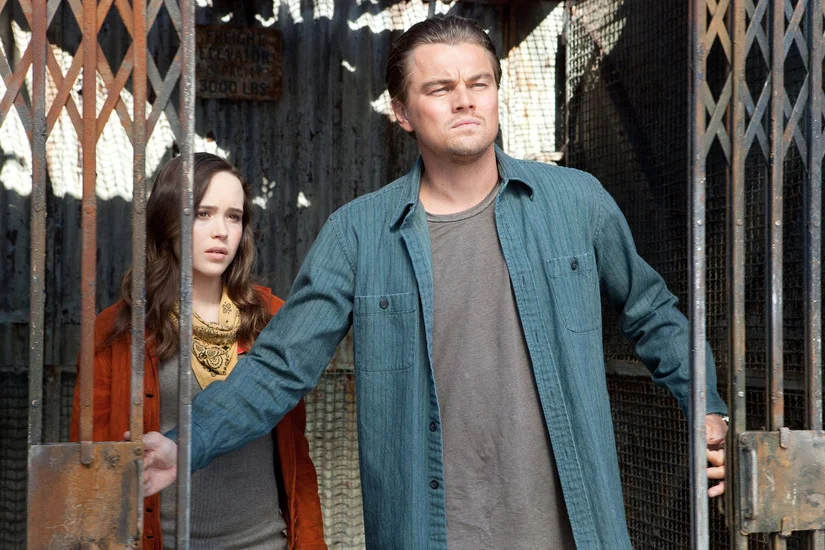

Since its release in 2010, Christopher Nolan’s Inception has inspired passionate debates, essays, and countless re-watches—all orbiting around one central mystery: what actually happens at the end? Does Cobb finally make it home to his children, or is he still trapped in a dream?
The final shot, with the infamous spinning top, cuts to black just before the audience sees it fall—or keep spinning. That visual ambiguity has fueled over a decade of speculation. But is there a definitive answer? And more importantly, what does it say about the story itself?
The Final Scene: A Quick Recap
After a high-stakes dream heist to implant an idea (or inception) into Robert Fischer’s mind, Dom Cobb (Leonardo DiCaprio) finally returns home to the United States. Cleared of criminal charges, he walks through the airport, seemingly unnoticed, and arrives at his house. Before reuniting with his children, he spins a small metal top—his totem—to test if he’s still in a dream.
In Cobb’s world, the top spins endlessly in a dream but falls in the real world. As he catches sight of his kids, his attention shifts, and the camera lingers on the top. It spins… wobbles slightly… then cuts to black. No resolution.
Was It All a Dream? The Case for “Yes”
Those who believe Cobb is still dreaming often point to the following clues:
- The Children’s Appearance: Cobb’s kids appear to be wearing the same clothes and are in the same position as in his recurring dream sequences. Critics argue this suggests he’s still trapped in a subconscious fantasy of reunion.
- No Confirmation from the Totem: The top never definitively falls. Nolan intentionally cuts away, denying the audience closure. If the point was to confirm Cobb’s return to reality, wouldn’t the film show the top falling?
- Totem Inconsistency: Some argue that Cobb’s top isn’t even his real totem. It originally belonged to his wife, Mal. If so, it wouldn’t function correctly as his guide to reality. He may never have truly known whether he was awake.
- The Limbo Theory: It’s possible that Cobb never fully escaped limbo after Mal’s death. Everything after that point could be wish-fulfillment—constructed subconsciously to give him the happy ending he couldn’t achieve in real life.
- Miles and Mal: Cobb’s father-in-law, Miles (Michael Caine), appears at the end. But earlier, he was associated with dream training and the idea of helping Cobb “come back.” Could this mean Miles is part of the dream architecture designed to soothe Cobb into letting go?
The Case for “It’s Real”
On the other side, many believe the ending takes place in the real world. Their arguments are just as compelling:
- The Top Wobbles: The top clearly begins to wobble before the cut. In dreams, it spins perfectly. This visual cue is subtle but significant. Nolan seems to imply that it will fall, confirming reality.
- Visual Differences: The lighting and setting of the final scene are distinctly different from the dream sequences. Cobb sees his children’s faces for the first time—a visual he could never conjure in dreams, where their faces were always obscured.
- Michael Caine’s Confirmation: In interviews, actor Michael Caine has said that Nolan told him any scene where his character appears is reality. Since Miles is present at the airport and homecoming, the implication is that Cobb is awake.
- Emotional Resolution: From a storytelling perspective, Cobb’s arc hinges on letting go of guilt and grief. By choosing not to watch the totem and focusing on his children, he demonstrates emotional growth. Whether the top falls or not becomes irrelevant. That thematic choice reinforces a real-world resolution.
- The Plane and Immigration Scene: The seamless passage through customs, the way the characters part ways—these events feel grounded and free of the distortions typical of dreams. Cobb doesn’t manipulate the world around him; it simply unfolds.
Nolan’s Intent: Ambiguity as a Statement
Christopher Nolan is no stranger to narrative ambiguity. From Memento to The Prestige, he’s repeatedly explored themes of perception, memory, and reality. With Inception, he intentionally left the ending open.
In interviews, Nolan has said the point of the final scene is not whether the top falls—it’s that Cobb no longer cares. By walking away from the totem, Cobb chooses to believe in his reality, regardless of whether it’s a dream. It’s a moment of acceptance, not verification.
This idea speaks to a deeper philosophical question: what defines reality? If an experience feels real, functions emotionally, and offers resolution, does it matter if it’s “real” in the objective sense?
The Totem as a Red Herring
Another interpretation is that the totem itself is a distraction. Throughout the film, characters are told never to touch or rely on someone else’s totem. Cobb’s continued use of Mal’s top breaks this rule. Some fans suggest that Cobb’s true totem is his wedding ring, which he wears only in dream sequences. Notably, in the final scene, he is not wearing it—suggesting he’s awake.
This subtle detail flips the entire ending. If the top was never reliable, then the visual focus on it becomes a clever misdirection—forcing viewers to question their assumptions while the real evidence is hidden in plain sight.
Why the Ambiguity Matters
Rather than a simple twist, the ambiguous ending reinforces the film’s central themes: control versus chaos, perception versus truth, and the emotional cost of obsession. Cobb has spent years building intricate mental mazes, haunted by regret and unable to accept reality. Whether he escapes or not is less important than the fact that he finally lets go.
That choice—to walk away from the need for certainty—mirrors the audience’s own dilemma. We’re conditioned to want clear answers. But Inception withholds them, challenging us to be comfortable with uncertainty. It’s a rare example of mainstream filmmaking treating viewers like active participants rather than passive consumers.
