
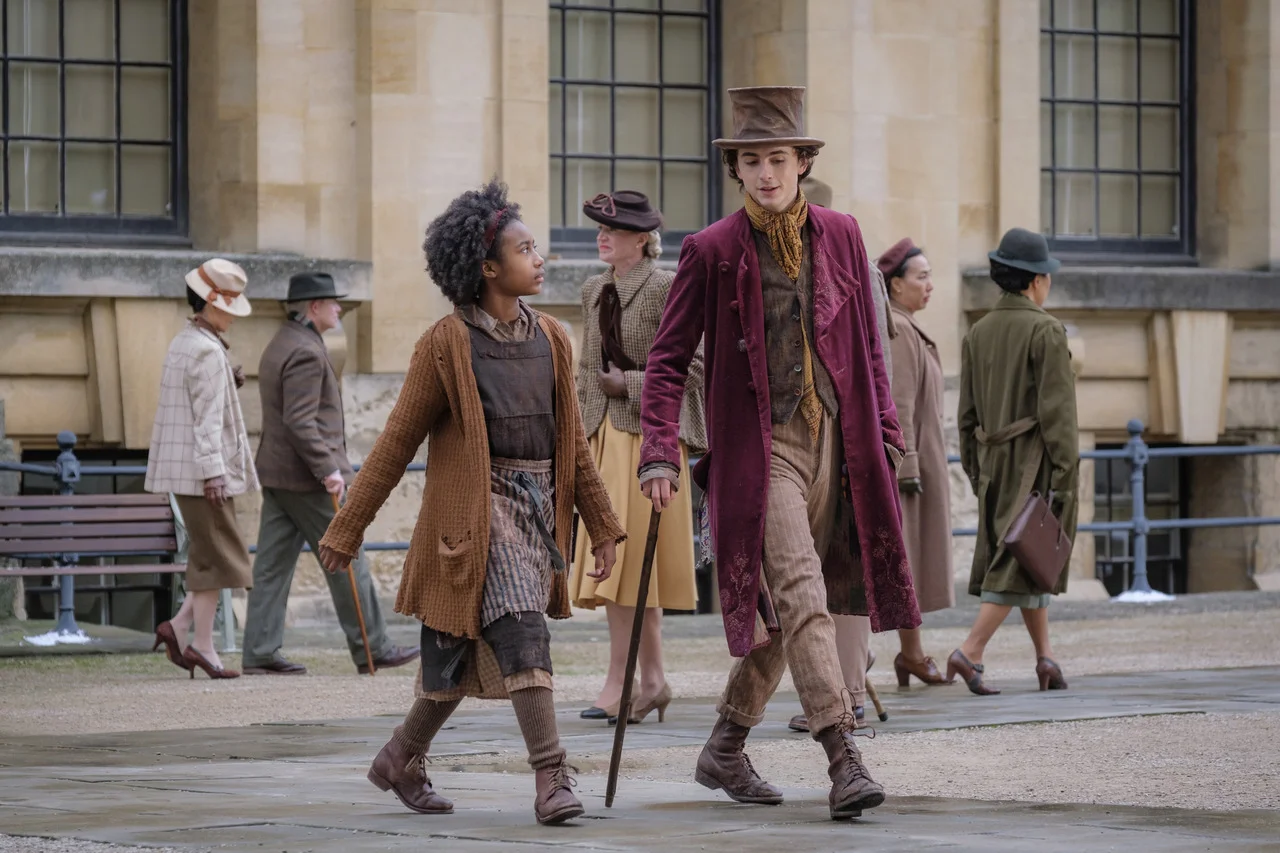

The whimsical world of Willy Wonka has always felt larger than life, filled with impossible inventions and eccentric characters. With the 2023 film presenting an origin story for the famous chocolatier, some viewers have wondered whether this tale of ambition and candy-making genius might be rooted in reality. The film’s grounded emotional tone and period setting can give the impression of historical inspiration, raising the question of where fact ends and fantasy begins.
Framing Willy Wonka (2023) as Fact or Fantasy in the World of Chocolate Making
Willy Wonka (2023) presents itself as a prequel that explores how a young dreamer became the legendary owner of the world’s most extraordinary chocolate factory. The story unfolds in a stylized European city where Wonka arrives with little money but boundless optimism, hoping to share his inventive sweets with the public. The film’s setting evokes real industrial-era confectionery traditions, with crowded markets, rival chocolatiers, and a powerful cartel controlling the trade.
Despite these grounded elements, the narrative quickly reveals a world governed by whimsical logic rather than historical realism. Musical sequences, exaggerated villains, and impossible candy creations signal that the story operates firmly in the realm of fantasy. The tone mirrors classic children’s literature more than biographical storytelling, suggesting that any resemblance to real life is atmospheric rather than factual.
The Literary Origins of Willy Wonka in Roald Dahl’s Classic Novel
The character of Willy Wonka originates from Roald Dahl’s 1964 novel Charlie and the Chocolate Factory, a work of fiction intended for children. Dahl created Wonka as an eccentric genius who combines the roles of inventor, magician, and industrialist. The original book never presents him as a real person or as someone inspired by a specific historical figure. Instead, he functions as a symbolic character representing imagination, creativity, and moral testing.
Dahl did draw loosely from his own experiences with the British chocolate industry during his school years. Students at his boarding school occasionally received experimental chocolate samples from manufacturers, including Cadbury, for feedback. This practice sparked Dahl’s childhood fantasies about secret factories and hidden recipes, which later influenced his writing. However, these memories shaped the setting rather than the character himself. Willy Wonka emerged as a purely fictional creation designed to inhabit a surreal world where ordinary rules do not apply.
How the Film Reimagines Wonka’s Early Life as Pure Fiction
The 2023 film constructs a detailed backstory for Wonka that does not exist in Dahl’s original novel. It portrays him as an orphaned young man inspired by his mother’s teachings and determined to open a chocolate shop despite exploitation and financial hardship. None of these biographical details come from historical records or known real individuals. They were invented to provide emotional grounding and narrative motivation.
The story introduces original characters who shape Wonka’s journey, including allies who help him escape servitude and villains who attempt to crush his dreams. These elements resemble classic fairy-tale structures rather than documented history. Even the obstacles he faces, such as corrupt business leaders and exaggerated punishments, are presented in a stylized manner that prioritizes drama over realism.
This fictional biography serves a narrative purpose: it transforms an already fantastical character into a relatable protagonist with a clear arc. The absence of real-life references underscores that the film is not attempting to reinterpret history but to expand a fictional universe.
The Absence of Any Real Chocolatier Behind the Character of Willy Wonka
No historical chocolatier has been identified as the basis for Willy Wonka. The character does not correspond to figures such as Milton Hershey in the United States or Joseph Fry and John Cadbury in Britain, who were pioneers of mass chocolate production. These real industrialists built factories and brands grounded in business practices, technological innovation, and philanthropy, not whimsical secrecy or fantastical inventions.
Wonka’s personality also diverges sharply from historical entrepreneurs. Real chocolate magnates operated within strict economic realities and public accountability, whereas Wonka’s factory in the broader franchise functions almost like a magical domain hidden from the outside world. His eccentric behavior, unpredictable rules, and theatrical flair align more closely with literary archetypes than with documented personalities.
The 2023 film reinforces this separation by portraying Wonka as a visionary artist rather than a business figure shaped by real-world industrial developments. His success depends on imagination and kindness rather than market forces or manufacturing breakthroughs.
Real-World Candy Industry Influences Reflected in the Film’s Setting
Although the central character is fictional, the broader environment draws inspiration from real aspects of the confectionery trade. The idea of competing chocolatiers controlling distribution channels echoes historical monopolies and guild-like structures that once dominated European commerce. Industrial cities during the late nineteenth and early twentieth centuries often had powerful business alliances that could restrict newcomers.
The film’s depiction of labor exploitation also reflects genuine historical concerns. Debt-based labor systems and harsh working conditions were common in various industries during earlier periods, including food production. By incorporating these themes, the story grounds Wonka’s struggle in recognizable social realities, even while maintaining a fantastical tone.
These influences provide texture rather than authenticity. They help the audience accept the setting as plausible without suggesting that the events themselves occurred. The result is a hybrid world that feels familiar but remains detached from specific historical timelines or locations.
Which Elements Resemble Historical European Confectionery Traditions
Certain visual details evoke authentic confectionery traditions, particularly those associated with continental Europe. Elaborate pastry displays, ornate packaging, and artisanal chocolate-making techniques reflect real cultural practices. Cities such as Brussels, Vienna, and Paris developed reputations for luxurious sweets long before mass production became dominant.
The film also portrays chocolate as both a luxury item and a symbol of comfort, mirroring its historical status. In earlier centuries, chocolate was expensive and often consumed by the upper classes, gradually becoming more accessible with industrialization. This context helps explain why a newcomer like Wonka would face resistance from established merchants guarding a profitable market.
However, the extraordinary properties of his creations—candies that defy physics or transform emotions—belong entirely to fantasy. No historical confectionery tradition includes such capabilities, reinforcing that these details are imaginative embellishments rather than references to real products or techniques.
Clearly Fictional Characters, Places, and Events Created for the Story
The supporting cast in Willy Wonka (2023) consists entirely of invented figures designed to populate the narrative. The antagonistic chocolatiers who form a cartel, the comedic authority figures, and the loyal companions who assist Wonka all follow archetypal roles common in fairy tales and musical films. None correspond to documented individuals or organizations.
The city itself remains unnamed and stylized, blending architectural influences from different European regions without committing to a specific location. This deliberate ambiguity prevents viewers from linking the story to a real place or historical moment. Major plot events, including dramatic confrontations and improbable escapes, unfold according to narrative logic rather than documented occurrences.
Even the legal and social systems depicted operate in exaggerated ways that serve the story’s tone. This further distances the film from any real-world framework and emphasizes its identity as a work of imaginative storytelling.
Final Verdict on Whether Willy Wonka (2023) Has Any Basis in Real Events
Willy Wonka (2023) is not based on a true story and has no direct connection to real historical events or individuals. The film is rooted entirely in Roald Dahl’s fictional universe, expanding on a character created for children’s literature rather than inspired by documented reality. While the setting incorporates elements reminiscent of real confectionery traditions and industrial-era commerce, these details function as atmospheric background rather than evidence of factual origin.
The narrative, characters, and central figure are products of creative invention. Any similarities to real-world industries or social conditions are broad and non-specific. The film should therefore be understood as a fantasy prequel that imagines how an iconic fictional chocolatier might have begun his journey, not as a dramatization of actual events.
