
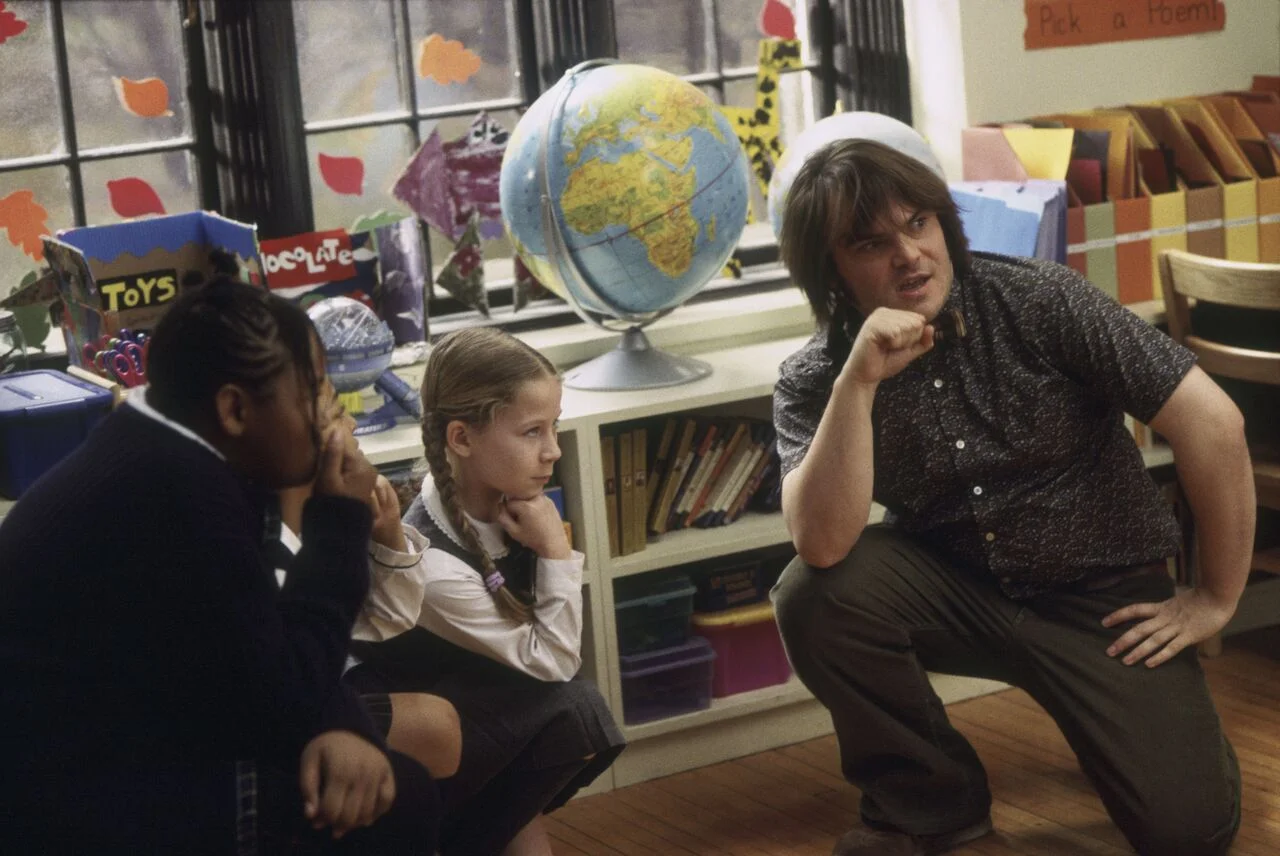

Deciding whether a comedy centered on a fake teacher and a classroom of kids is suitable for younger viewers can feel tricky. The tone is energetic and playful, but the story also involves rule-breaking, adult deception, and strong personalities. What follows is a calm look at what children actually see and experience, helping set realistic expectations without assuming every child will react the same way.
Thinking About School of Rock (2003) as a Lighthearted Music Comedy for Family Viewing
At its core, the story follows Dewey Finn, an unemployed musician who impersonates his roommate to land a substitute teaching job at a strict private school. Instead of teaching traditional subjects, he secretly trains the students to form a rock band for a competition. Most of the humor comes from his immaturity and the children’s gradual excitement as they discover music outside their rigid routine.
The overall mood is upbeat and comedic rather than tense or threatening. There are no frightening villains, disturbing imagery, or intense action scenes. Children are likely to experience it as a fun, slightly chaotic story about breaking out of boring routines.
However, the premise involves an adult lying, ignoring school rules, and manipulating authority figures. Younger viewers may not fully grasp the consequences of that deception, so adults may want to clarify that the situation is meant for comedy rather than imitation.
The Rebellious Classroom Setup That May Raise Questions About Rules and Authority
Dewey’s entire plan depends on pretending to be someone else and encouraging the students to keep secrets from their parents and principal. He dismisses homework, sneaks instruments into the classroom, and pressures the children to help him win money.
Many kids will simply see this as mischievous fun, especially because the students appear happier and more confident. But some scenes blur the line between harmless rebellion and irresponsible behavior. The children are taught to deceive adults, skip normal lessons, and prioritize a competition over school responsibilities.
This could prompt useful conversations about honesty, rules, and trust. Without context, younger children might interpret the behavior as acceptable because the story frames Dewey as likable and well-intentioned.
Jack Black’s Loud, Goofy Humor That Most Kids Will Enjoy
Jack Black’s performance relies heavily on exaggerated expressions, physical comedy, and enthusiastic shouting. He jumps on desks, performs mock rock-star poses, and reacts dramatically to even small setbacks. This broad style of humor is easy for children to understand and often sparks laughter regardless of age.
Much of the comedy comes from playful insults, silly nicknames, and over-the-top reactions rather than mean-spirited jokes. Dewey’s childish personality makes him feel closer to a mischievous older sibling than a strict adult figure, which many kids find appealing.
That said, his volume and chaotic energy can be overwhelming for very sensitive viewers. The character rarely speaks calmly, and the film maintains a high level of noise and excitement, especially during rehearsal scenes.
Mild Language and Attitude That Some Parents May Want to Consider
The dialogue includes occasional mild profanity and sarcastic remarks. While not constant or extreme, the language reflects Dewey’s frustrated personality and rock-music persona. Some jokes involve insults or dismissive comments about authority figures.
Most of the language is unlikely to shock older children, but very young viewers may pick up on phrases or tones that adults would prefer they not repeat. The humor sometimes depends on exaggerating rudeness for laughs rather than modeling polite behavior.
No explicit content is present, but Dewey’s casual attitude toward responsibility, employment, and honesty may also be worth noting. He often avoids consequences until the final portion of the story.
Positive Messages About Confidence, Teamwork, and Creativity
Despite the rebellious setup, the narrative ultimately emphasizes growth. Each child discovers talents beyond academic performance, whether through singing, songwriting, or stage presence. Students who were shy, anxious, or pressured by parents gain confidence through collaboration.
The film also highlights teamwork. The band succeeds only because every member contributes, from musicians to stage managers. This reinforces the idea that different skills are valuable, even those not traditionally praised in school settings.
Parents may appreciate how the story encourages self-expression and perseverance. It shows children learning to support one another rather than compete destructively, which provides a constructive emotional takeaway.
Performance Scenes and Rock Music Energy That Keep Children Engaged
The rehearsal sequences and final competition form the most exciting parts of the film. Loud music, colorful costumes, and energetic performances create a concert-like atmosphere that many children find captivating.
These scenes are visually dynamic but not frightening or violent. The excitement comes from music and crowd reactions rather than danger. Even younger viewers who struggle with the dialogue-heavy sections may remain engaged during these musical moments.
Because the performers are children themselves, many young viewers connect easily with them. Watching peers take center stage and succeed can feel empowering and fun.
Emotional Moments About Pressure from Parents and Expectations at School
Several students struggle with demanding parents who prioritize academic success over personal interests. One girl hides her singing talent because her parents expect perfection in other areas. Another child feels overshadowed by siblings.
These scenes introduce emotional weight that younger children may not fully understand but older ones often relate to. The tension is not frightening, yet it touches on anxiety, disappointment, and fear of letting parents down.
The resolution offers reassurance, showing families learning to appreciate their children’s individuality. This emotional arc can be meaningful, but very young viewers might lose interest during these quieter discussions.
The Age at Which the Humor, Themes, and Tone Usually Feel Most Comfortable
For many families, the experience becomes most enjoyable once children can distinguish between fictional misbehavior and real-world expectations. Kids around 8+ generally understand that Dewey’s deception is part of a story and not a model for everyday conduct. At this age, they can also appreciate the humor, music, and emotional themes without confusion.
Children younger than 7 may still enjoy the songs and physical comedy but could misunderstand the rule-breaking elements or become restless during dialogue-heavy scenes. They might need occasional explanations about why the adults in the story react as they do.
A practical minimum age for independent viewing is around 8+, when children can follow the plot, handle the mild language, and interpret the rebellious tone appropriately. Younger viewers can still watch with guidance, but they may require reassurance that the behavior shown is meant to be funny rather than instructive.
