
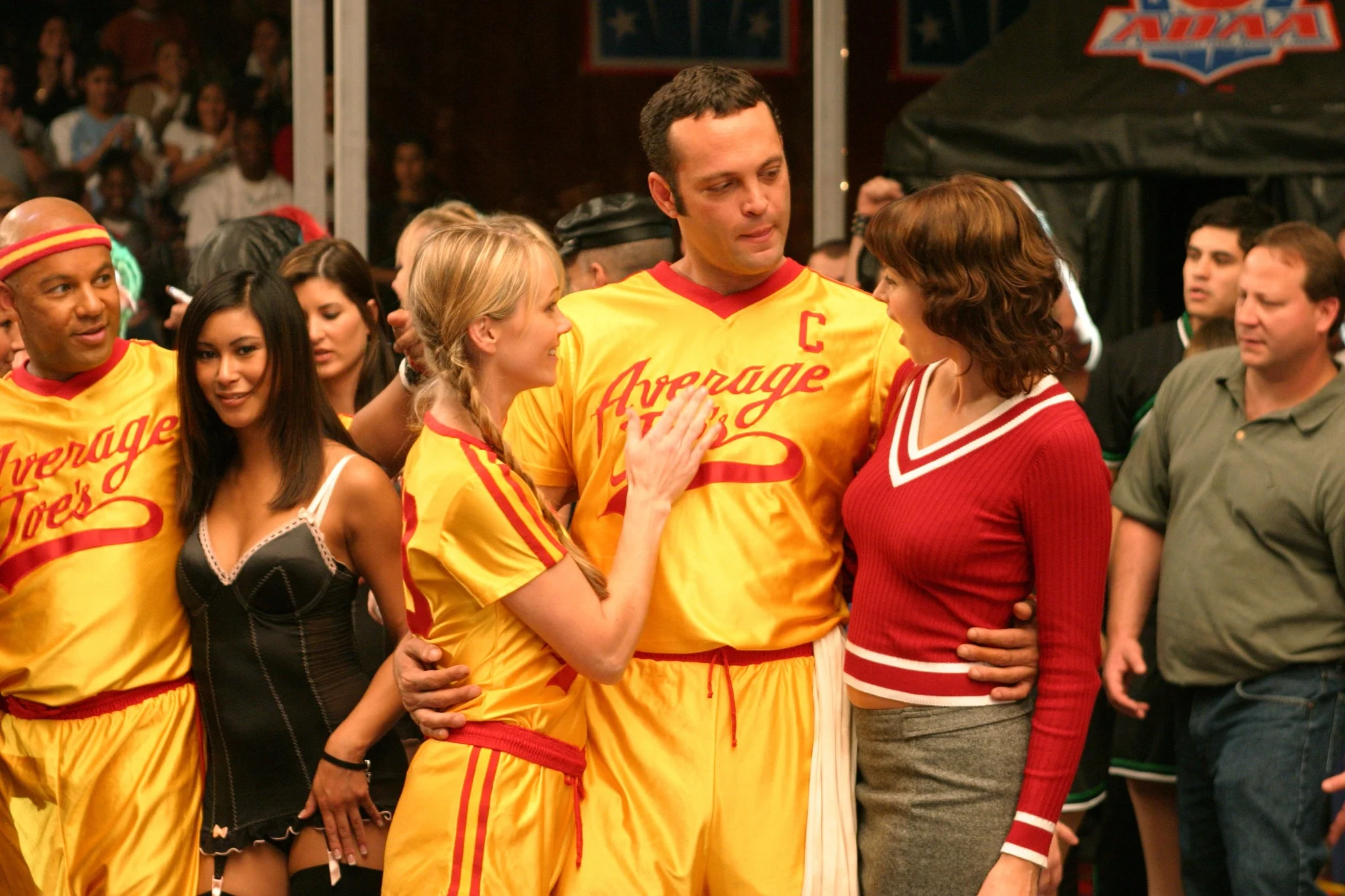

Deciding whether this kind of comedy fits a child’s age often depends less on action and more on tone. Dodgeball: A True Underdog Story looks playful on the surface, built around sports mishaps and exaggerated characters, yet much of its humor is aimed beyond a young audience.
The movie raises reasonable questions for parents who want to know how the jokes, behavior, and themes may land with children.
Setting expectations for parents about Dodgeball and younger viewers
This movie presents itself as a loud, fast-paced comedy that rarely pauses for emotional depth. From the opening scenes, it establishes a sarcastic, mocking style where exaggeration is the main source of humor. Children watching it are likely to notice the constant joking and physical chaos before anything else.
At the same time, the humor assumes a certain level of social awareness. Many jokes rely on irony, adult references, or intentionally rude behavior being framed as funny. For parents, this means the experience is less about intensity or fear and more about how children interpret what they see and hear.
The comedic tone and exaggerated style kids are likely to notice
The tone throughout the movie is intentionally over-the-top. Characters are exaggerated versions of stereotypes, and their actions are designed to be ridiculous rather than realistic. This can feel cartoonish to kids, making the story easier to follow on a surface level.
However, the comedy often comes from arrogance, insults, and humiliation. Children may laugh at the silliness without fully understanding the satire behind it. Younger viewers, in particular, may take the behavior at face value rather than recognizing it as parody.
Physical humor, sports action, and how rough the on-screen antics feel
Most of the physical action involves dodgeball matches, pratfalls, and exaggerated injuries. Characters are hit with balls, knocked over, or left temporarily stunned, but there is no blood or lasting harm shown. The violence is slapstick in nature and clearly played for laughs.
For many children, this kind of physical comedy feels similar to cartoons where characters bounce back instantly. Still, the movie repeatedly treats physical pain as a joke, which may be uncomfortable for parents who prefer gentler humor. The roughness is constant, even if it is unrealistic.
Insults, crude jokes, and language that may stand out to children
One of the most noticeable elements for parents is the frequent use of insults. Characters mock each other’s appearance, intelligence, and worth, often in ways meant to provoke laughter. While strong profanity is limited, the tone of the dialogue is consistently sharp and dismissive.
Children are likely to notice the attitude as much as the words themselves. The humor often rewards characters for being cruel or sarcastic, which can normalize teasing if taken without context. This is less about specific vocabulary and more about repeated exposure to disrespectful behavior.
Sexual humor and suggestive moments that may require explanation
The movie includes recurring sexual innuendo and suggestive jokes. These moments are not explicit, but they are clearly designed for adult viewers. References to bodies, attraction, and exaggerated masculinity appear throughout the film.
Younger children may not fully understand these jokes, but they may still sense that something inappropriate is being implied. Older kids and early teens are more likely to recognize the meaning, which can lead to awkward moments or questions during viewing. These scenes are brief but frequent enough to be noticeable.
Themes of competition, teasing, and bullying within the story
At its core, Dodgeball is an underdog competition story, but it frames victory through ridicule and revenge as much as perseverance. The antagonist relies heavily on bullying tactics, while the heroes often respond with similar mockery once they gain confidence.
For children, the takeaway may be mixed. While the story celebrates standing up to arrogance, it does not clearly separate confidence from cruelty. Teasing and humiliation are treated as acceptable tools, which may require discussion to help kids understand the difference between comedy and real-life behavior.
Aspects that some kids may find funny or entertaining
Despite its concerns, there are elements that children may genuinely enjoy. The fast pace, bright visuals, and exaggerated sports sequences can be entertaining, especially for kids who like physical comedy. The simple underdog setup is easy to follow, even if many jokes go over their heads.
Some children may also enjoy the team dynamic and the idea of unlikely characters coming together for a shared goal. These lighter aspects can make parts of the movie feel fun and accessible, particularly to older kids who are already familiar with sarcastic humor.
How the movie may land differently when watched by kids versus adults
Adults often view Dodgeball as a parody of sports movies and fitness culture, picking up on the irony and exaggerated satire. Children, by contrast, tend to focus on what is directly shown: insults, physical gags, and competitive behavior.
This difference can create a gap in how the movie is experienced during family viewing. Adults may laugh at the absurdity, while kids may imitate lines or behaviors without understanding their context. Watching together can work better when adults are prepared to explain why the humor is intentionally exaggerated.
A realistic age range where the movie tends to work best
Based on its tone, language, and recurring sexual innuendo, Dodgeball: A True Underdog Story tends to be more appropriate for older kids rather than younger ones. While some children under 12 may laugh at the physical comedy, the frequent insults and suggestive jokes are better suited to viewers who can recognize parody.
In practical terms, the movie works best for ages 13 to 14 and up, when kids are more able to separate exaggerated comedy from acceptable behavior. For children younger than that, the humor and attitudes may be confusing or inappropriate without adult guidance.
