
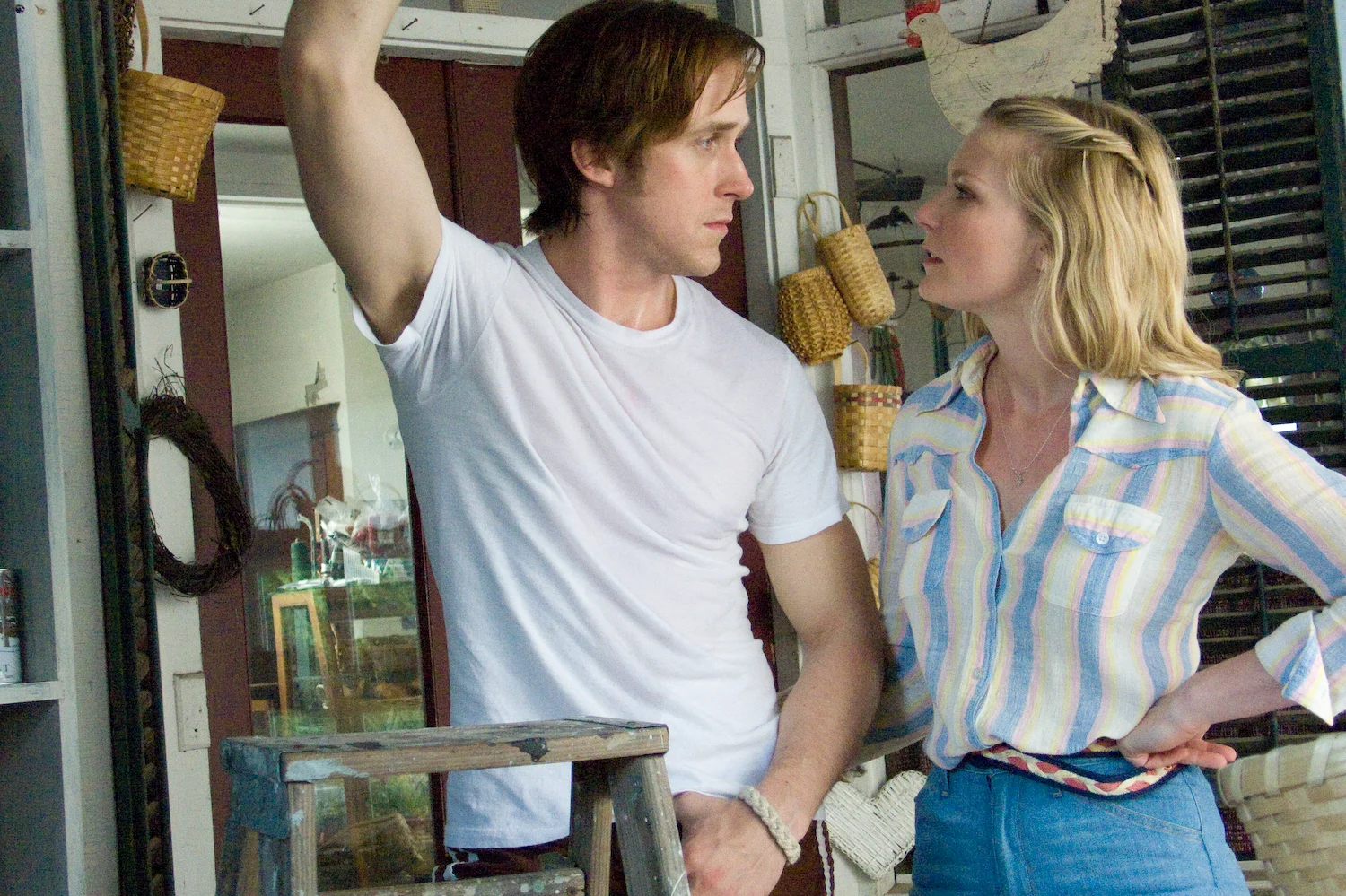

The 2010 film All Good Things has long prompted questions about how closely its unsettling story mirrors real life. Viewers quickly notice parallels to a famous missing-person case and a wealthy, secretive family, which makes the line between invention and reality feel intentionally blurred. The film draws from documented events, but it also reshapes them in ways that complicate any simple claim of truth or fiction.
How All Good Things positions itself between fictional drama and real-life inspiration
All Good Things presents itself as a fictional narrative while openly borrowing from real events that were already well known when the film was released. It does not claim to be a factual account, and its characters carry different names from their real-life counterparts. At the same time, the structure of the story, its central disappearance, and the background of its main character are clearly modeled on an actual case that had remained unresolved for decades.
The film uses this approach to create distance from the legal and ethical constraints of a true-crime retelling. By framing the story as a dramatized interpretation, the filmmakers were able to combine verified elements with imagined scenes and compressed timelines. This positioning allows the story to reflect the emotional and psychological dimensions of the real events without asserting that everything shown on screen happened exactly as depicted.
The real disappearance that inspired the story told in All Good Things
At the core of the film’s premise is the disappearance of a young woman married to a wealthy real estate heir. This storyline is inspired by the real-life disappearance of Kathie Durst, who vanished in January 1982. Kathie Durst was married to Robert Durst, a member of a prominent New York real estate family, and was last seen after an argument with her husband.
Despite extensive searches and investigations, her body was never found, and no criminal charges were filed in connection with her disappearance for many years. The case drew sustained media attention because of the Durst family’s wealth, influence, and perceived lack of cooperation with authorities. These circumstances form the backbone of the film’s central mystery, though the on-screen version simplifies and reshapes key details.
Robert Durst and the real-life background behind David Marks
David Marks, the protagonist of All Good Things, is closely modeled on Robert Durst, though the film avoids using his real name. Like Marks, Durst grew up in a powerful real estate family and had a strained relationship with his father. Both figures were described by acquaintances as socially withdrawn and emotionally distant, traits that the film emphasizes heavily.
Robert Durst’s life included several events that later became central to public scrutiny. In addition to his wife’s disappearance, he was linked to the killing of his neighbor Morris Black in Texas in 2001, a case in which Durst admitted to dismembering the body but claimed self-defense. These elements inform the darker aspects of David Marks’s character, even when the film rearranges or fictionalizes specific actions.
Parallels between Kathie Durst’s disappearance and the film’s central mystery
The film’s depiction of the wife’s disappearance mirrors several aspects of Kathie Durst’s case. Both women vanish suddenly after marital tension, and in both situations, the husband provides shifting or incomplete accounts of his wife’s last known movements. The lack of physical evidence and the passage of time also play similar roles in obstructing legal resolution.
However, the film introduces moments of implied violence and near-confession that were never established in the real case. While investigators suspected Robert Durst for years, no definitive proof linked him to his wife’s disappearance. The film’s narrative leans more heavily on suggestion and psychological implication than the historical record allows.
Key story elements that closely reflect documented events and investigations
Several elements of All Good Things align closely with public records and reporting. The strained marriage, the wife’s medical studies, and the family’s vast real estate holdings all reflect real circumstances. The portrayal of law enforcement frustration, including stalled investigations and limited cooperation, also matches what has been publicly documented about the Kathie Durst case.
The film’s depiction of later scrutiny, including renewed interest years after the disappearance, echoes how the real case resurfaced periodically through media attention and legal proceedings. These shared elements ground the story in recognizable reality, even when the film departs from factual precision.
Characters, timelines, and incidents altered or invented for the film’s narrative
To create a coherent dramatic arc, All Good Things alters timelines and invents interactions that have no confirmed real-life equivalents. Events separated by many years are presented as closely connected, and certain confrontations are imagined rather than drawn from documented testimony. Secondary characters are also composites, designed to represent broader social or investigative pressures rather than specific individuals.
The film further dramatizes the emotional dynamics of the marriage, often implying motives or actions that were never proven. These changes are typical of narrative filmmaking, where clarity and tension take precedence over strict adherence to the historical record.
How much of All Good Things aligns with known facts versus dramatic interpretation
All Good Things aligns with known facts in its broad outline rather than its specific claims. The existence of a powerful family, a missing spouse, and decades of unanswered questions are all real. Where the film diverges is in assigning clear psychological motivations and suggesting definitive responsibility.
Much of what remains unresolved in real life is given a more concrete shape on screen. This does not mean the film contradicts known facts, but it does go beyond them, filling gaps with interpretation rather than evidence. The distinction between what is known and what is imagined is essential when evaluating the film’s relationship to reality.
Final assessment of whether All Good Things is based on a true story
All Good Things is best understood as a fictional drama inspired by real events rather than a direct retelling of a true story. It draws heavily from the disappearance of Kathie Durst and the life of Robert Durst, using those elements as a foundation for a narrative shaped by speculation and artistic license. While many aspects reflect documented circumstances, the film ultimately presents an interpretation rather than a factual account, leaving the unresolved nature of the real case intact.
