
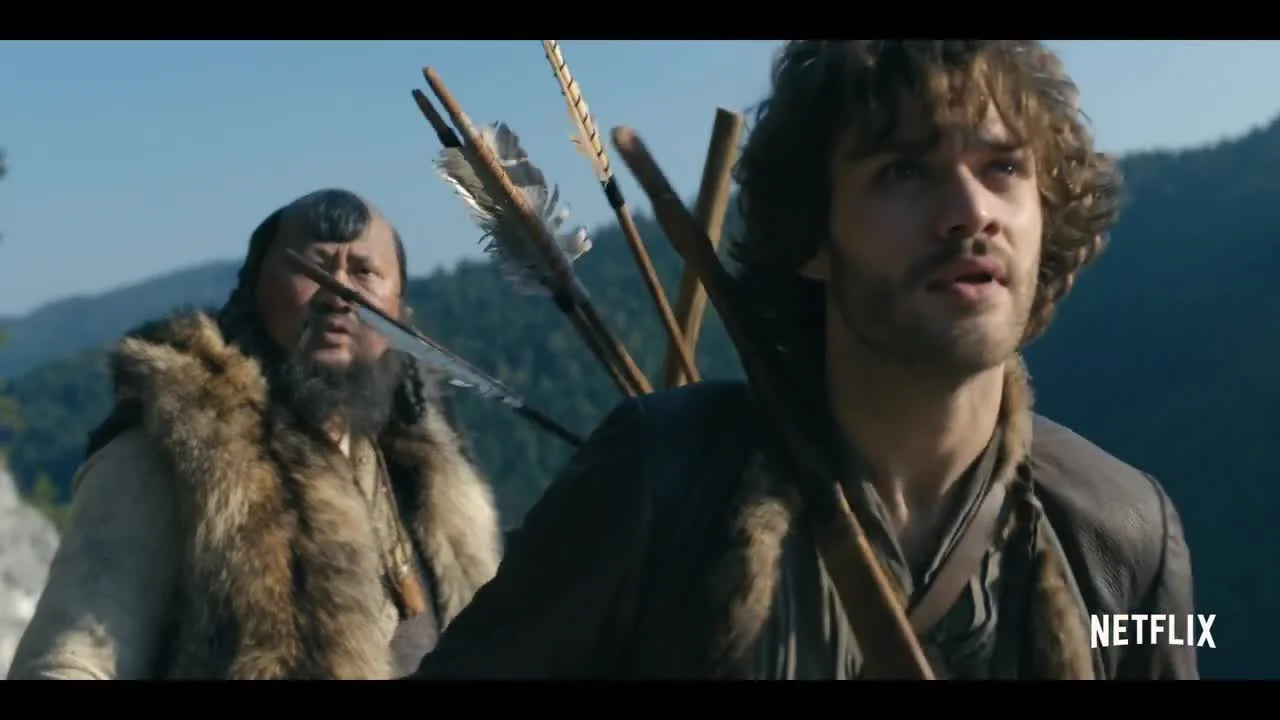

For years after its second season aired, Marco Polo continued to prompt questions about whether its story was truly finished or simply paused.
The series ended without a traditional wrap-up, and time passing without updates has only added to the uncertainty for some viewers. At the same time, Netflix made a clear decision early on that reshaped the show’s future and left its long-term plans unrealized.
The status of Marco Polo after two seasons and why the question still comes up
Marco Polo ran for two seasons on Netflix before coming to an abrupt stop. Although the platform officially ended the series in 2016, the question of a third season continues to surface because the story itself was not designed to conclude where it did. Major historical conflicts and character arcs were still in motion when the second season ended.
The ongoing curiosity is also fueled by the ambition behind the project. Marco Polo was conceived as a large-scale historical epic, and its scope suggested a longer lifespan than two seasons. That contrast between intention and outcome is why the series is still discussed years after its cancellation.
Netflix’s 2016 announcement that formally ended the series
In December 2016, Netflix publicly confirmed that Marco Polo would not continue beyond its second season. The announcement made it clear that the decision was final, with no indication of a pause, retooling, or future continuation. At the time, this marked the first instance of a Netflix original series ending before reaching a third season.
The announcement came shortly after the release of Season 2, leaving little room for interpretation. Netflix did not frame the decision as temporary or conditional, which set expectations firmly and immediately for both the creative team and the audience.
The reasoning Netflix shared publicly when confirming the cancellation
Netflix’s explanation centered on performance relative to investment. While the series attracted attention for its production values and historical ambition, it did not meet internal expectations in terms of return. Reports at the time indicated that the costs associated with producing the show were exceptionally high compared to its viewership impact.
The decision was not presented as a creative disagreement or a response to critical reception alone. Instead, Netflix framed it as a business choice tied to sustainability, signaling that continuing the series did not align with the platform’s broader strategy.
How the story concluded at the end of Season 2
Season 2 of Marco Polo ends with the political landscape in flux rather than resolved. Kublai Khan remains in power but faces growing internal and external pressures. Marco himself is still positioned as an intermediary figure, navigating loyalty, survival, and shifting alliances.
Key conflicts, including tensions between rival factions and the future direction of the empire, are left open. The season finale functions more as a stopping point than a conclusion, with narrative momentum clearly aimed forward rather than inward toward closure. No final resolution is offered for Marco’s personal arc or the broader historical trajectory the series was building toward.
The longer narrative arc creator John Fusco had planned before the decision
Creator John Fusco had spoken openly about envisioning Marco Polo as a multi-season story, reportedly mapped out across five seasons. This structure was meant to follow Marco’s journey through increasingly complex political and cultural conflicts as history unfolded.
Those long-term plans were never realized on screen. While some groundwork for future developments can be seen in Season 2, the cancellation meant that intended story beats, character evolutions, and historical events remained unexplored. These plans exist only as context, not as an indication of future production.
The role production scale and costs played in stopping further seasons
Marco Polo was one of Netflix’s most expensive early original productions. Large international sets, extensive location shoots, elaborate costumes, and a sizable cast contributed to its scale. That ambition was part of what defined the series visually, but it also made continuation difficult once performance expectations were not met.
Reports following the cancellation pointed to the show’s cost as a decisive factor. While Netflix did not release detailed financial figures, the consistent emphasis on expense in industry reporting aligns with how the platform explained its decision at the time.
Why Marco Polo has seen no continuation or follow-up since its cancellation
Since its cancellation, Marco Polo has not been revisited in any official capacity. There have been no revival discussions, spin-off announcements, or indications of renewed interest from Netflix or another platform. The lack of follow-up reflects both the finality of the original decision and the practical challenges of restarting such a large-scale production.
Narratively, the series leaves room for continuation, but production reality outweighs that possibility. Without active support from the original platform or a shift in ownership, the story remains where it ended in Season 2. As things stand, there are no confirmed plans to extend Marco Polo beyond the two seasons already released.
