
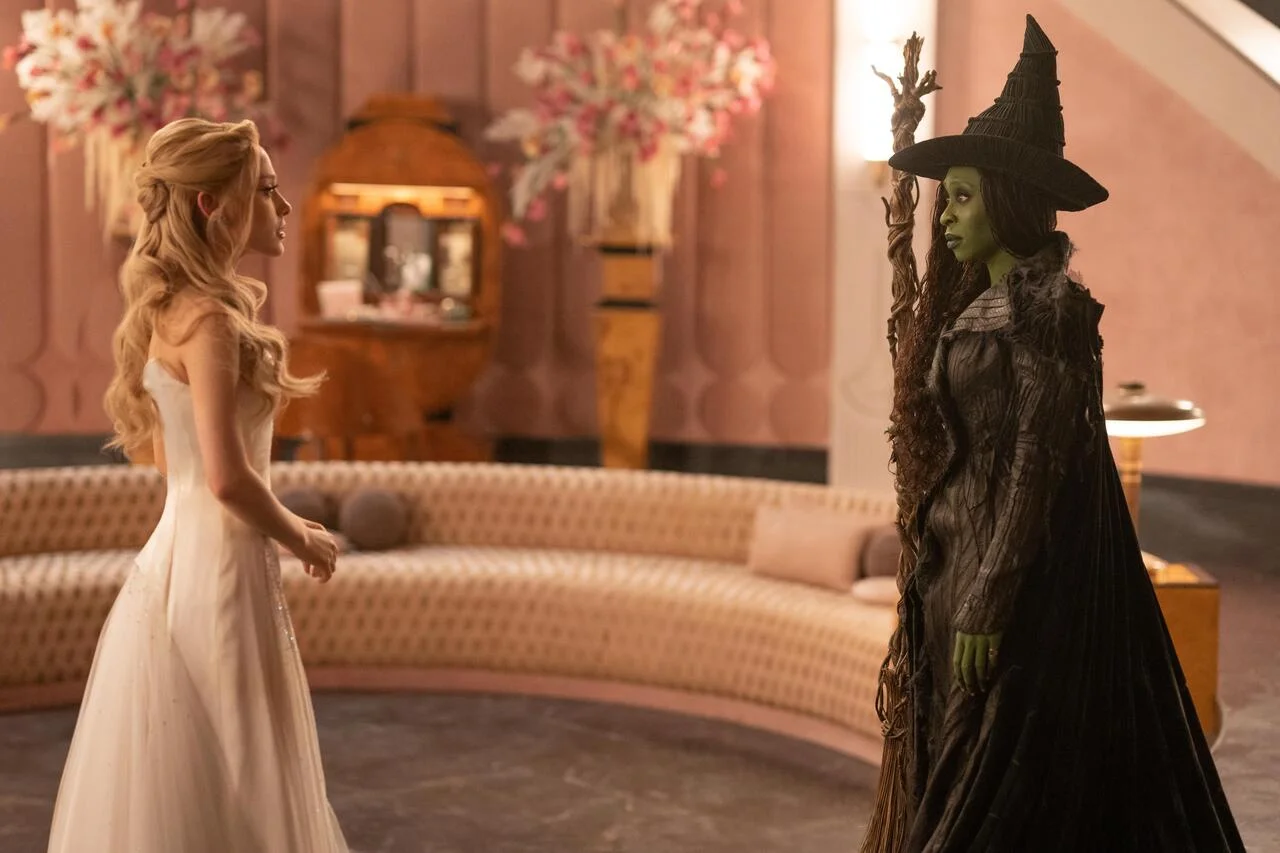

Parents considering Wicked: For Good (2025) for family viewing may remember the colorful fantasy and music of the first film while wondering how much darker the continuation becomes.
This chapter follows characters already facing serious consequences, which gives the story a more emotional tone even though it remains rooted in a magical world.
Watching Wicked: For Good (2025) Together as a Family Sequel to the First Film
As the second half of a continuous story, this film assumes familiarity with the characters and events established earlier. Children who enjoyed the first installment will recognize Elphaba, Glinda, and the setting of Oz, which can make the experience feel welcoming rather than confusing. However, the narrative begins at a point where tensions are already high, and the atmosphere is less playful than before.
Younger viewers who did not see the previous film may struggle to understand relationships and motivations, since the sequel does not reset the story. Emotional conflicts, shifting alliances, and consequences from earlier choices are central to the plot. Watching the films in order makes the themes easier to follow and reduces the risk of confusion or disengagement.
Familiar Songs, Fantasy Settings, and Visual Spectacle That Many Kids Will Enjoy
The musical format remains one of the most accessible elements for children. Large-scale songs, elaborate costumes, and imaginative locations provide visual excitement even when the story becomes serious. Bright colors, flying sequences, and magical effects create a sense of wonder that can hold attention across age groups.
These musical moments often lighten the mood between heavier scenes. Children who enjoy singing along or watching performance-based storytelling are likely to stay engaged during these sequences. The fantasy world of Oz also provides a buffer from real-life fear, since the conflicts occur in a clearly fictional environment.
For many kids, these visually rich scenes are the highlight of the experience and help balance the more dramatic aspects of the story.
Darker Turns in Elphaba’s Story That May Feel Intense for Younger Viewers
This installment focuses heavily on Elphaba’s transformation into the figure known as the Wicked Witch. Her growing isolation, public rejection, and fear-driven reputation create a somber tone at times. Scenes showing her being hunted or misunderstood may feel emotionally heavy for children who are sensitive to loneliness or unfair treatment.
While the film does not rely on graphic imagery, the sense of danger surrounding her character is constant. Some moments depict hostility from crowds or authority figures, which can be unsettling because the threat comes from people rather than monsters. Younger children may find these scenes upsetting even though they are not visually frightening.
Themes of Friendship, Betrayal, and Public Fear That Require Emotional Maturity
A central thread involves the strained friendship between Elphaba and Glinda. Their relationship evolves as they choose different paths, leading to moments of disagreement, distance, and emotional conflict. Children may notice the sadness of two close friends drifting apart without fully understanding the social pressures behind it.
The story also deals with how fear can shape public opinion. Characters are judged based on rumors and appearances, which introduces ideas about prejudice and manipulation. These themes are meaningful but can be complex, especially for younger viewers who tend to see situations in simpler terms of right and wrong.
Magical Confrontations and Menacing Moments Without Graphic Violence
Conflict is expressed primarily through magical duels, threatening displays of power, and tense standoffs. Flying creatures, sudden bursts of magic, and collapsing structures may startle sensitive children, but the film avoids graphic injury or realistic violence. The emphasis is on spectacle rather than physical harm.
Villainous figures may appear intimidating due to costume design, lighting, or voice effects. These moments are designed to feel dramatic rather than terrifying, yet very young viewers could still find them overwhelming. Parents familiar with how their child reacts to fantasy villains will have a good sense of whether these scenes are manageable.
Political Overtones and Moral Questions That Younger Children May Not Fully Understand
The story incorporates ideas about power, propaganda, and control over society. Leaders manipulate information, and characters must decide whether to follow authority or challenge it. These elements unfold through dialogue-heavy scenes that may seem slow or confusing to children focused mainly on action or music.
Older kids may begin to grasp the moral dilemmas, while younger ones might simply perceive that “people are arguing” without understanding the stakes. The film does not pause to explain these concepts in simple terms, which can lead to disengagement for viewers not ready for abstract ideas.
Romantic Elements and Character Relationships That Skew Toward Older Kids
Romantic tension between characters continues from the first film and plays a noticeable role in the story. Scenes involving jealousy, emotional longing, or complicated choices may not resonate strongly with younger children. Physical affection is mild, limited to gestures such as hugging or brief kissing, but the emotional content is more prominent than the visuals.
Preteens and teens are more likely to understand why these relationships matter to the characters. Younger viewers may simply see these scenes as interruptions between musical numbers or action.
Length and Dramatic Tone That May Test Short Attention Spans
The film’s runtime is substantial, and the pacing alternates between energetic musical sequences and extended dramatic scenes. Children who prefer fast-moving stories may become restless during slower sections focused on dialogue or character reflection.
Unlike animated features designed for younger audiences, the film does not constantly reintroduce excitement to maintain attention. Patience is rewarded with emotional payoff later, but some children may struggle to stay engaged long enough to reach that point.
Positive Messages About Empathy, Identity, and Standing Up for Others
Despite the darker tone, the story emphasizes compassion, courage, and the importance of understanding those who are different. Elphaba’s journey encourages viewers to consider how appearances can mislead and how kindness can exist even in misunderstood individuals. These messages are clear and constructive for children capable of processing them.
Moments of loyalty, sacrifice, and self-acceptance offer reassurance after the tension. The film ultimately portrays empathy as a strength rather than a weakness, providing a thoughtful conclusion to the characters’ arcs.
The Age Where Wicked: For Good Usually Feels Moving Rather Than Overwhelming
For most families, Wicked: For Good (2025) tends to work best for children around 10+. At this age, viewers can follow the emotional storyline, handle the darker themes without distress, and remain engaged during longer dialogue scenes.
Younger children may enjoy the songs and visuals but could feel confused by the complex relationships or unsettled by the more serious tone. Kids under 8 are likely to lose focus or become uneasy during intense moments, while preteens and older audiences can experience the story as intended with little difficulty.
