
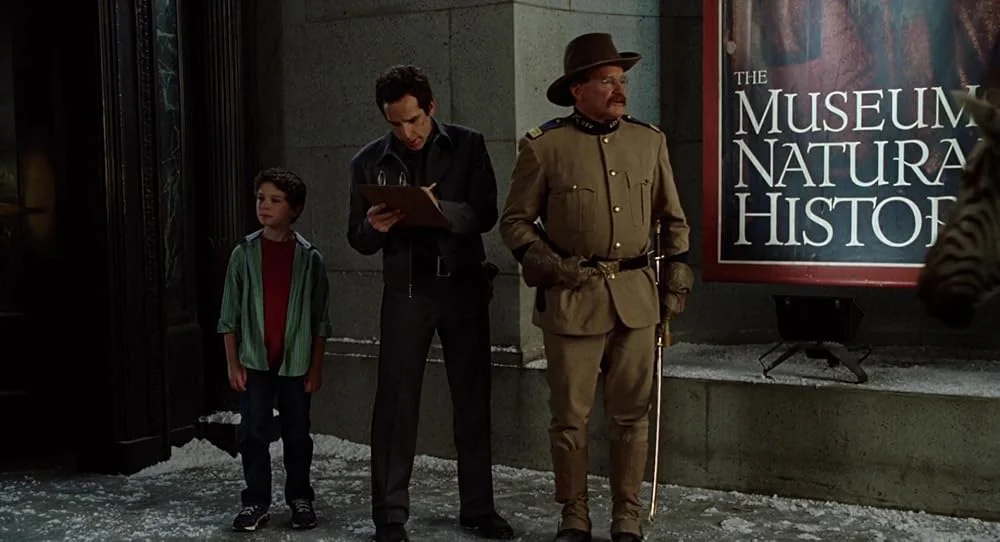

A parent considering Night at the Museum (2006) for family movie time might notice that its premise—museum exhibits coming to life overnight—blends fantasy adventure with light comedy.
The film was designed to be broadly family-friendly, but it still includes moments of tension, fast-paced chaos, and humor that younger children may not fully grasp. Looking closely at how the story presents its action, jokes, and themes can help clarify what children are likely to experience while watching.
Watching Night at the Museum (2006) with kids and the kind of adventure-comedy it delivers
Night at the Museum follows Larry Daley, a struggling father who takes a night security job at the American Museum of Natural History. On his first shift, he discovers that the museum’s exhibits magically come to life after dark. Dinosaurs, historical figures, animals, and miniature armies begin moving through the halls, turning the quiet museum into a lively and chaotic environment.
For children, the overall tone of the story feels playful rather than threatening. Much of the comedy comes from Larry trying to manage the unexpected behavior of animated exhibits, such as a mischievous monkey stealing his keys or historical characters arguing with each other. The story keeps a light, energetic pace, and most scenes are meant to entertain rather than frighten.
Parents might notice that the film mixes slapstick humor with fantasy adventure. There are moments of confusion and noisy chaos when multiple exhibits start running through the museum at once, but the tone remains colorful and comedic rather than intense. Most children respond to the lively atmosphere and imaginative setting, especially if they enjoy stories about magical objects or museums.
The museum exhibits coming to life and how the fantasy concept feels for younger viewers
The central idea of Night at the Museum—that historical displays become alive at night—can feel exciting and surprising for children. The film shows a wide range of exhibits waking up, including a Tyrannosaurus skeleton, Roman soldiers, cowboys, and even a giant Easter Island head.
For many kids, this concept sparks curiosity and wonder. Seeing famous historical figures interact with each other in humorous ways can feel imaginative and playful. The dinosaur skeleton, for example, behaves like a friendly dog rather than a frightening creature, which keeps the tone light.
However, very young children might briefly feel uneasy during the first moments when the exhibits suddenly start moving. Larry initially panics as he realizes the museum is alive, and the sudden activity in the dark halls may surprise younger viewers who are sensitive to unexpected movement or loud sounds.
In practice, the film quickly shifts from surprise to humor. Once the idea is established, the exhibits behave in silly and exaggerated ways that reassure viewers that the situation is meant to be fun rather than dangerous.
Playful chaos between historical figures and animals that many kids find funny
Much of the film’s humor comes from the interactions between animated exhibits. Historical characters like Theodore Roosevelt, played with friendly enthusiasm, interact with miniature soldiers, cowboys, and Roman gladiators. At the same time, animals such as monkeys and prehistoric creatures create playful chaos around the museum.
Children often enjoy the physical comedy in these scenes. Characters run through exhibits, objects fall over, and animals behave in mischievous ways. The monkey repeatedly causing trouble for Larry is one of the film’s most memorable running jokes.
The chaos stays firmly in the realm of cartoon-like comedy. Although characters occasionally argue or chase each other, the tone is exaggerated and humorous rather than aggressive. This style of humor tends to work well for kids who enjoy lively visual comedy.
At the same time, some jokes depend on recognizing historical references or character personalities. Younger viewers may laugh at the action and movement but might not fully understand why certain characters behave the way they do.
Mild action scenes and chases that create excitement without strong violence
Several scenes involve running, chasing, or minor confrontations between characters. Larry sometimes has to stop the exhibits from escaping the museum or prevent conflicts between rival groups such as the cowboys and Roman soldiers.
These sequences are energetic but not violent in a realistic sense. Most action is presented as slapstick or playful competition. Characters may bump into objects or knock things over, but injuries are not shown and the mood remains light.
Children usually interpret these moments as exciting rather than frightening. The action sequences are brief and often followed by comedic reactions from Larry or the exhibits. Even when tension rises, the film quickly returns to humor.
Parents who are sensitive to depictions of conflict may notice occasional shouting or physical scuffling between characters, but the presentation stays firmly within the tone of a family-friendly adventure.
Moments of tension with mischievous exhibits that could briefly startle sensitive viewers
Although Night at the Museum is largely comedic, a few moments may feel slightly intense for very young children. When Larry first discovers the exhibits moving, the museum’s dark hallways and sudden activity create a sense of surprise.
Certain characters, such as the miniature soldiers or the mischievous monkey, occasionally cause trouble that leads to chaotic situations. In one scene, Larry struggles to regain control as multiple exhibits run through the museum at once.
These moments are short and quickly balanced by humor. The characters are rarely presented as truly threatening. Even the dinosaur skeleton behaves in a playful way that softens any potential fear.
Children who are sensitive to loud sounds or sudden surprises may react briefly during these scenes, but the overall tone remains friendly and reassuring.
Larry’s role as a father and the family themes woven into the story
A central part of the story focuses on Larry’s relationship with his young son. At the beginning of the film, Larry feels uncertain about his role as a parent and struggles to prove that he can succeed in life. Taking the night guard job becomes part of his effort to rebuild confidence and stability.
Throughout the story, Larry learns to take responsibility and show determination even when the situation becomes chaotic. His growing confidence is reflected in how he manages the museum and earns the respect of the exhibits.
Children watching the film may notice that the story emphasizes perseverance and believing in oneself. The relationship between Larry and his son adds an emotional layer that many families appreciate during shared viewing.
These themes are presented simply and clearly, making them easy for children to understand without becoming overly dramatic.
Humor based on history and character quirks that older kids may appreciate more
Many jokes in the film come from the personalities of historical figures. Theodore Roosevelt behaves like a charismatic leader, while miniature soldiers treat their tiny battles with great seriousness.
Older children who recognize historical characters or understand the jokes about leadership, rivalry, or teamwork may find these moments especially funny. The dialogue occasionally relies on wordplay or historical references that younger viewers might miss.
Younger kids often respond more to the visual humor, such as characters running through exhibits or the dinosaur skeleton chasing objects like a pet.
Because the film combines both visual comedy and character-based humor, children of different ages may enjoy different parts of the story.
The age where most children comfortably enjoy the adventure and humor in Night at the Museum (2006)
Night at the Museum generally works best for children who are old enough to follow the story’s fantasy premise and appreciate its mix of adventure and humor. Kids around 6+ usually handle the magical museum concept and playful chaos without difficulty, especially if they already enjoy imaginative adventure stories.
Younger children may still enjoy certain scenes, particularly the dinosaur skeleton or the lively animal characters, but the pacing and occasional moments of tension in the dark museum could feel confusing or briefly startling for very small viewers. Children in the 7–10 range often respond most positively because they can follow the story, recognize the characters, and enjoy the humor.
For most families, a practical viewing age for Night at the Museum is around 6+, as children at that age typically understand the fantasy elements and find the adventure entertaining rather than overwhelming.
