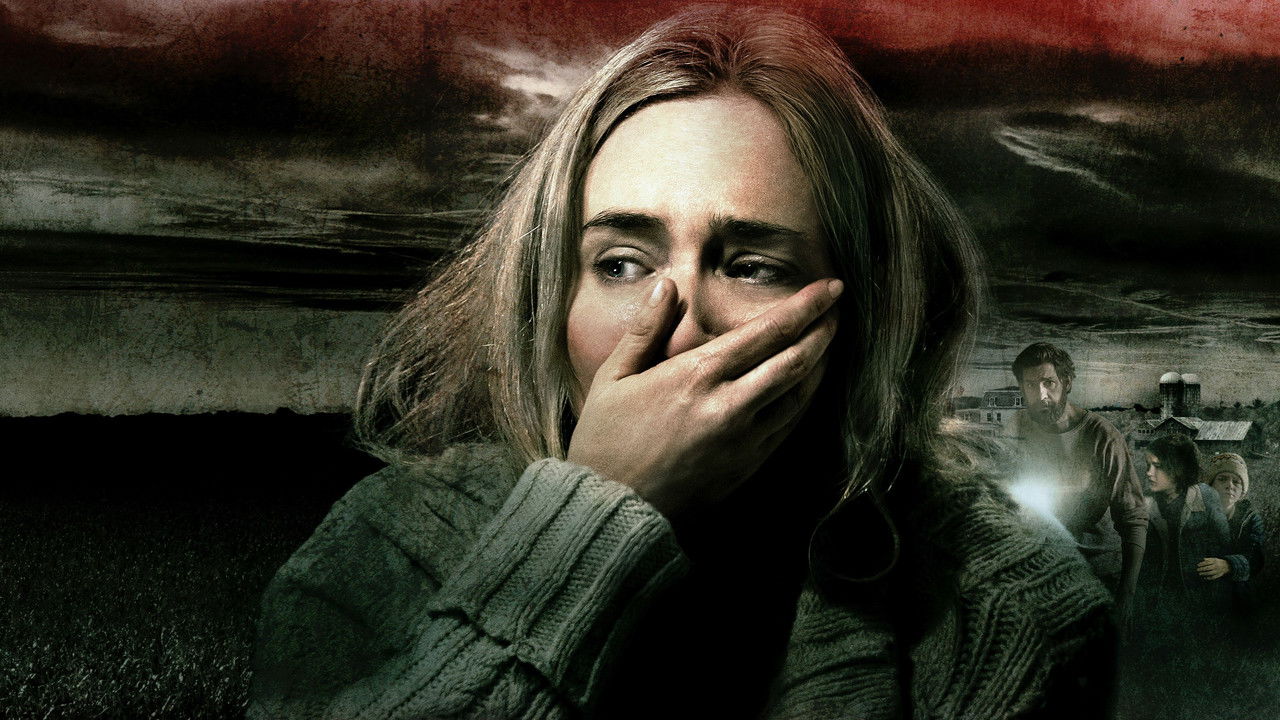

A Quiet Place makes its creatures feel more than like monsters in a survival thriller. They are the force that defines the Abbott family’s every movement, but they also work as a story device that turns ordinary family life into a test of discipline, grief, and sacrifice.
Their “hidden meaning” comes from how the film uses them: the creatures are not just predators that hunt by sound, they are the reason each character’s choices matter so much. By following what the Abbotts lose, protect, and finally learn to weaponize, the film turns its monsters into a visual and emotional shorthand for the cost of survival.
Sound as the film’s first rule
The creatures’ basic function is clear from the opening stretch of the film: any noise can draw them in, and once they hear it, they attack instantly. That simple rule shapes every scene and forces the Abbotts into a life of total caution. The family communicates in sign language, walks barefoot, and surrounds itself with soft surfaces that reduce accidental noise. The creatures matter because they make silence feel physical, almost like a character the family must live alongside.
That rule also gives the film its tension. Instead of depending on random scares, A Quiet Place builds suspense out of the possibility of a mistake: a dropped toy, a squeaky floorboard, a cry too loud to suppress. The monsters are therefore not only hunters, but an externalization of fragility. The family’s world becomes one in which a small slip can be fatal, and that constant pressure explains why the creatures are so closely tied to the film’s emotional stakes.
Why the family fears the creatures so deeply
The Abbotts’ fear is not abstract. It comes from lived loss, especially the death of their young son Beau early in the film. He is taken because a toy with a battery creates noise, and the creature reaches him before his family can protect him. That scene establishes the creatures as swift, merciless, and indifferent to pleading or panic. It also clarifies that the family’s silence is not just a survival tactic; it is a form of mourning and self-blame.
After Beau’s death, the creatures become linked to the family’s guilt and grief. Lee Abbott’s strictness is not simply harshness for its own sake. He has already seen how a tiny mistake can destroy everything, so his discipline is shaped by the belief that control is the only thing standing between his remaining children and another tragedy. The monsters are hidden meaning-wise as the embodiment of consequence: every choice in the house now carries the weight of what happened to Beau.
How the creatures reshape Lee and Evelyn’s marriage
Lee and Evelyn’s relationship is defined by the effort to keep their children alive, but the creatures also expose the limits of their shared coping strategies. Lee focuses on systems, tools, and rules. Evelyn manages the household with care and constant vigilance, all while hiding her pregnancy. Together, they have built a way of life around anticipating danger before it arrives, because the creatures punish hesitation.
Their differing responses to fear reveal the film’s deeper point. Lee believes in preparation and problem-solving, while Evelyn’s pregnancy introduces a kind of vulnerability preparation cannot fully erase. The creatures make that contrast unavoidable. They force the couple to confront the reality that love is not enough if it is not paired with sacrifice, communication, and trust. When danger closes in, the film shows that their relationship survives not because they are fearless, but because each is willing to endure pain to protect the other and their children.
Regan’s hearing aid changes what the monsters mean
Regan’s hearing aid is one of the film’s most important details because it gradually turns into the key to understanding and fighting the creatures. At first, the device makes her feel isolated. It does not work the way she wants, and Lee’s frustration with her makes their bond strained. But the hearing aid also becomes the place where the film’s “hidden meaning” sharpens: the thing that makes Regan different is eventually the thing that helps the family survive.
Because the creatures are so sensitive to sound, Regan’s hearing aid produces feedback that affects them. Lee realizes that the device can disrupt or weaken the monsters long enough to create an opening. This is the film’s clearest example of turning a perceived weakness into a strength. Regan is not simply a child with a disability in a horror movie; she becomes the person whose perspective leads to the family’s best chance at defense. The creatures, in effect, force the story to value adaptation over perfection.
The monsters and the film’s idea of sacrifice
The creatures are also a constant reminder that survival in this world requires somebody to take the hit. Lee’s final act makes that explicit. When the family is cornered in the basement and Evelyn and the children are trapped upstairs, Lee chooses to draw a creature’s attention by making noise. He knows exactly what that means. The act is not accidental heroism; it is a deliberate trade of his life for his children’s.
That sacrifice matters because it completes the emotional arc the film has been building from the start. The creatures have already taken Beau, and now they are positioned to take another parent unless someone makes a decisive choice. Lee’s death is the price of turning the family’s survival strategy into action. The monsters therefore represent not just danger, but the impossible math of protection: sometimes the only way to save one person is to lose another.
Why the final fight matters to the hidden meaning
The climax shows the film’s interpretation of the creatures becoming practical. Evelyn, now alone with her children and a newborn baby, must stay silent while the house becomes a battlefield. The creatures are drawn toward the sound of the baby’s cry, and that moment raises the stakes in the most direct way possible: the thing that marks new life is also what can attract death. The film’s tension comes from that contradiction, and it is one reason the creatures feel symbolically loaded without ever becoming abstract.
Regan’s hearing aid then pays off in the final confrontation. Lee’s earlier realization allows her to use the feedback against the creature, giving her family a fighting chance. The ending makes the creatures less mysterious in a practical sense, because the family now understands how to hurt them. But it does not make the world safe. What changes is the family’s position: they are no longer only prey. The hidden meaning shifts from helplessness to resistance, and that is why the final confrontation feels like a breakthrough rather than just another attack.
What the creatures leave unresolved
Even after the family learns how to fight back, the film does not pretend the threat is over. The creatures remain a larger force in the world, and the ending leaves the family with a new weapon but not a solution to the apocalypse around them. That unresolved danger is important, because it keeps the monsters from becoming a one-off obstacle. They are still part of the world’s structure, not a problem neatly closed by one successful battle.
That is also where the title’s deeper meaning settles in. The creatures in A Quiet Place are frightening because they punish sound, but their real role is to expose what silence costs and what it can protect. They strip away normal life, yet they also reveal how much the Abbotts love one another and how far they are willing to go for one another. By the end, the family has learned that the monsters are not just something to hide from; they are something to understand, outsmart, and survive together.