
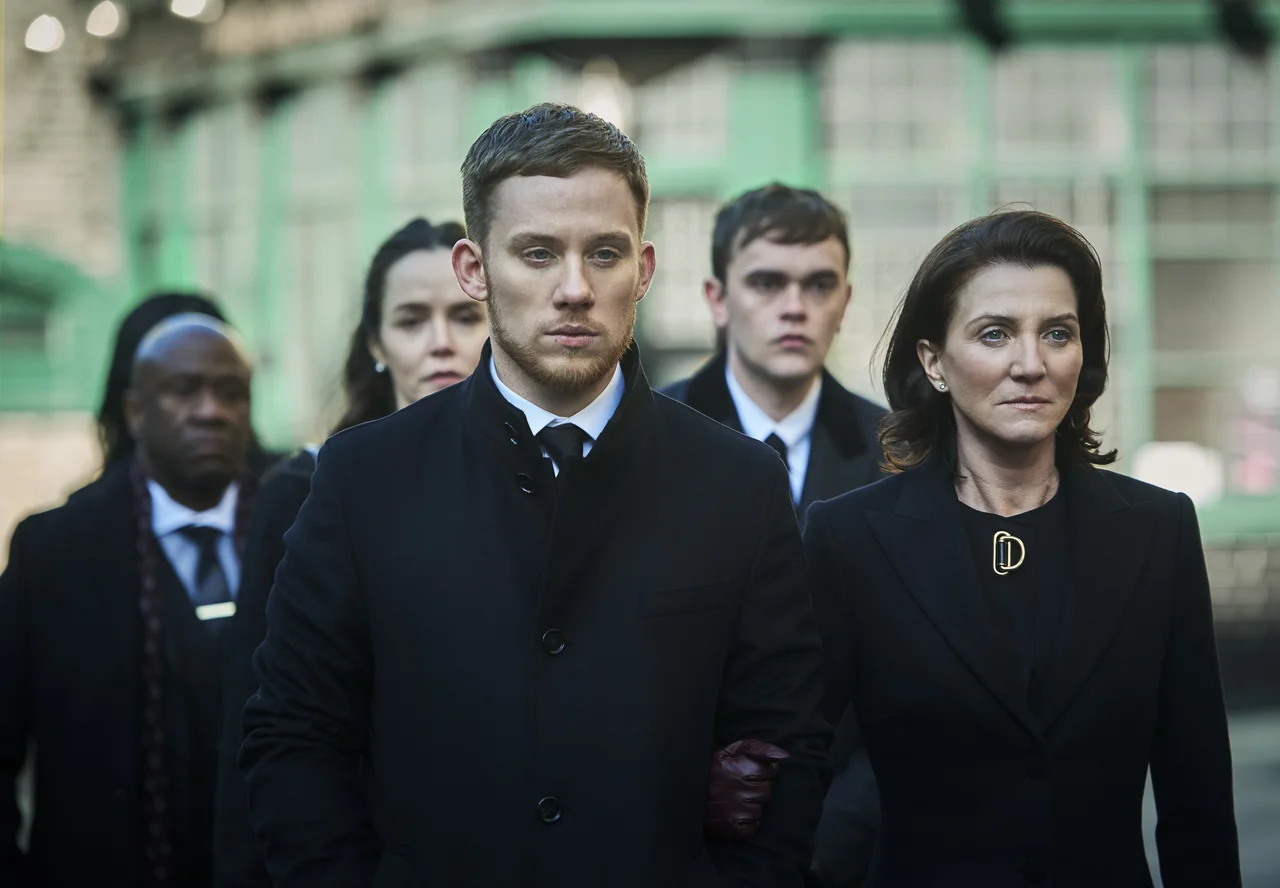

Chaos rarely settles quietly in Gangs of London, and the closing chapter of season 3 leaves the city’s criminal landscape in a very different shape than it began. Several characters reach moments of decision that reshape alliances, while long-running conflicts finally collide.
The final scenes bring a violent resolution to some rivalries while leaving the larger struggle for control of London far from finished.
The final confrontation in Gangs of London season 3 and the shifting balance of power in the city
The last episode builds toward a large-scale confrontation between multiple factions fighting for control of London’s criminal network. The Wallace organization, weakened by internal conflict and outside pressure, faces attacks from rival gangs who believe the moment has come to dismantle the family’s power.
In the climactic sequence, several groups converge at a heavily guarded location connected to the Wallace operation. Gunfire breaks out as armed teams attempt to eliminate key figures inside the organization. Members of different gangs turn on each other as long-standing alliances collapse in the chaos.
By the time the confrontation ends, many of the fighters involved have been killed or forced to retreat. The Wallace network survives the attack but emerges fractured and weakened. Several territories that were previously under Wallace control fall into the hands of rival groups.
The immediate result of the battle is a power vacuum. No single organization fully replaces the Wallace family as the dominant force, leaving London’s criminal landscape unstable as the season closes.
Elliot Carter’s position after the last violent showdown and what side he ultimately stands on
During the final conflict, Elliot Carter plays a critical role in determining the outcome of several confrontations. Throughout the season, Elliot has moved between different sides of the criminal world, often acting as a double agent while pursuing his own agenda.
In the last episode, Elliot arrives at the main battle site with knowledge of both the attackers’ plans and the vulnerabilities within the Wallace organization. During the firefight, he intervenes in several moments that prevent certain characters from being killed by rival gangs.
One of the decisive moments occurs when Elliot confronts a group of attackers attempting to eliminate a key Wallace lieutenant. He chooses to assist the lieutenant rather than allow the rival gang to succeed. This decision shows that Elliot has chosen a side, at least for the moment.
By the end of the episode, Elliot remains alive and still positioned between multiple factions. His actions during the final battle suggest that he is no longer acting purely as an outsider but has become deeply tied to the power struggle within London’s underworld.
Sean Wallace’s fate by the end of the season and how his war with the rival gangs concludes
Sean Wallace’s storyline reaches its most intense moment during the final confrontation. As the remaining leader of the Wallace organization, Sean spends the last episodes trying to defend his family’s influence while responding to attacks from rival gangs.
In the climactic scenes, Sean personally leads a group of loyal fighters during the battle against the coalition of gangs targeting his empire. The fight becomes brutal and chaotic, with several of Sean’s closest allies being killed.
Sean survives the battle, but his position changes significantly. By the end of the episode, the Wallace organization no longer controls the same network of territories it once did. Several criminal groups have broken away or seized opportunities created by the chaos.
The conclusion of Sean’s storyline leaves him alive but politically weakened. His survival ensures that the Wallace name remains part of London’s criminal structure, but the family’s dominance has clearly been challenged.
The alliances that collapse in the closing episodes and who gains control of London’s criminal network
A major theme of the final episodes is the collapse of several alliances that previously kept the city’s criminal ecosystem stable. Groups that once cooperated with the Wallaces begin pursuing their own interests once they sense weakness in the organization.
During the final battle, characters who had been partners earlier in the season openly turn on each other. Some factions abandon the fight once it becomes clear the confrontation will be too costly, while others use the chaos to eliminate rivals.
When the violence subsides, no single group emerges as the clear victor. Instead, control of the city becomes fragmented. Different gangs take control of specific areas that were previously overseen by the Wallace family.
This outcome changes the balance of power in London. Rather than one dominant organization controlling the city, multiple smaller groups now compete for influence.
Lale’s role in the final conflict and how her decisions reshape the remaining power structure
Lale’s storyline intersects directly with the final conflict. Over the course of the season, she builds her own network while maintaining a complex relationship with the Wallace organization.
During the final episodes, Lale arrives in London with her own fighters, initially appearing to support one side of the conflict. However, her true intentions become clearer once the confrontation begins.
In one crucial scene, Lale refuses to follow a plan that would have strengthened another gang’s claim to territory. Instead, she orders her forces to withdraw from the main battle once her own objectives are achieved.
By the end of the episode, Lale emerges as one of the few leaders whose position has actually improved. Her careful decisions allow her organization to avoid major losses while expanding its influence in parts of the city.
This development signals that Lale may become an even more powerful figure in London’s criminal landscape moving forward.
The last betrayals that change the future of the Wallace organization
Betrayal plays a key role in the final stretch of the season. Several characters within the Wallace network secretly negotiate with rival gangs, hoping to secure their own survival if the organization collapses.
One of the most significant betrayals occurs during the lead-up to the final battle. A trusted member of the Wallace operation leaks information about security arrangements, allowing rival gangs to plan their attack.
This act directly contributes to the heavy losses suffered during the confrontation. Once the betrayal becomes clear, the remaining Wallace loyalists begin questioning each other’s loyalty.
The discovery of these internal betrayals leaves the organization deeply divided. Even though the family survives the attack, the trust that once held the network together has been severely damaged.
The closing scene in London’s underworld and what it suggests about the next phase of the gang war
The final scene shifts away from the battlefield to show the aftermath of the conflict. In different parts of the city, surviving gang leaders meet with their allies to assess the new balance of power.
Sean Wallace is shown reviewing reports about lost territories while planning his next move. Elliot Carter appears separately, quietly observing how the different factions begin reorganizing themselves.
The closing moments present London as a city where no single group is fully in control. Rival gangs begin preparing for the next stage of conflict, aware that the power vacuum created by the final battle will lead to new struggles for dominance.
Rather than presenting a complete resolution, the ending shows a criminal world that has entered a new phase. Several characters survive the season’s violence, but the struggle for control of London is clearly far from finished.
