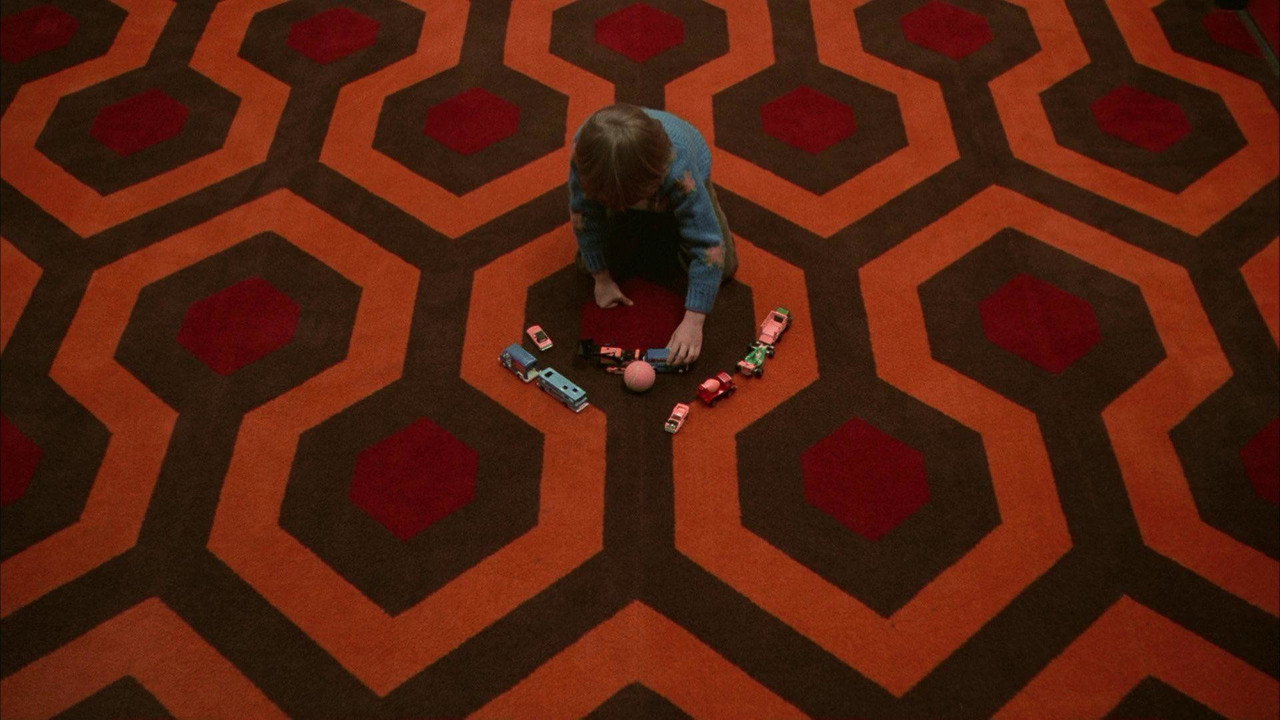

Stephen King’s The Shining and Stanley Kubrick’s 1980 film tell the same basic story of a winter caretaker trapped with his family in the Overlook Hotel, but they are built for very different purposes. King’s novel is a slow-burn horror story with a strong emphasis on Jack Torrance’s inner life, Danny’s psychic experiences, and the hotel’s active, malevolent presence. Kubrick’s film keeps the isolated hotel setting and the family breakdown, but reshapes almost everything around atmosphere, ambiguity, and visual dread.
The result is not a simple “faithful” or “unfaithful” adaptation, but a major reinterpretation. The movie keeps the premise and some iconic images while changing character dynamics, plot structure, and even the meaning of the ending. Looking at those changes side by side shows how a screen adaptation can preserve the skeleton of a story while altering its emotional and thematic center.
Jack Torrance’s character arc is fundamentally different
In King’s novel, Jack Torrance is a damaged but still recognizably human man whose alcoholism, anger, and insecurity make him vulnerable to the Overlook’s influence. He is not stable, but he is also not simply monstrous from the start. The book gives him moments of remorse, self-awareness, and love for his family, which makes his collapse feel tragic as well as terrifying.
Kubrick’s version presents Jack Nicholson’s Jack as unsettled almost immediately. The performance has wit and menace from the beginning, and the film gives less space to the long, painful deterioration that dominates the novel. As a result, the movie turns Jack’s breakdown into something closer to a gradual unveiling of what was already there, while the book treats it as a corrosive possession that overtakes a man who might have been saved.
Wendy becomes a much stronger presence on screen
Book Wendy is a more capable and inwardly complex character than many readers expect, but King still writes her largely through Jack and Danny’s family crisis. She has fear, intelligence, and protectiveness, yet the novel’s focus remains heavily on Jack’s psychological unraveling and Danny’s supernatural sensitivity. Wendy’s perspective matters, but it is not the novel’s main engine.
The film gives Wendy a more visibly central role in the household’s survival. Shelley Duvall’s Wendy is frightened, determined, and increasingly isolated, and the screenplay and staging make her reactions a crucial part of the movie’s suspense. That shift matters because it changes the family drama: the book’s tragedy is partly Jack destroying himself, while the film becomes more directly about Wendy struggling to survive a husband whose threat feels immediate and physical.
Danny’s psychic ability is altered in tone and detail
Both versions make Danny’s “shining” essential, but the book explores it with much greater breadth. King shows Danny’s gift as a source of communication, warning, and spiritual vulnerability, including the complexity of his relationship to Hallorann and the hotel. The novel also spends more time on how Danny processes terrifying information and how his ability shapes his understanding of the Overlook.
The movie streamlines Danny’s psychic life into a more cinematic set of images and episodes. His visions are sharper, more abrupt, and less explained, especially through the recurring “REDRUM” motif and the speaking scenes with Tony. This makes Danny’s role more mysterious on screen, but also less expansive than in the book, where his ability is woven into the story’s larger metaphysical rules.
The Overlook Hotel is less explicit as a supernatural force in the film
King’s novel makes the Overlook feel active, corrupt, and hungry. It is not just haunted in a generic sense; it is a place with a history that manipulates Jack through temptations, images, and manifestations tied to the hotel’s past. The idea that the building itself is spiritually malignant is central to the book’s structure and escalation.
Kubrick’s movie keeps the haunted-hotel idea, but it is far more ambiguous about what is “real” and what might be psychological. The film’s ghosts and impossible spaces create dread, yet the narrative does not spell out the hotel’s rules with the same certainty as the novel. That ambiguity changes the story’s logic: the book argues that evil inhabits the place, while the film leaves room for the possibility that the Overlook exposes and amplifies already-existing instability.
The screenplay removes or compresses several major set pieces
One of the clearest differences is how much material the film leaves out. The novel includes more of the hotel’s progression toward chaos, more encounters with its supernatural manifestations, and more of Jack’s internal struggle. King’s story builds through a series of escalating incidents that make the Overlook feel increasingly inescapable and specific.
Kubrick pares that down into a tighter, more controlled pattern of scenes. Instead of adapting every major book sequence, the film selects a few memorable events and repeats motifs of isolation, repetition, and spatial unease. This compression gives the movie its famously austere rhythm, but it also means that some of the novel’s cumulative dread and narrative explanation are replaced by atmosphere and visual design.
Hallorann’s role changes from helper to sacrificial figure
In the novel, Dick Hallorann is an important ally to Danny and Wendy, and his presence helps the story imagine a counterforce to the Overlook’s evil. He is more fully developed, and his relationship to Danny gives the book a wider emotional network beyond the Torrance family. His journey back to the hotel is part of the novel’s tension, but it also connects to the story’s hope that help can arrive.
The film gives Hallorann a smaller role and a more abrupt function in the plot. Scatman Crothers brings warmth and recognition to the part, but the movie uses him less as a sustained protective presence and more as a figure whose return underscores the hotel’s violence. His reduced screen time narrows the emotional balance of the story, making the film feel more sealed off and less socially connected than the novel.
The ending is changed from explosive destruction to chilling ambiguity
King’s novel ends with the Overlook’s physical destruction, a climax that matches the book’s more overt supernatural logic. The hotel’s evil is not merely implied; it is confronted and destroyed in a dramatic final sequence. That ending also gives the story a tragic release, especially because the book has spent so much time on Jack’s internal conflict and the hope that he might resist the hotel.
Kubrick’s film chooses a very different final movement. Rather than a clear external defeat of the Overlook, the movie closes on unsettling uncertainty, using the famous photograph to suggest that Jack has somehow been absorbed into the hotel’s history. This ending does not resolve the haunting so much as deepen it. It turns the story from a battle against a destructive force into a puzzle about recurrence, identity, and whether the hotel erases people or preserves them in some sinister way.
The story’s emotional center shifts from tragedy to dread
King’s novel is deeply invested in family tragedy. It asks how addiction, pride, and fear can fracture a man who still loves his wife and son, and it gives that collapse a mournful shape. The horror comes not only from ghosts and violence, but from watching a family deteriorate under pressure that is both supernatural and psychological.
Kubrick’s adaptation keeps the family structure but changes the emphasis. The movie is colder, more distant, and more interested in the mechanics of unease than in Jack’s moral struggle. That shift affects every major change: Jack becomes less sympathetic, Wendy more exposed, Hallorann less central, and the hotel more enigmatic. Taken together, those differences make the film feel like a nightmare version of the novel’s premise, one that trades the book’s tragic catharsis for an ending that lingers as a mystery.