

The closing stretch of Welcome to Mercy leaves behind the slow-burn unease of its early scenes and replaces it with something far more direct and disturbing. By the time the film ends, the viewer is left processing a sequence of betrayals, revelations, and violence that reframe nearly everything that came before.
The ending is meant to unsettle, not only through what happens to Madeline, but through what is quietly revealed about the household that claimed to offer her refuge.
How the film’s ending unfolds and where the final act begins
The final act begins once Madeline’s condition worsens and her behavior becomes increasingly erratic. She experiences more intense physical pain, disturbing visions, and apparent supernatural manifestations, including violent convulsions and episodes that resemble possession. The family that took her in, led by Mrs. Elliott, becomes less concerned with her wellbeing and more focused on containing her.
As tensions escalate, Madeline is isolated within the house, restrained, and prevented from leaving. Attempts to seek outside help are blocked, and the tone shifts from uneasy hospitality to overt imprisonment. This shift marks the point where the film moves away from ambiguity and begins revealing the true nature of the household’s intentions.
What exactly happens to Madeline in the final scenes
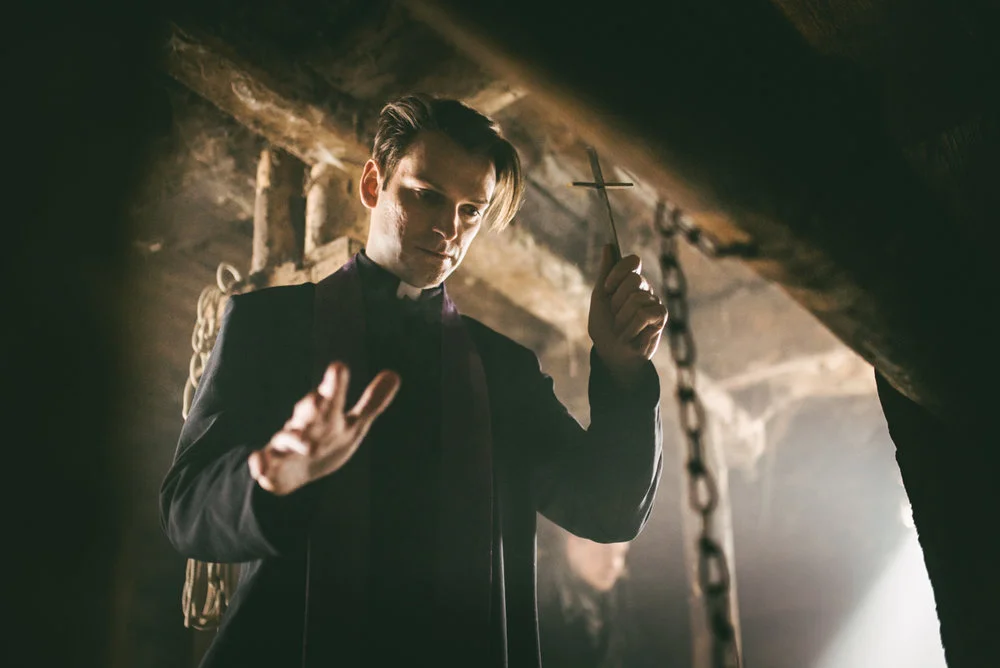
In the closing scenes, Madeline is forcibly prepared for a ritual carried out by the family. She is restrained, physically weakened, and clearly terrified as the household members gather around her. The ritual involves chanting, religious symbols, and deliberate infliction of pain, all framed as an act of purification or spiritual necessity.
As the ritual progresses, Madeline’s condition deteriorates rapidly. She screams, convulses, and appears to lose consciousness at several points. The film shows her body failing under the strain, and despite her resistance, the family continues without hesitation. The final moments depict Madeline collapsing, her fate sealed by the very people who claimed to be saving her.
Why the household turns against Madeline by the end
The household’s shift from caretakers to executioners is gradual but deliberate. Early in the film, they present themselves as deeply religious individuals offering compassion to a stranger in need. However, as Madeline’s symptoms intensify, they begin interpreting her suffering as evidence of demonic possession rather than illness or trauma.
By the end, the family no longer sees Madeline as a person but as a vessel for evil that must be destroyed. Their actions are driven by fanaticism and fear, not concern. The decision to perform the ritual is framed as unavoidable within their belief system, making Madeline’s death, in their eyes, a necessary sacrifice rather than a moral failing.
What the ritual scene reveals about the family’s true intentions
The ritual scene confirms that the family’s intentions were never centered on Madeline’s survival. While they initially claim to want to help her, the structure and severity of the ritual indicate that they believe death may be the only acceptable outcome. The lack of hesitation or doubt during the ceremony underscores how fully committed they are to their ideology.
This moment exposes the household as a closed system governed by rigid beliefs, where compassion is conditional and obedience to doctrine outweighs human life. The ritual is not an improvised response to Madeline’s condition but the culmination of a worldview that values spiritual purity over mercy.
Whether Madeline survives and what her final fate suggests
Madeline does not survive the events of the final act. The film makes this clear through her physical collapse, the cessation of her struggle, and the family’s calm acceptance of the outcome. There is no attempt to revive her or seek help once the ritual concludes.
Her death suggests that the film’s true horror lies not in the possibility of supernatural possession, but in the certainty of human cruelty justified by belief. Madeline’s fate is not portrayed as tragic inevitability, but as the direct result of choices made by those around her. The ending offers no suggestion that her death was redemptive or necessary, only that it was preventable.
How the final moments reframe the events leading up to the ending
After the ritual, the film presents a quiet, unsettling aftermath. The household resumes a sense of normalcy, implying that Madeline’s death has resolved what they saw as a spiritual problem. This calm ending forces a reevaluation of earlier scenes that may have seemed ambiguous or even compassionate.
Moments that once appeared as concern or care are recontextualized as surveillance and control. The family’s insistence on prayer, isolation, and obedience is revealed to be preparation rather than protection. The ending reframes the entire film as a study in how extremism can disguise itself as kindness until it is too late.
What questions the ending leaves intentionally unresolved
The film leaves several key questions unanswered. It never definitively confirms whether Madeline was truly possessed or suffering from untreated trauma and illness. The supernatural elements are presented through her perspective, leaving room for interpretation rather than certainty.
It also avoids showing any external consequences for the household. There is no intervention, investigation, or reckoning shown on screen. This lack of resolution reinforces the film’s bleak message: that such acts can occur quietly, shielded by faith and isolation. The ending closes without comfort, leaving the viewer with the unsettling sense that Madeline’s story is not unique, only unseen.
