
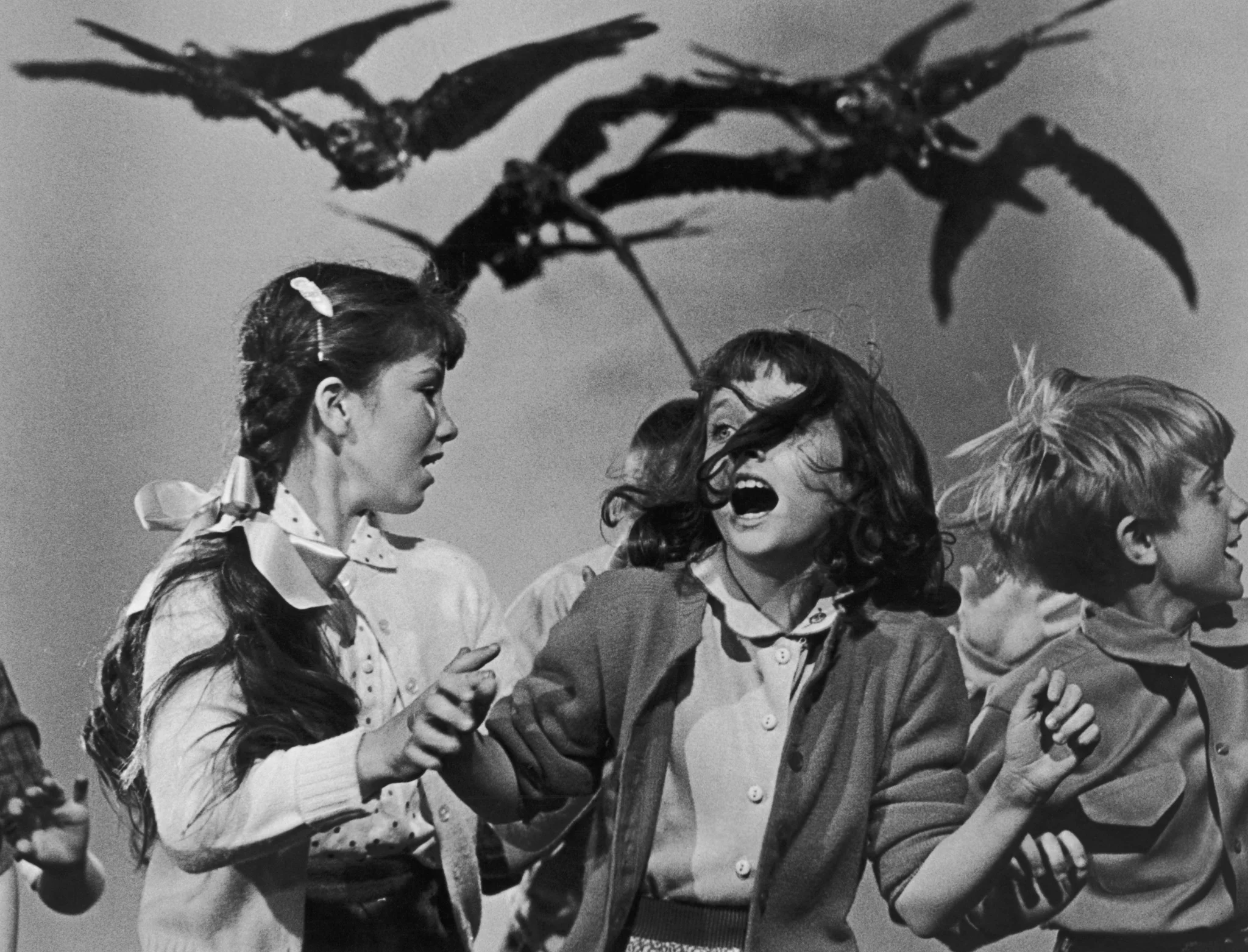

Sudden flocks of birds turning violent without explanation makes the story feel disturbingly plausible, which is why many viewers assume it must have roots in reality.
The film presents ordinary coastal life disrupted by behavior that seems almost natural, not supernatural. That grounded setting blurs the line between nightmare and possibility, prompting questions about whether something similar ever actually occurred.
Separating Hitchcock’s Apocalyptic Bird Attacks from Real-World Animal Behavior
In the film, birds of many species begin attacking humans in coordinated waves, causing widespread injuries, deaths, and ultimately a sense of societal collapse. These assaults escalate from isolated incidents to relentless, organized aggression, suggesting a mysterious force driving the animals. The attacks appear deliberate and strategic, far beyond normal animal behavior.
Real-world bird aggression does occur, but it is typically limited to territorial defense during nesting season or reactions to perceived threats. Documented incidents involve single birds or small groups, not coordinated mass attacks across multiple species. No scientific evidence supports the idea of birds collectively targeting humans on a large scale. The film’s portrayal transforms ordinary wildlife into an apocalyptic force, diverging sharply from known biological patterns.
The 1961 Capitola, California Incident That Reportedly Inspired the Film
One real event often linked to the film occurred in Capitola, California, in August 1961. Residents reported that large numbers of seabirds, particularly sooty shearwaters, began crashing into buildings, cars, and people. The birds appeared disoriented, flying erratically and vomiting partially digested fish. Property damage and minor injuries were reported, but there were no coordinated attacks resembling those in the film.
This incident gained national attention because it was unusual and unsettling, especially since the cause was initially unknown. Hitchcock reportedly took interest in these reports while developing his project. Although the Capitola event did not involve aggressive intent, its eerie nature provided a real-world example of birds behaving in a disturbing and unexplained way, which could be adapted into horror.
How Newspaper Reports of Disoriented Seabirds Reached Alfred Hitchcock
News coverage of the Capitola incident appeared in California newspapers, describing residents waking to find birds smashing into windows and falling from the sky. These reports emphasized confusion rather than hostility, portraying the birds as victims of an unknown environmental disturbance. Hitchcock is known to have followed such reports closely, often drawing inspiration from real-life oddities.
The director incorporated the unsettling imagery of birds invading human spaces into his film’s concept. However, he amplified the threat by portraying the animals as purposeful attackers rather than confused creatures. This transformation turned a puzzling environmental event into a deliberate horror scenario, shifting the emphasis from natural mystery to existential terror.
Daphne du Maurier’s Short Story as the Primary Source for the Plot
Despite the Capitola connection, the film is primarily based on a 1952 short story by Daphne du Maurier. Her story, set in rural England, already depicted birds turning hostile without explanation, long before the 1961 incident occurred. The narrative focused on a farming family attempting to survive repeated attacks, emphasizing isolation and helplessness.
Hitchcock’s adaptation moved the setting to California and introduced new characters and situations, but the core premise originated from du Maurier’s work. This literary source established the concept of unexplained avian aggression as a fictional idea rather than a dramatization of a real case. The Capitola event likely reinforced the plausibility of the story rather than serving as its foundation.
What Science Says About the Real Bird Event Linked to Toxic Algae
Subsequent research into the Capitola incident suggests that the birds were affected by domoic acid poisoning. This toxin, produced by certain types of algae, can accumulate in fish and shellfish consumed by seabirds. When ingested in large quantities, it causes neurological symptoms such as disorientation, seizures, and loss of coordination.
Scientists later concluded that the birds were not attacking humans but were essentially flying blind and crashing due to neurological damage. The vomiting behavior observed by witnesses aligns with known effects of domoic acid poisoning. Similar events have been documented in other coastal regions, reinforcing the explanation as a natural phenomenon rather than an unexplained anomaly.
The Film’s Escalation from Local Disturbance to Global Catastrophe
While the real incident was localized and temporary, the film portrays the attacks spreading rapidly and intensifying over time. Multiple species—including gulls, sparrows, and crows—participate in coordinated assaults, suggesting a breakdown of the natural order. Communication systems fail, infrastructure collapses, and authorities appear powerless to respond.
No real-world event has matched this scale or progression. Environmental disturbances affecting wildlife tend to remain confined to specific regions and eventually subside. The film’s escalation serves narrative purposes, heightening suspense and reinforcing the theme of humanity’s vulnerability. It moves far beyond any documented animal behavior.
Which On-Screen Attacks Reflect Documented Events and Which Are Pure Fiction
Certain visual elements in the film echo real reports, such as birds striking windows, entering buildings, or appearing in unusually large numbers. These details align with eyewitness descriptions from Capitola, where disoriented birds collided with structures and landed in unexpected places. The unsettling sight of wildlife invading domestic spaces has a basis in reality.
However, the deliberate pecking attacks, coordinated ambushes, and sustained assaults on groups of people have no documented counterpart. The film also portrays birds targeting individuals repeatedly, implying intelligence and intent that scientists have not observed in such contexts. These aspects belong entirely to fictional storytelling.
Verdict: A Fictional Horror Story Loosely Inspired by a Single Real Incident
The Birds (1963) is not based on a true story in the conventional sense. Its central premise comes from Daphne du Maurier’s fictional short story, while the 1961 Capitola incident provided atmospheric inspiration rather than narrative structure. The real event involved disoriented seabirds affected by environmental toxins, not purposeful attacks on humans.
The film transforms that unsettling but explainable occurrence into a large-scale horror scenario with no direct historical equivalent. It should therefore be understood as a fictional work that borrowed imagery and mood from a real incident, not as a dramatization of documented events.
