
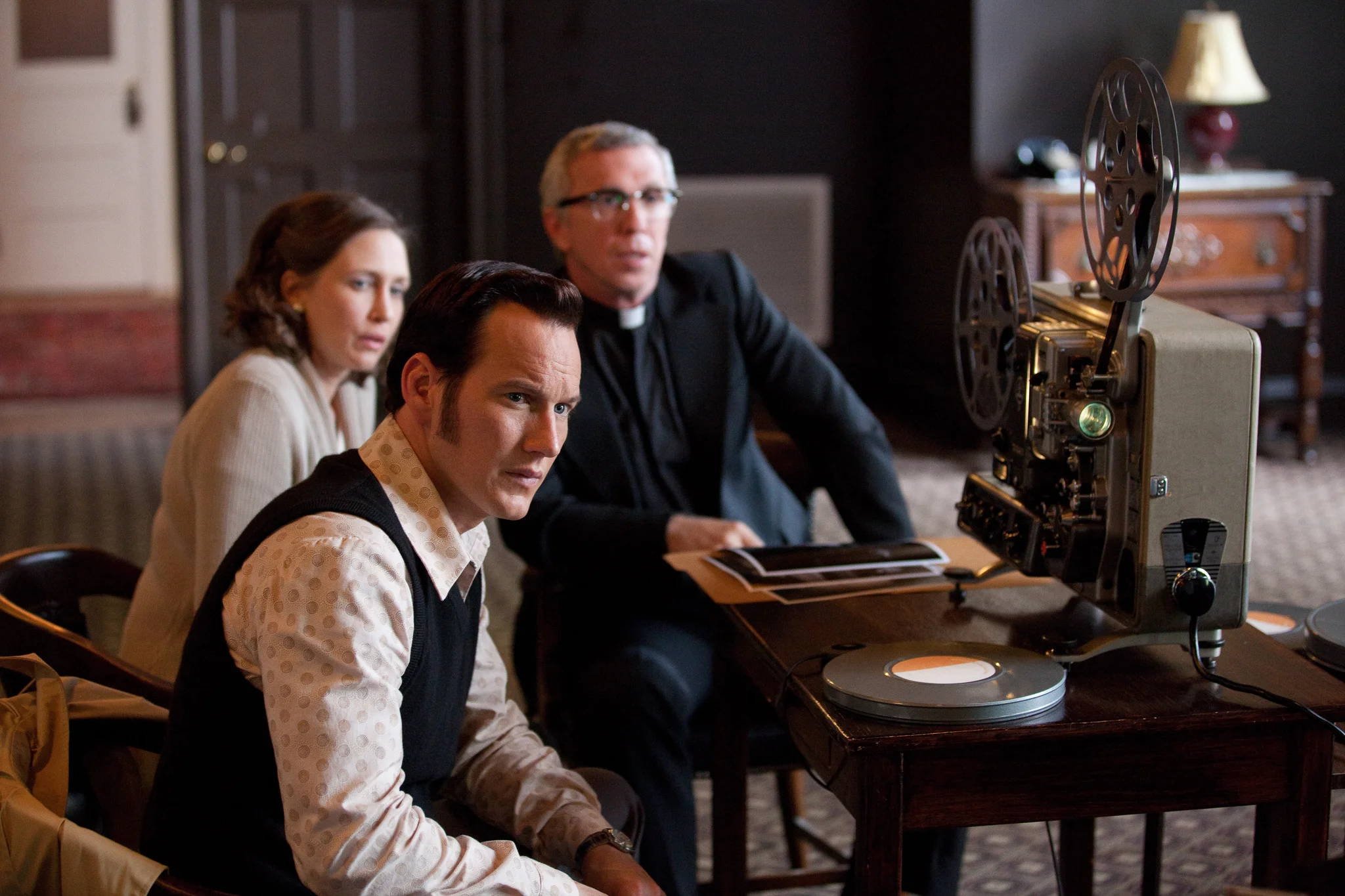

The Conjuring presents itself as more than a traditional horror film, leaning heavily on the idea that its story has roots in real events. That framing has led many viewers to question how much of what they see on screen actually happened and how much was shaped for dramatic effect. The answer sits somewhere between documented cases and creative interpretation, rather than at either extreme.
Looking at the real-life inspiration behind The Conjuring
The Conjuring is inspired by cases investigated by Ed and Lorraine Warren, a married couple who claimed to specialize in paranormal investigations. The film does not present a fully fictional story, but it also does not function as a direct retelling of a single historical record. Instead, it draws from reported experiences, personal accounts, and the Warrens’ own descriptions of their work, which were later adapted into a structured horror narrative.
From the outset, the movie frames itself as being connected to real events, using dates, locations, and names associated with an actual family. At the same time, it signals that what follows is a cinematic interpretation rather than a documentary reconstruction.
The case that influenced the story told in The Conjuring
The primary inspiration for The Conjuring comes from the Perron family, who lived in a farmhouse in Harrisville, Rhode Island, during the early 1970s. According to accounts shared by the family, they experienced a range of disturbing incidents after moving into the house, including unexplained noises, objects moving on their own, and sensations of being watched or touched.
Ed and Lorraine Warren reportedly became involved after the family sought help, conducting an investigation into what they believed was a case of demonic activity. These events, as described by the Perrons and the Warrens, form the backbone of the film’s story, even though the movie compresses and rearranges them for narrative clarity.
Who Ed and Lorraine Warren were outside the film
Outside the world of cinema, Ed and Lorraine Warren were real individuals who gained prominence in the United States during the second half of the twentieth century. Ed Warren described himself as a demonologist, while Lorraine Warren claimed to be a clairvoyant and medium. Together, they investigated numerous cases involving alleged hauntings and possessions, many of which later became the basis for books, lectures, and media adaptations.
Their work has always been controversial. Supporters view them as sincere investigators responding to people in distress, while skeptics question the validity of their claims and methods. The film portrays them in a largely heroic and compassionate light, focusing on their dedication and personal bond rather than the debates surrounding their credibility.
The Perron family and what is known about their experience
The Perron family has consistently maintained that their time in the Harrisville house was marked by frightening and unexplainable events. Family members have spoken publicly about their experiences, describing recurring disturbances and a sense that the house was tied to a dark history involving previous occupants.
However, much of what is known about their story comes from personal testimony rather than independent documentation. There are no official records confirming supernatural activity at the property. What exists are interviews, written accounts, and recollections shared years after the events took place, which makes the story difficult to verify in objective terms.
Events in The Conjuring that are drawn from real-life accounts
Several elements shown in The Conjuring are rooted in details described by the Perron family and the Warrens. These include reports of repeated knocking sounds, doors opening without explanation, and a general atmosphere of unease that affected daily life in the house. The film also reflects the idea that the disturbances intensified over time, rather than appearing all at once.
The concept of a long-standing presence tied to the property’s past is also drawn from real-life stories associated with the farmhouse. According to accounts, the land had a history of deaths and tragedies, which the film incorporates as part of its backstory.
Story elements created or altered for dramatic effect
While The Conjuring borrows from real accounts, many of its most memorable scenes were created specifically for the film. Moments involving violent physical attacks, overt supernatural manifestations, and highly structured exorcism sequences are cinematic inventions rather than documented events.
The timeline of the investigation was also condensed. In reality, the Warrens’ involvement with the Perron family unfolded over a longer period and did not follow the clear escalation shown on screen. The film simplifies this process to maintain tension and narrative momentum.
Key differences between the movie and what actually happened
One of the most significant differences lies in the level of danger portrayed. The film depicts immediate and life-threatening situations that require dramatic intervention, while real-life accounts describe a more prolonged and ambiguous experience. Additionally, the climactic confrontation shown in the movie has no direct counterpart in the reported events.
The personalities of those involved were also adjusted. Characters were shaped to fit recognizable roles within a horror framework, emphasizing conflict, urgency, and resolution in ways that real life often does not provide.
How closely The Conjuring reflects the real events it is based on
The Conjuring can be described as loosely based on a true story rather than a faithful reenactment. It uses real people, a real location, and reported experiences as a foundation, but builds upon them with fictional elements designed to create a cohesive and frightening film.
In practical terms, the movie reflects the spirit of the claims surrounding the Perron family case without adhering strictly to documented facts. Viewers looking for historical accuracy will find notable deviations, while those interested in the origins of the story will recognize genuine references beneath the dramatization.
