
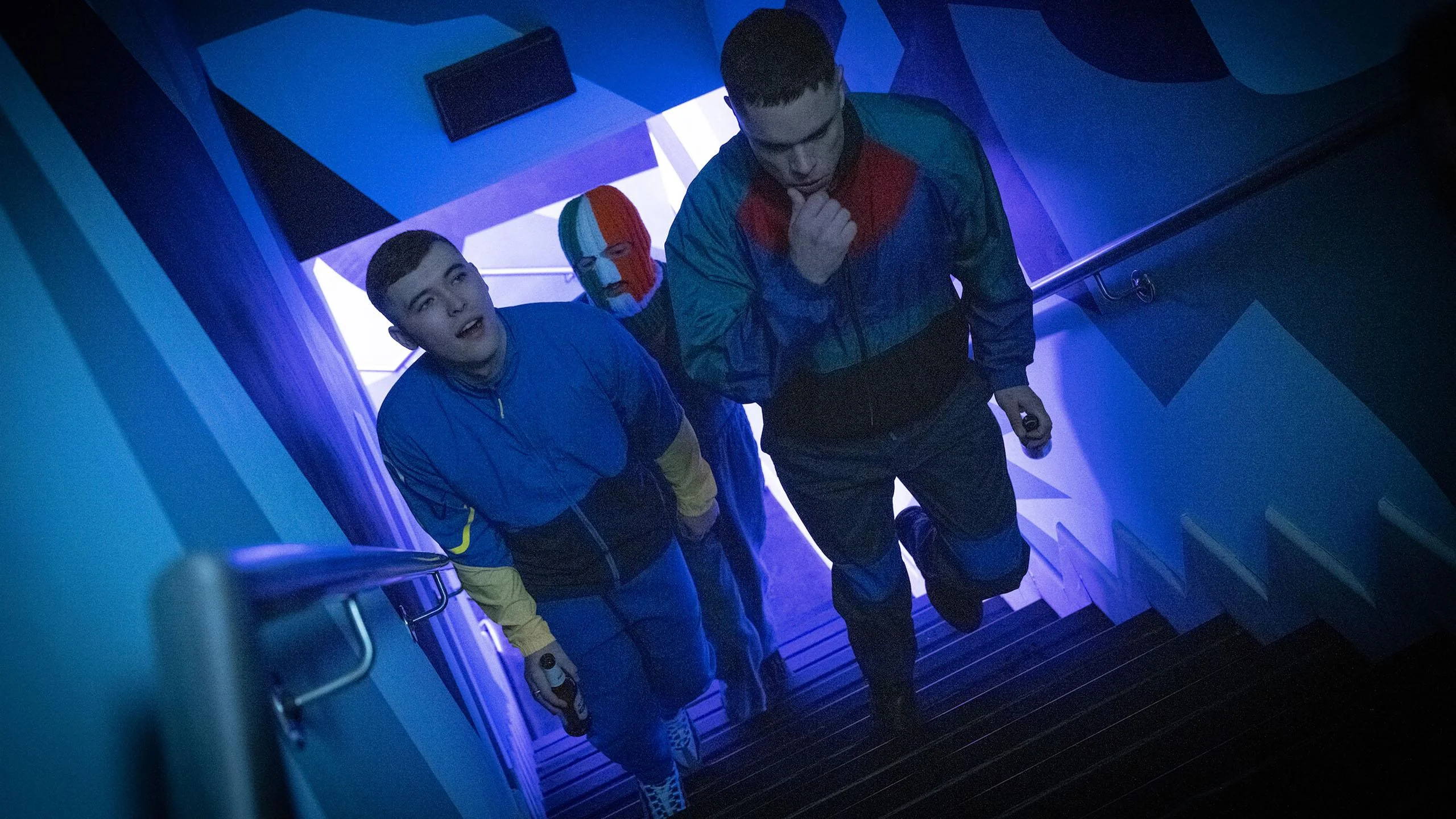

Kneecap presents itself with a level of immediacy and cultural specificity that naturally invites questions about how much of it is rooted in real life.
The film blurs the line between lived experience and stylized storytelling, especially given its focus on language, music, and identity. That blend makes it reasonable to wonder where documented reality ends and creative interpretation begins.
Setting up the question of real-life inspiration behind Kneecap
Kneecap is not framed as a traditional biopic, nor does it claim to be a strict retelling of historical events. Instead, it occupies a space between reality and fiction, drawing heavily from real cultural movements while shaping them into a narrative designed for the screen. The film’s tone, performances, and use of real-world references give it an authenticity that can feel documentary-like at times.
At the same time, the story unfolds with heightened drama and structured arcs that signal deliberate storytelling choices. This combination makes it clear that the film is inspired by reality rather than bound to it, setting up a fact-versus-fiction discussion rather than a simple true-or-false answer.
The real people and cultural background that influenced the story
The strongest real-life foundation of Kneecap lies in its cultural context. The film is closely tied to contemporary Irish-language culture, particularly in Northern Ireland, where language, politics, and identity remain deeply intertwined. This background is not invented for the story; it reflects ongoing social realities and tensions that are well documented.
The narrative is also influenced by the real-world presence of the rap group Kneecap, whose work uses the Irish language as both artistic expression and political statement. Their emergence within a specific cultural moment informs the film’s atmosphere, values, and conflicts, grounding the story in a recognizable social landscape even when individual scenes are dramatized.
How the film draws from actual events in the band’s rise and identity
Elements of the film echo aspects of Kneecap’s real-life rise, particularly the group’s use of provocative lyrics, humor, and defiance to draw attention to Irish-language issues. The portrayal of music as a disruptive force and a tool for reclaiming identity aligns with how the group has been discussed in interviews and media coverage.
However, the film does not attempt to recreate a precise timeline of real events. Instead, it compresses experiences, reshapes conflicts, and rearranges milestones to create a coherent narrative. The essence of the band’s identity and impact is present, but the specifics are adapted to serve the story rather than historical accuracy.
Which characters are based on real individuals and how closely they reflect reality
Several characters in Kneecap are clearly inspired by real people, including members of the band themselves. These portrayals reflect recognizable traits, attitudes, and backgrounds associated with the real individuals, particularly in their relationship to language, authority, and cultural resistance.
That said, the characters are not exact replicas. Their personalities are sharpened, their conflicts intensified, and their interactions shaped to fit a dramatic structure. Supporting characters, in particular, often function as composites, blending traits from multiple real-life figures or representing broader social forces rather than specific individuals.
What parts of the story are fictionalized or reshaped for dramatic effect
Much of the film’s narrative momentum comes from fictionalized situations. Confrontations with authorities, rapid escalations of conflict, and neatly resolved turning points are shaped to maintain pacing and emotional impact. These elements are common in narrative cinema and do not correspond directly to documented events.
Dialogue is another area where invention plays a significant role. Conversations are crafted to express themes clearly and efficiently, even if similar exchanges may not have occurred in real life. This reshaping allows the film to communicate its ideas more directly, but it also distances certain moments from strict reality.
How the film blends real-life experiences with invented scenes
Rather than separating fact and fiction cleanly, Kneecap weaves them together. Real locations, cultural references, and linguistic authenticity are combined with invented scenes that heighten drama or clarify character motivation. This blending creates a sense of truthfulness even when events themselves are not factual.
The film’s use of real music and performance styles reinforces this effect. By anchoring fictional scenes in authentic cultural expression, the story maintains credibility while still exercising creative freedom. The result is a narrative that feels rooted in lived experience without being constrained by it.
Where the on-screen story diverges from what is known to have actually happened
The most significant divergences appear in the speed and simplicity of the band’s rise within the film. Real artistic careers typically unfold unevenly, with setbacks and gradual progress, while the movie presents a more streamlined path for narrative clarity. This does not contradict known facts so much as it condenses them.
Additionally, the resolution of certain conflicts is more decisive on screen than in real life. Cultural and political tensions surrounding language and identity are ongoing issues, yet the film often frames them as obstacles that can be confronted within a single storyline. This divergence reflects the needs of storytelling rather than an attempt to rewrite history.
Taken together, Kneecap is best understood as a film inspired by real people, real culture, and real tensions, rather than a literal account of events. It draws heavily from documented realities but reshapes them into a fictional narrative designed to communicate broader truths. The story’s power comes from that balance, using invention to illuminate reality rather than replace it.
