
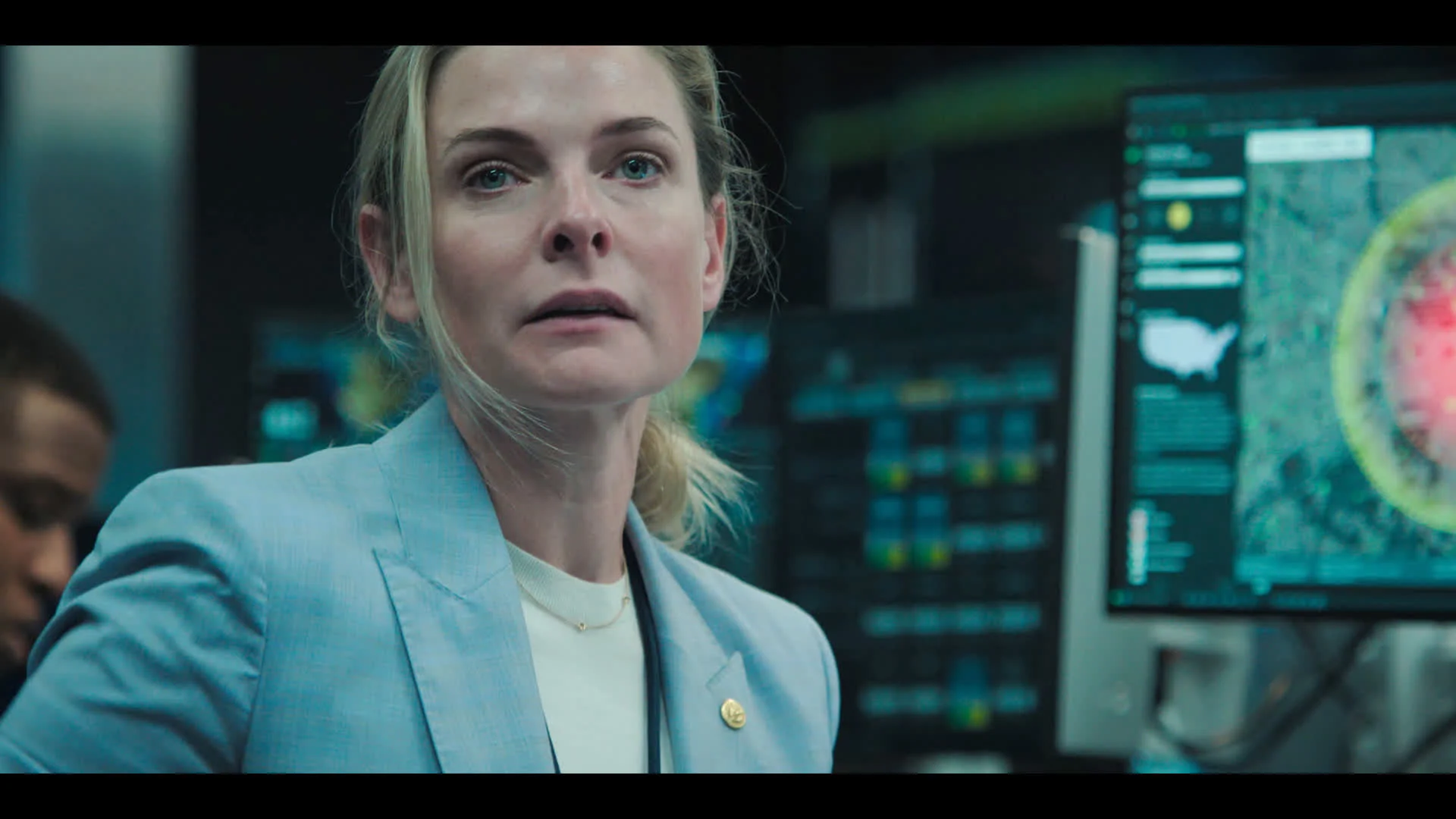

Choosing whether to watch A House of Dynamite (2025) largely comes down to tolerance for tense, dialogue-driven drama centered on a crisis that escalates inside a confined setting.
The story revolves around a volatile situation involving explosives, shifting loyalties, and people forced to make decisions under extreme pressure. Rather than relying on constant action, it builds intensity through conversations, suspicion, and the fear that everything could go wrong at any moment.
A Tense, High-Stakes Story That Unfolds Like a Slow-Burning Threat
The film centers on a group of individuals trapped in a building wired with explosives, where survival depends on cooperation, strategy, and uncovering hidden motives. The central character is a crisis negotiator who is pulled into the situation unexpectedly and must navigate conflicting demands from those inside and authorities outside. The premise unfolds gradually, revealing personal connections, past conflicts, and secrets that complicate the effort to defuse the danger.
Most scenes take place within enclosed rooms or corridors, emphasizing the claustrophobic atmosphere. The tension comes from uncertainty about who can be trusted and whether the explosives are truly controllable. Instead of fast-paced action, the story leans on escalating stakes as time passes and options narrow. This approach makes the threat feel persistent rather than explosive in short bursts.
The Suspense Elements That Keep the Situation Feeling Urgent
Urgency is maintained through a ticking-clock structure, with characters constantly reminded that any misstep could trigger disaster. Communication devices fail intermittently, plans unravel, and unexpected developments force rapid adjustments. Each attempt to resolve the crisis introduces new complications, preventing the story from settling into predictability.
The film also uses perspective shifts to show what different characters believe is happening, sometimes revealing information the negotiator does not yet know. This creates tension not from physical action but from anticipation—viewers are aware that hidden factors could derail the fragile stability at any moment. Sound design, including alarms, distant sirens, and muffled detonations from outside, reinforces the sense that events are spiraling beyond control.
Performances and Character Dynamics That Drive the Drama Forward
Because the setting is confined and action sequences are limited, the film depends heavily on performances. Much of the drama unfolds through arguments, negotiations, and emotional confrontations. Characters are forced to reveal personal histories and motivations, which influence their decisions as the crisis deepens.
The negotiator’s calm exterior contrasts with the panic and anger displayed by others, creating tension even in quiet scenes. Secondary characters—such as the individual who planted the explosives and those caught in the building—are given enough backstory to feel more than symbolic roles. Alliances shift as new information emerges, making relationships central to the unfolding drama.
These dynamics keep scenes engaging even when nothing physically dramatic occurs. The viewer’s investment comes from wanting to understand who will compromise, who will resist, and whether cooperation is possible at all.
Moments Where the Pacing May Feel Deliberate or Drawn Out
The deliberate pace is one of the film’s most divisive aspects. Long stretches focus on dialogue, strategic planning, or waiting for a response from outside authorities. Scenes often linger on reactions rather than actions, emphasizing psychological strain over physical movement.
For viewers expecting constant suspense or explosive sequences, these pauses may feel slow. The story prioritizes tension through uncertainty rather than spectacle, which can create the impression that events are not progressing quickly. However, the measured pace also allows character motivations to develop and makes later developments more comprehensible.
Those comfortable with slow-burn thrillers may find these sections immersive, while others may feel the narrative is stretching a limited scenario over too much runtime.
Plot Complexity That Can Either Intrigue or Confuse
The narrative introduces multiple layers of motivation, including personal grudges, political implications, and hidden agendas. Information is revealed gradually, sometimes contradicting earlier assumptions. This structure encourages active engagement but requires attention to detail.
At times, the film withholds explanations long enough that viewers may feel uncertain about the true nature of the threat or the intentions of key characters. The complexity adds depth but can also create confusion, especially if dialogue-heavy scenes introduce new information without visual reinforcement.
By the final act, most threads converge, but the path there demands patience. Those who enjoy unraveling mysteries through conversation and subtle clues are likely to appreciate this approach more than viewers who prefer straightforward storytelling.
Who Is Most Likely to Appreciate This Kind of Pressure-Filled Narrative
The film is best suited to viewers who enjoy contained thrillers driven by psychological tension rather than physical action. Fans of negotiation dramas, hostage scenarios, or stories focused on moral dilemmas will likely find it engaging. The emphasis on character interaction over spectacle makes it feel closer to a stage play adapted for the screen than a traditional action film.
It may not appeal as strongly to audiences seeking large-scale set pieces or constant movement. The confined setting and heavy reliance on dialogue demand concentration and interest in character psychology. Those drawn to intense conversations and shifting power dynamics are more likely to find the experience compelling.
How Satisfying the Build-Up Feels Once the Story Reaches Its Peak
As the situation reaches its breaking point, the film delivers several major developments that resolve long-standing tensions. Confrontations that have been building throughout the story finally occur, and hidden motives are exposed. The climax relies less on spectacle and more on emotional stakes, focusing on decisions that determine who survives and what consequences follow.
For viewers invested in the characters, the payoff can feel meaningful because it directly reflects their choices and relationships. However, those expecting a dramatic visual resolution may find the finale restrained compared to the buildup. The film prioritizes resolution through dialogue and character action rather than large-scale destruction.
Whether This Experience Justifies the Time Investment
Taken as a whole, the film offers a focused and intense narrative that rewards attention but demands patience. Its strengths lie in sustained tension, strong performances, and a carefully constructed scenario that unfolds through human behavior rather than spectacle. The confined setting and deliberate pacing create a consistent mood of pressure.
At the same time, the limited variety of locations and action may make the experience feel repetitive for some viewers. Those who disengage from the dialogue-driven approach may struggle to remain invested until the conclusion. For audiences who appreciate slow-building thrillers centered on negotiation and psychological conflict, the film provides a coherent and absorbing experience. For most viewers willing to accept its measured pace, A House of Dynamite (2025) is worth watching.
Other High-Tension Dramas to Consider If This One Doesn’t Fully Land
- Phone Booth (2002) — A real-time thriller focused on a single man trapped by a sniper, emphasizing tension through confinement and dialogue.
- Buried (2010) — Centers on a character trapped underground with limited communication, relying entirely on psychological pressure.
- Inside Man (2006) — A hostage situation driven by negotiation, hidden motives, and shifting power dynamics.
- Panic Room (2002) — Explores survival inside a confined space as intruders attempt to break in.
- Argo (2012) — Focuses on a high-risk extraction mission built around suspense, planning, and human decisions under pressure.
