
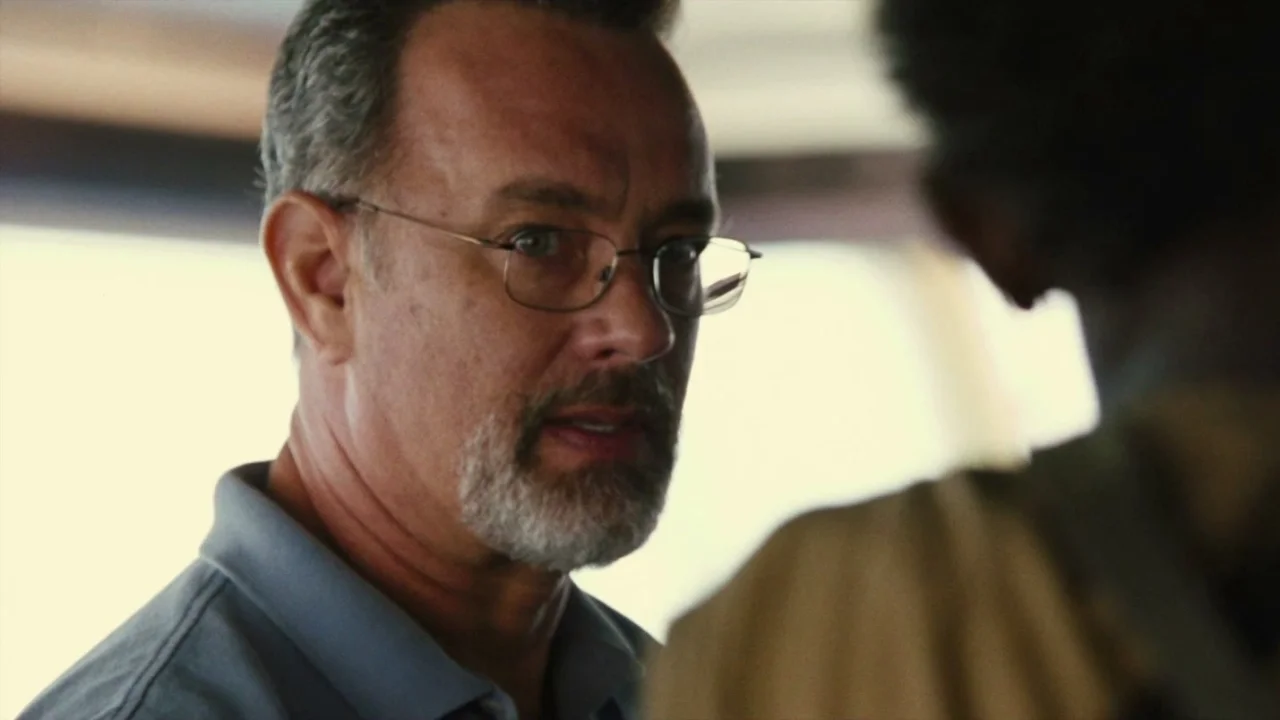

A cargo ship surrounded by armed pirates in the open ocean feels like the kind of story written for suspense. Captain Phillips (2013) presents exactly that scenario, following the takeover of an American container ship and the tense standoff that follows.
Because the events unfold with such specific detail—names, locations, and military involvement—many viewers wonder how much of the story actually happened in real life.
The real maritime hijacking behind Captain Phillips and why the story feels so authentic
Captain Phillips draws its central narrative from a real maritime crisis that occurred in 2009. The film portrays the hijacking of the American container ship Maersk Alabama by Somali pirates in the Indian Ocean, an event that quickly became international news at the time.
The authenticity of the story comes from the fact that the basic situation shown on screen—an unarmed cargo vessel attacked by pirates and a captain taken hostage—is grounded in documented events. Modern piracy off the coast of Somalia had been increasing during the late 2000s, with commercial ships occasionally targeted by armed groups seeking ransom.
The film uses the real ship name, the real captain, and the general sequence of events reported during the crisis. These elements give the story a strong connection to reality. At the same time, the film is still a dramatized interpretation designed to present a clear narrative structure and maintain tension.
The 2009 attack on the Maersk Alabama off the Somali coast that inspired the film
On April 8, 2009, the container ship Maersk Alabama was traveling through the Gulf of Aden carrying humanitarian cargo bound for Kenya. During the voyage, a small group of Somali pirates approached the vessel using a fast skiff.
According to public reports from the crew and shipping company, the pirates attempted to board the ship by climbing its sides with ladders. The crew initially tried to prevent the takeover by increasing speed and activating security measures, but several pirates still managed to get on board.
The attack marked the first successful hijacking of a U.S.-flagged cargo ship in nearly two centuries. Once the pirates gained access, the situation turned into a standoff between the crew and the armed attackers inside the vessel.
The film recreates these early moments closely. The approach of the skiff, the attempts by the crew to repel the boarding, and the tension on the bridge reflect widely reported details from the actual event.
Captain Richard Phillips and the five-day hostage ordeal portrayed on screen
The central figure in the story is Captain Richard Phillips, who was in command of the Maersk Alabama during the hijacking. In reality, Phillips was taken hostage by the pirates after negotiations inside the ship broke down.
During the real incident, Phillips ended up inside a covered lifeboat with the pirate leader and several of his accomplices. The pirates hoped to use him as leverage for a ransom payment from the shipping company.
For five days, the situation remained unresolved while the lifeboat drifted in the ocean under the watch of the U.S. Navy. Reports from the time describe the tense conditions inside the small vessel, where Phillips was held under constant guard.
The film closely follows this basic outline. It shows Phillips being forced into the lifeboat and spending several days in captivity while the surrounding naval forces attempt to manage the situation.
The lifeboat standoff in the Indian Ocean and the U.S. Navy response shown in the film
As the hostage situation developed, the United States Navy deployed multiple ships to the area. Among them was the destroyer USS Bainbridge, which became central to the rescue operation.
The Navy monitored the drifting lifeboat while negotiating with the pirates and attempting to secure Phillips’ release. Navy SEAL snipers were eventually brought into position after the situation remained unstable for several days.
The real rescue took place on April 12, 2009. After assessing that Phillips was in immediate danger, SEAL snipers simultaneously fired on three of the pirates inside the lifeboat. Phillips was rescued unharmed shortly afterward.
The film recreates this sequence with considerable accuracy. The surrounding naval ships, the tense negotiations, and the coordinated sniper rescue reflect the widely reported events from the operation.
Details from Captain Phillips’ memoir A Captain’s Duty that shaped the movie’s narrative
Much of the film’s narrative structure comes from Captain Richard Phillips’ memoir, A Captain’s Duty, which he wrote after the hijacking. The book describes his experiences during the attack and the days spent as a hostage.
The memoir provides personal details about Phillips’ thoughts during the crisis, the interactions with the pirates, and the physical conditions inside the lifeboat. These elements helped shape how the film presents the emotional side of the story.
Certain scenes in the movie appear to draw directly from descriptions in the book. Moments showing Phillips attempting to remain calm while negotiating with the pirates or observing their behavior during captivity echo details from his written account.
However, a memoir reflects one person’s perspective. While it provides valuable insight into the experience of the hostage, it represents a personal recollection rather than a complete reconstruction of every event.
Events during the hijacking that match documented reports from the Maersk Alabama crew
Several key events shown in the film correspond closely with accounts from members of the Maersk Alabama crew. During the hijacking, the crew reportedly worked together to limit the pirates’ control of the ship.
Crew members hid in secure areas and disabled parts of the vessel to prevent the pirates from navigating the ship effectively. At one point, they managed to capture one of the attackers during a struggle, creating leverage in negotiations.
The film includes a version of these events, showing the crew coordinating to protect themselves while attempting to regain control of the ship. These actions were widely reported in news coverage and later discussed by crew members.
The broad sequence—pirates boarding, crew resistance, Phillips being taken hostage, and the Navy response—matches the timeline described in many public sources.
Scenes and character moments that were simplified or dramatized for the film
Although the film follows the real incident closely, certain aspects were simplified or adjusted for storytelling. Movies often condense complex events so that the audience can follow a clear narrative within a limited runtime.
Some crew members later stated that the film focuses heavily on Captain Phillips’ perspective while giving less attention to the actions taken by the rest of the crew during the crisis. In reality, the crew played a significant role in resisting the hijackers and maintaining control of parts of the ship.
The personalities and backgrounds of the pirates are also simplified in the film. While the story shows internal tensions among them, the real individuals involved had more complex histories that are not explored in detail.
These changes do not alter the main facts of the hijacking but reshape certain details so that the story can focus on a central protagonist and maintain dramatic tension.
Captain Phillips as a dramatized retelling of a real maritime crisis rather than a fully exact record of events
Captain Phillips is closely tied to the real hijacking of the Maersk Alabama and the rescue of Captain Richard Phillips in 2009. The core events shown in the film—the pirate attack, the hostage situation in the lifeboat, and the Navy SEAL rescue—are supported by documented reports from the time.
At the same time, the film presents those events through a cinematic structure that emphasizes tension and character perspective. Certain scenes are simplified, and some character interactions are shaped to support a clear dramatic arc.
For that reason, Captain Phillips is best understood as a dramatized retelling of a real maritime crisis. The story is based on genuine events and real individuals, but the on-screen version adapts those events to create a focused narrative rather than a complete documentary record.
