
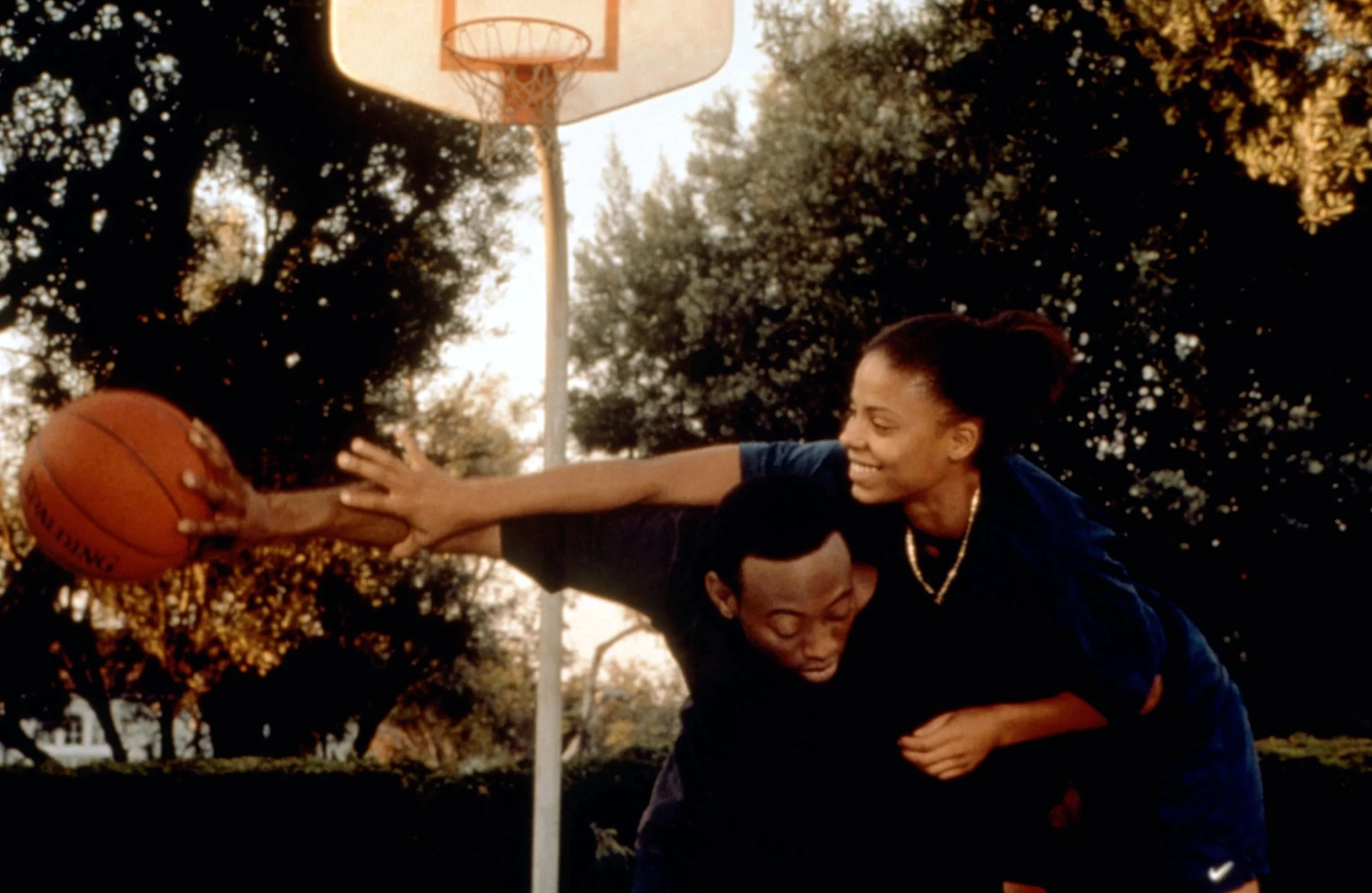

Many viewers assume Love & Basketball must be rooted in a specific real-life romance because of how convincingly it portrays young athletes growing up together while chasing professional dreams.
The film follows Monica Wright and Quincy McCall from childhood neighbors to adult competitors whose personal lives intertwine with their basketball careers. Its emotional realism and detailed depiction of sports culture naturally raise the question of whether these characters are based on actual people.
The Personal Roots of Love & Basketball in Gina Prince-Bythewood’s Own Life
The story does not come from a documented real couple, but it is closely tied to the experiences of writer-director Gina Prince-Bythewood. She played competitive basketball in high school and has spoken publicly about how the sport shaped her adolescence and identity. Rather than adapting a specific biography, she drew on memories of practices, locker room dynamics, and the pressures faced by girls who wanted to pursue athletics seriously.
Prince-Bythewood has described the film as partly autobiographical in spirit. The emotional tone, the dedication to the game, and the frustration of navigating a male-dominated sports environment all reflect lived experience. However, the characters themselves are fictional creations designed to tell a broader story about ambition and relationships.
How Monica Wright’s Journey Reflects Real Challenges Faced by Female Basketball Players
Monica’s path mirrors many realities faced by women in basketball, especially during the 1990s when professional opportunities were limited. She must fight for recognition, deal with stereotypes about female athletes, and balance competitiveness with social expectations. These elements align with documented experiences shared by real players who pursued college scholarships or professional careers before women’s leagues gained widespread visibility.
For example, the film shows Monica confronting coaches who question her temperament and commitment, as well as peers who judge her ambition. These conflicts are grounded in real social attitudes rather than invented obstacles. While Monica herself is fictional, the barriers she faces are supported by accounts from athletes who came of age during the same period.
Elements of High School and College Competition Drawn from Authentic Experiences
The basketball sequences and progression from youth leagues to collegiate play reflect authentic structures of American sports development. Tryouts, recruitment pressure, team hierarchies, and the intensity of scholarship competition are portrayed with accuracy. The film also shows the physical and emotional demands of training, including injuries, benching, and the uncertainty of advancing to the professional level.
These details were informed by real practices within school and college athletics. Prince-Bythewood’s personal familiarity with the environment helped shape scenes that feel credible rather than stylized. Although the specific games and teams are fictional, the overall framework mirrors how players actually move through competitive systems.
The Fictional Love Story Between Monica and Quincy Created for the Film
The central romance between Monica and Quincy is entirely invented. There is no public record of a real couple whose relationship followed the same trajectory depicted on screen. Their dynamic—neighbors who grow up together, compete against each other, separate, and reunite—is a narrative device designed to explore themes of timing, ambition, and emotional maturity.
Quincy’s background as the son of a professional athlete and Monica’s contrasting family situation provide dramatic tension, but these elements were crafted for storytelling purposes. The film aims to blend a romantic narrative with a sports drama, not to reconstruct an actual relationship. This fictional framework allows the story to move through multiple life stages while maintaining a cohesive emotional arc.
Which Family Dynamics and Career Obstacles Mirror Real Situations in Women’s Sports
Several family-related conflicts reflect real pressures experienced by athletes, particularly women balancing expectations at home with personal ambitions. Monica’s strained relationship with her mother, who prioritizes traditional femininity, echoes common tensions reported by female players who pursued physically demanding careers. At the same time, Quincy’s father’s infidelity storyline highlights the impact of fame and professional sports on family stability.
While these specific characters are not based on identifiable individuals, the situations they encounter are grounded in recognizable patterns. Interviews with athletes and public figures have documented similar struggles involving parental expectations, public scrutiny, and the emotional toll of professional competition. The film uses these realities as a foundation for its fictional drama.
How the Film Blends Personal Memory with Invented Characters and Events
The narrative structure combines authentic details with imagined developments. Training routines, recruitment processes, and locker room interactions draw from real experience, while pivotal plot points—such as the climactic one-on-one game for emotional closure—are clearly dramatized. This blend allows the film to feel truthful without being constrained by actual events.
Prince-Bythewood’s intention was not to recreate her own life exactly but to capture the emotional truth of growing up as a basketball-focused young woman. By fictionalizing the characters and timeline, she could shape a story that resonates broadly rather than recounting a single biography. The result is a semi-autobiographical tone rather than a factual narrative.
Final Verdict on Whether Love & Basketball Is Based on True Events
Love & Basketball is not based on one specific true story or real-life couple. Instead, it is a largely fictional narrative inspired by Gina Prince-Bythewood’s personal experiences as a competitive basketball player and by the broader realities faced by female athletes. Many aspects of the sports environment, social pressures, and career challenges reflect genuine conditions, but the characters, romance, and specific events were created for dramatic purposes.
The film can best be understood as a fictional story with strong real-world echoes rather than a dramatization of documented events.
