
Peter Jackson’s The Lord of the Rings trilogy did not simply adapt J.R.R. Tolkien’s books; it turned Middle-earth into a fully realized screen language. The first film, The Fellowship of the Ring, had to establish a world with its own history, geography, cultures, and dangers while also introducing a huge ensemble of characters in a way that felt clear and emotionally grounded. That balancing act shaped nearly every major production choice, from casting to scale to visual effects.
Because the trilogy was designed as one connected production, many of the memorable details people associate with the 2001 film are tied to broader franchise-building decisions. The elves, hobbits, dwarves, and men needed to feel distinct not just in appearance, but in movement, costume, and setting. The result was a movie where craftsmanship often does the storytelling: a hand gesture, a piece of armor, or the layout of a room can tell you as much as dialogue does.
The film had to introduce an entire mythology without feeling like a lecture
The Fellowship of the Ring begins with a compact history lesson, but it quickly shifts into character-driven storytelling. The prologue with the forging of the Rings of Power, the rise of Sauron, and Isildur’s refusal to destroy the One Ring gives the audience the essential stakes before the story narrows to Frodo’s quieter life in the Shire. That structure lets the film handle Tolkien’s dense backstory without losing momentum.
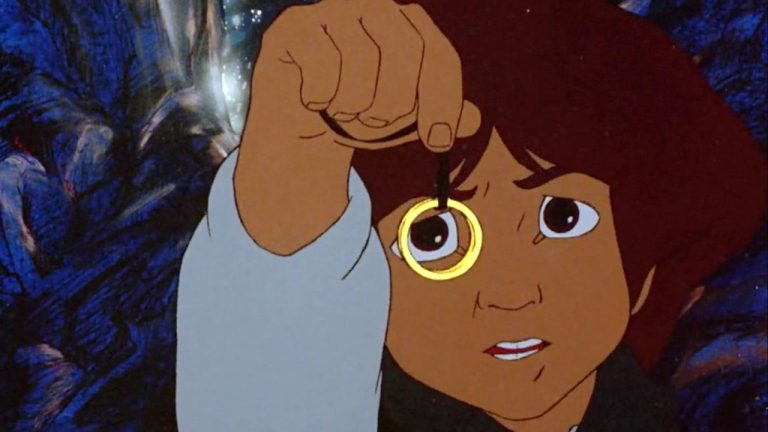
The decision to front-load only the most necessary mythology also helps preserve the mystery around the Ring itself. Viewers learn enough to understand why it matters, but not so much that the object becomes just another fantasy prop. The film uses repeated visual cues—fire, inscriptions, the eye motif, and the Ring’s effect on behavior—to make its danger feel immediate long after the opening narration ends.
The Shire was designed as a complete visual identity, not just a pretty setting
The hobbits’ home is one of the trilogy’s most carefully defined environments. The rounded architecture, earth-toned interiors, low ceilings, and cluttered cupboards all reinforce the idea of a culture built for comfort, domesticity, and routine. Even the smallest details, such as the scale of doors and tables, help the audience understand that hobbits are physically and culturally separate from the rest of Middle-earth.
That design work matters dramatically because the Shire is not merely idyllic; it represents the life Frodo is leaving behind. By making it feel lived-in and specific, the film gives emotional weight to his departure. The warmth of Bag End and the smaller homes around Hobbiton also makes the encroaching threat of the Ring feel more personal, since the story begins in a place defined by peace and ordinary pleasures.
Costumes and practical effects helped differentiate the Fellowship before they even spoke
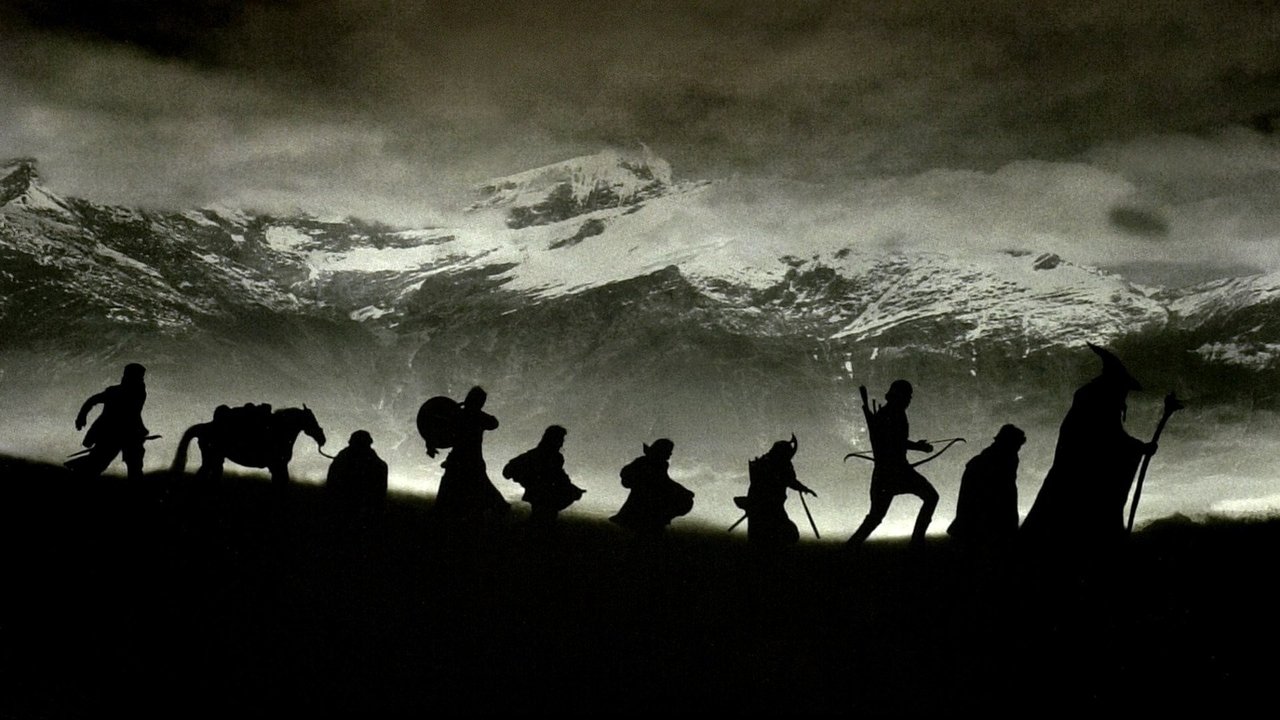
One of the production’s most impressive achievements is how quickly it establishes the members of the Fellowship as individuals. Their costumes are not interchangeable fantasy armor; they reflect each character’s home, status, and history. Aragorn’s weathered ranger clothing, Boromir’s Gondorian armor, Legolas’s lighter elven look, and Gimli’s heavier battle gear all signal different traditions before the group even starts moving together.
Practical effects were central to that sense of physical distinction. The film relies on prosthetics, forced perspective, and costume engineering to make the hobbits seem small beside humans and elves. Those techniques are especially important in scenes where the characters share the frame, because the illusion has to hold in close-ups, wide shots, and group compositions. The result is a film that feels tactile rather than digitally over-processed.
The Ring’s menace is built through performance and camera language, not only plot
The One Ring is not presented as dangerous solely because the script says so. Its threat is communicated through how characters react to it, how the camera lingers on it, and how the sound design treats moments of temptation or visibility. When the Ring changes hands, the movie often slows down just enough for its presence to feel heavy and uncanny.
That approach gives the object almost a personality. It is small enough to fit in a palm, but the film repeatedly makes it feel invasive and consuming. Gollum’s later importance in the trilogy is foreshadowed by this same idea: the Ring does not just belong to a story; it exerts pressure on the people around it. In the first film, that pressure is already visible in Bilbo’s reluctance, Gandalf’s caution, and Boromir’s curiosity.
Middle-earth’s races were built with distinct movement and behavior in mind
The film does not treat elves, dwarves, hobbits, and humans as interchangeable fantasy categories. Each group is given a different physical rhythm. Elves tend to move with elegance and calm control, dwarves with grounded solidity, hobbits with quick domestic ease, and humans with a more direct, martial presence. Those choices make the world feel organized by culture rather than by simple costume variation.
This is especially visible in scenes of travel and assembly, where characters from different peoples occupy the same space. Elrond’s council in Rivendell works because the film gives each faction its own visual and behavioral identity. The scene is crowded, but not confusing: language, posture, and costume all help separate the participants even before the dialogue clarifies their positions on the Ring.
Rivendell functions as both sanctuary and a demonstration of production design range
Rivendell is one of the film’s most important locations because it marks a tonal shift. After the rustic familiarity of the Shire and the threatening openness of the road, the elves’ refuge feels ancient, luminous, and carefully ordered. The set and visual effects create a place that is protective without becoming sterile, which suits a location where history is remembered rather than feared.
The council sequence also turns Rivendell into an information hub without making it feel static. The setting supports the film’s political and emotional stakes: it is where old alliances are discussed, old grievances surface, and the future of the Ring is debated. That blend of world-building and character conflict is one reason the scene remains one of the trilogy’s structural anchors.
Gandalf’s fall matters because the film treats magic as costly, not casual
Gandalf is one of the movie’s clearest examples of how the trilogy handles power. He is wise and formidable, but not all-knowing, and the film emphasizes that even his knowledge has limits. His confrontation in Moria with the Balrog is not just an action sequence; it is the point at which the Fellowship loses its most obvious source of guidance.
That loss is crucial because it changes the emotional shape of the story. After Gandalf falls, the remaining members of the Fellowship have to function without the person most capable of interpreting the Ring’s larger significance. The film therefore becomes less about receiving answers and more about enduring uncertainty, which is a fitting tone for a story in which no one can fully control the consequences of the Ring’s existence.
The movie’s craftsmanship is visible in how it makes scale feel believable
One of the trilogy’s most celebrated accomplishments is the seamless contrast between the intimate and the enormous. The same film that spends time on breakfast tables and hobbit holes also presents mountain passes, ancient ruins, and vast armies in ways that feel coherent. That coherence comes from disciplined use of miniatures, location work, digital effects, and composition.
The first film has to make the audience believe not just in isolated spectacles, but in a world where those spectacles belong. That is why the journey from Hobbiton to Bree to Rivendell to Moria feels so consequential: every location looks as though it has a history beyond the immediate scene. The movie’s making is impressive because it never treats scale as a gimmick; it uses scale to deepen the story’s emotional geography.