
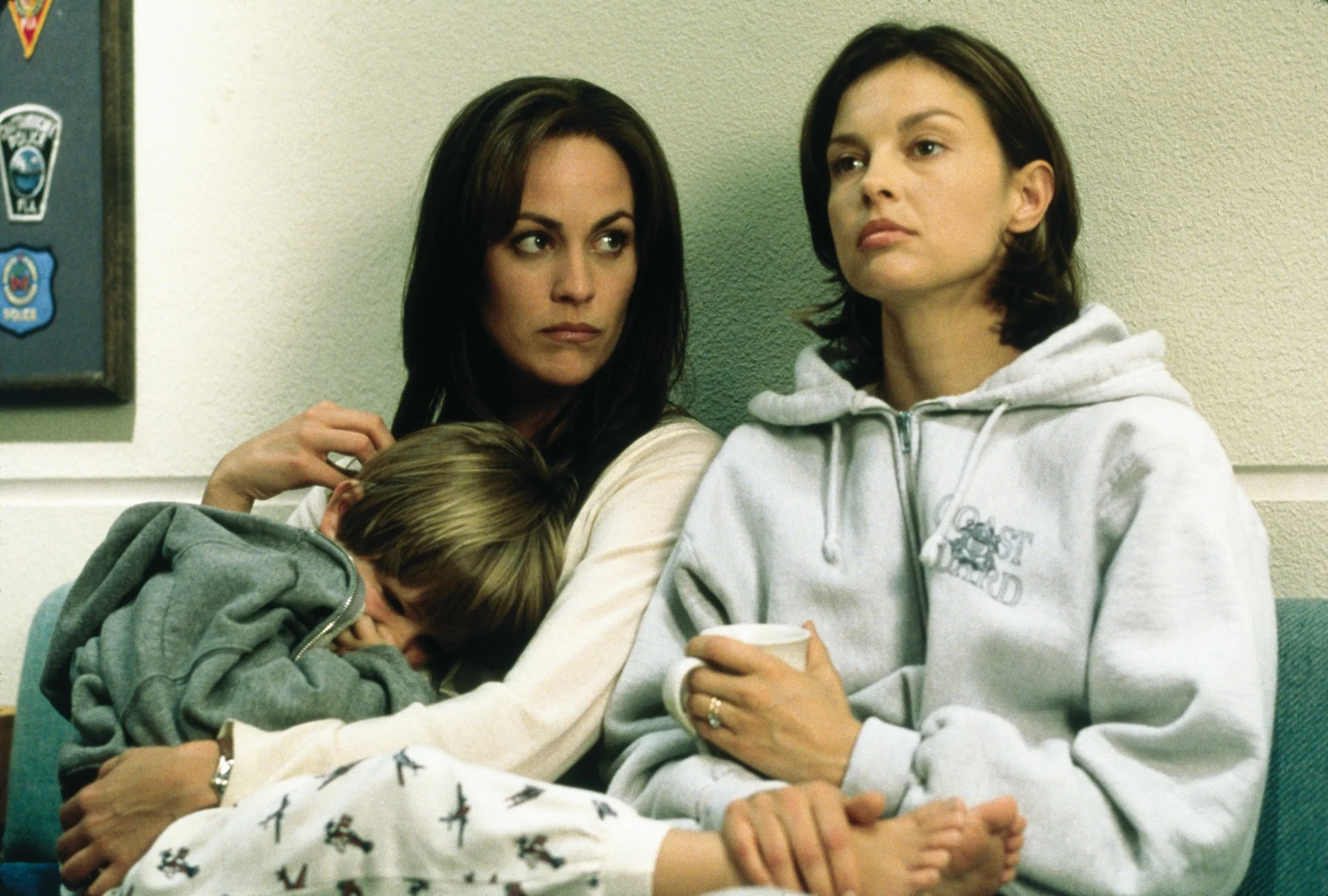

A sense of unfinished justice hangs over the last part of Double Jeopardy (1999). By the time the story reaches its final confrontation, Libby Parsons has spent years believing her husband framed her for his own murder.
When the truth about Nick finally surfaces, the story shifts from a mystery about deception to a tense showdown where Libby must decide what to do with the man who ruined her life.
The moment Libby finally confronts Nick and the truth behind the staged murder
Near the end of the story, Libby tracks down her husband Nick, who has been living under a new identity after faking his death years earlier. She discovers him living comfortably with their son Matty in a secluded home, confirming that he staged the entire murder plot in order to disappear with the money he stole.
When Libby arrives at the house, she confronts Nick directly. The confrontation makes it clear that he never died on the boat the night Libby was arrested. Instead, Nick framed her for his “murder,” leaving her to serve a prison sentence while he started a new life.
During the confrontation, Nick admits that he planned everything. He explains that the financial fraud he committed would have been exposed, so he decided to fake his death and let Libby take the blame. This moment finally reveals the full scope of his betrayal.
This scene resolves the central mystery of the film. The audience sees clearly that Libby’s imprisonment was built on a carefully staged crime designed to eliminate suspicion and allow Nick to escape prosecution.
Why Libby believes the law allows her to kill Nick without facing another murder charge
Before reaching Nick, Libby spends much of the film believing that she could legally kill him without consequences. While she was in prison, another inmate explained the legal principle of double jeopardy to her.
The idea presented in the film is that a person cannot be tried twice for the same crime. Because Libby had already been convicted of Nick’s murder, she believes that if she finds him alive and kills him for real, she cannot be charged again.
As Libby travels across the country searching for him, this belief becomes a powerful motivation. She feels the law has already condemned her for a crime she did not commit, and she begins to view killing Nick as a form of justice.
In reality, the legal explanation in the film is simplified and inaccurate. However, within the story, Libby believes the rule protects her. This belief drives her determination to confront Nick face-to-face.
The chain of clues that leads Libby to Nick’s new life under a different identity
Libby’s search for Nick involves several discoveries that eventually lead her to his new identity. After being released from prison, she begins following financial and personal clues connected to her husband’s past.
She learns that money from Nick’s fraud was hidden and later accessed under a different name. By tracing these financial records, Libby realizes that Nick did not disappear permanently but instead built a new life elsewhere.
The investigation leads her to a small town where Nick is now living under another identity. There, he has created the appearance of a normal family life while raising their son Matty.
By the time Libby arrives, she understands that Nick has spent years hiding in plain sight. The discovery that he kept their son with him makes the confrontation even more personal.
How Travis Lehman’s pursuit brings him to the same confrontation between Libby and Nick
Throughout the story, parole officer Travis Lehman has been assigned to monitor Libby after her release. At first he believes she is simply an ex-convict who must follow strict conditions during her parole.
As the investigation unfolds, Lehman begins to realize that Libby’s story may be true. He sees evidence suggesting that Nick might still be alive and that Libby was framed.
Lehman follows Libby as she continues her search, eventually tracking her movements to the same location where Nick is hiding. His arrival at the house happens just as the confrontation between Libby and Nick reaches its most dangerous point.
His presence becomes important because he represents the legal system that once failed Libby. Now he is in a position to witness the truth about what happened.
The gunshot standoff at the house and the decision that determines Nick’s fate
Inside the house, the confrontation escalates into a tense standoff. Libby holds Nick at gunpoint, confronting him about the years she lost in prison because of his deception.
Nick attempts to manipulate the situation, threatening Libby and trying to regain control. The tension builds as both characters struggle for the weapon.
During the struggle, Nick is shot. The gunfire ends the confrontation that began years earlier on the boat where he faked his death.
Nick’s injury stops him from continuing his escape. The truth about his actions becomes unavoidable once the police and authorities become involved.
The standoff serves as the dramatic resolution of the central conflict. Libby finally faces the man who framed her, and the outcome ensures that he can no longer hide from the consequences.
What happens legally to Libby once Nick’s deception and survival are exposed
After the confrontation, the authorities discover that Nick is alive and responsible for the original crime. This revelation completely changes the legal situation surrounding Libby’s conviction.
The fact that Nick staged his own death proves that Libby could not have murdered him on the boat years earlier. The evidence of his fraud and deception exposes the entire scheme that led to her imprisonment.
With Nick’s survival confirmed, Libby’s conviction for his murder is no longer valid. The justice system now recognizes that she was framed.
This moment resolves the legal conflict that drove the entire story. Libby’s name can finally be cleared because the supposed victim of the murder is alive and responsible for the crime.
Travis Lehman’s final role in confirming the truth about the original crime
Travis Lehman becomes the key witness who connects the final confrontation to the earlier investigation. Having followed Libby and observed the events at Nick’s house, he now understands what truly happened.
Lehman recognizes that Libby was not the criminal he once believed her to be. Instead, she was the victim of a carefully planned deception.
His involvement ensures that the authorities receive a clear account of the events. By confirming that Nick staged his death and framed Libby, Lehman helps bring the truth into the legal system.
This shift in his perspective completes his role in the story. He begins as a strict parole officer but ends as someone who recognizes Libby’s innocence and helps confirm it.
The closing scenes of Libby reunited with her son and what the ending ultimately resolves
In the final scenes, Libby is reunited with her son Matty. The years they spent apart because of Nick’s deception come to an end once the truth is revealed.
The reunion shows that the central emotional conflict of the story has finally been resolved. Libby’s goal throughout the film was not only to expose Nick but also to reclaim the life that was taken from her.
Matty’s return to his mother represents that restoration. After years of believing she had murdered his father, the truth now becomes clear.
The ending closes the story by restoring both justice and family. Libby’s innocence is proven, Nick’s scheme is exposed, and the life that was stolen from her is finally given back.
