
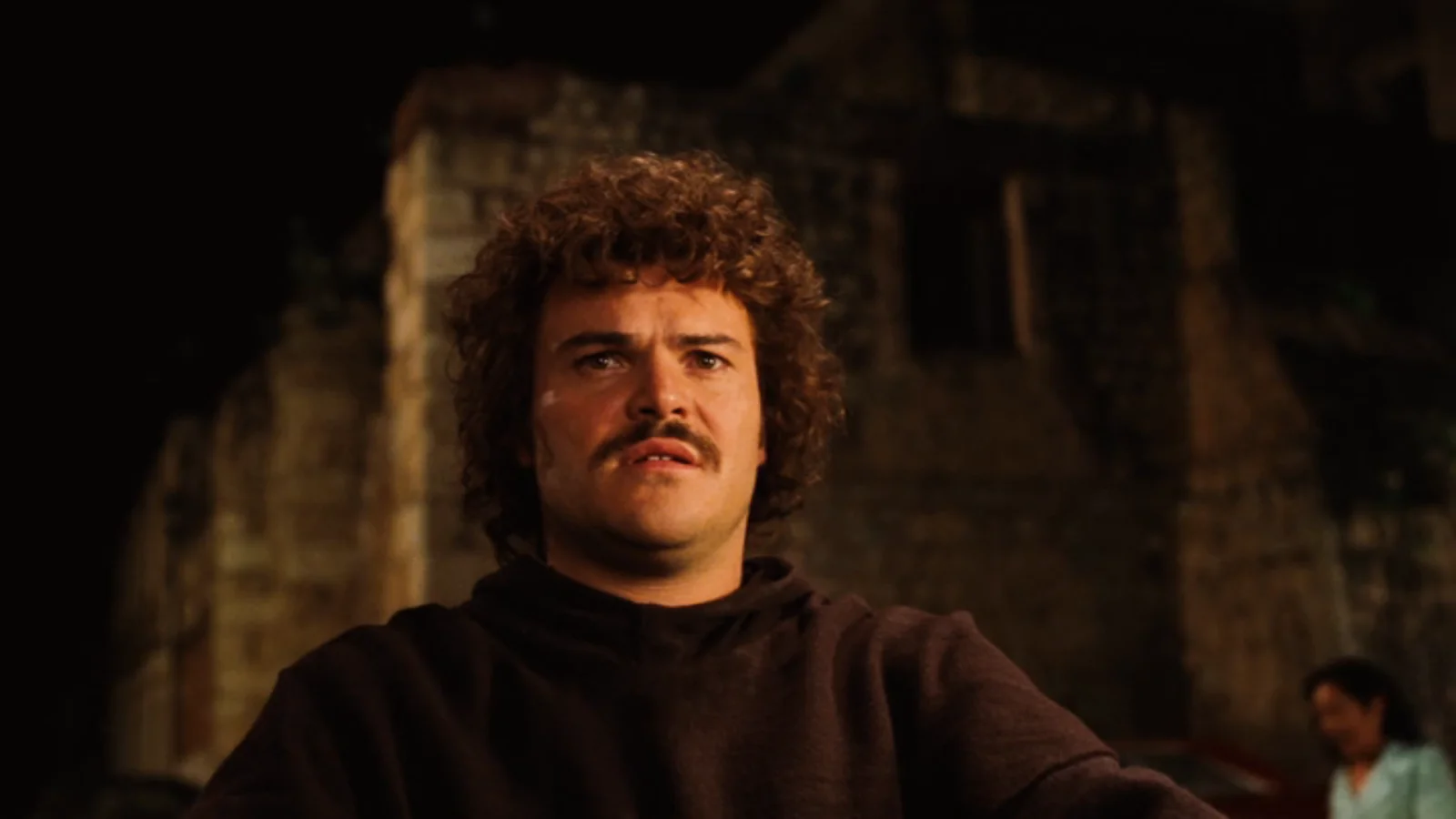

A priest who secretly becomes a flamboyant masked wrestler sounds too unusual to be completely made up, which is why many viewers suspect that Nacho Libre draws from real life.
The story centers on Ignacio, a monastery cook who enters lucha libre matches to raise money for the orphanage where he lives and works.
While the film presents this premise in an absurd, comedic style, it is rooted in a genuine historical figure whose life contained some remarkably similar elements. The truth lies somewhere between faithful inspiration and exaggerated fiction.
The Real Priest Who Inspired the Idea Behind Nacho Libre
The concept behind Nacho Libre originates from a real Mexican Catholic priest who led a double life as a professional wrestler. Reports about this unusual figure circulated widely in international media, drawing attention to the idea of a clergyman competing in masked wrestling matches to support charitable causes. These real stories provided the creative spark for the film’s premise.
However, the filmmakers did not set out to dramatize a specific biography. Instead, they took the broad outline of the priest’s situation — religious service combined with secret participation in lucha libre — and reshaped it into a lighthearted fictional narrative. The movie’s tone, character arcs, and comedic style were designed primarily for entertainment rather than historical accuracy.
This approach explains why the story feels both authentic and exaggerated at the same time. The foundation is real, but nearly every detail was modified to fit a whimsical, character-driven comedy.
Sergio Gutiérrez Benítez (“Fray Tormenta”) and His Life as a Masked Wrestler
The real person behind the inspiration is Sergio Gutiérrez Benítez, better known by his wrestling name “Fray Tormenta,” which translates to “Friar Storm.” He became a Catholic priest in Mexico and later founded an orphanage that housed hundreds of children over several decades.
To financially support this institution, he began wrestling professionally in lucha libre matches while wearing a mask to conceal his identity. He maintained this double life for more than 20 years, reportedly competing in thousands of matches. Unlike the film’s protagonist, he did not wrestle out of personal ambition but out of practical necessity, using his earnings to fund food, housing, and education for children in need.
This documented history establishes a clear real-world basis for the central premise. A priest secretly entering the wrestling ring to support an orphanage is not fictional; it happened. Yet the similarities largely end there.
How the Film Adapts the Priest’s Mission to Support an Orphanage
In the film, Ignacio lives in a monastery and cares for orphaned boys, struggling to provide them with proper meals and resources. His decision to become a wrestler is driven by a desire to improve their living conditions, mirroring the charitable motivation of Fray Tormenta.
Despite this shared motivation, the details differ significantly. The real priest’s orphanage was a long-term institutional effort with broad community support, while the film portrays a smaller, more isolated setting. The movie emphasizes Ignacio’s personal frustrations and his dream of glory, blending altruism with individual ambition for comedic effect.
Additionally, the financial stakes are simplified. In reality, sustaining an orphanage involves ongoing administrative, social, and economic challenges. The film reduces these complexities into a straightforward narrative device: winning matches equals helping the children. This streamlined portrayal makes the story easier to follow but less representative of actual events.
Ignacio’s Personality and Storyline as a Comedic Invention
Ignacio, played by Jack Black, is depicted as awkward, impulsive, and theatrically passionate about wrestling. His character is defined by exaggerated behavior, physical comedy, and a childlike pursuit of fame. These traits are designed to generate humor and emotional accessibility rather than to reflect a real individual.
Fray Tormenta, by contrast, has been described in interviews and reports as disciplined, pragmatic, and deeply committed to his religious duties. There is no evidence that he shared Ignacio’s flamboyant personality or comedic misadventures.
The film also invents numerous personal conflicts, including Ignacio’s rivalry with other wrestlers, his romantic feelings toward a nun, and his struggle for recognition. These narrative elements serve dramatic and comedic purposes but are not rooted in documented aspects of the priest’s life.
Lucha Libre Culture Portrayed Through a Fictional Narrative
Although the storyline is fictional, the film draws heavily on authentic elements of Mexican lucha libre culture. Masked identities, theatrical costumes, and the blend of athletic competition with performance art are genuine characteristics of the sport.
The depiction of wrestling as both spectacle and livelihood reflects real practices. Lucha libre performers often adopt elaborate personas and storylines, making the exaggerated presentation in the film feel culturally grounded even when specific events are invented.
At the same time, the movie amplifies the eccentricity of the wrestling world for comedic impact. Opponents, arenas, and training sequences are stylized to appear absurd and whimsical, distancing the portrayal from the everyday reality experienced by professional wrestlers.
Which Events in the Film Reflect Documented Facts and Which Do Not
Certain core elements align with documented history: a Catholic priest did wrestle professionally, wore a mask to conceal his identity, and used the income to support an orphanage. These points are factual and widely reported.
Most other events in the film — specific matches, relationships, personal struggles, and dramatic turning points — are fictional creations. There is no evidence that Fray Tormenta experienced the kinds of humiliating defeats, secret romances, or comic training montages shown on screen.
The timeline is also condensed. Real-life developments occurred over decades, whereas the film presents Ignacio’s transformation as a relatively short journey. This compression is typical of narrative filmmaking but further separates the story from historical reality.
How the Movie Blends True Inspiration with Exaggerated Humor and Fantasy
Nacho Libre operates primarily as a comedy, relying on visual gags, absurd dialogue, and intentionally unrealistic situations. This tone signals that the film’s purpose is entertainment rather than biographical accuracy.
The blending of truth and fiction allows the movie to explore themes of faith, identity, and perseverance without being constrained by factual details. By exaggerating characters and scenarios, the filmmakers created a playful interpretation of an already unusual real-life story.
Even the visual style contributes to this approach. Costumes, settings, and character reactions often border on caricature, reinforcing the idea that the narrative exists in a heightened, fictionalized version of reality.
Final Verdict on Whether Nacho Libre Is Based on True Events
Nacho Libre is not a direct retelling of a real person’s life, but it is clearly rooted in a genuine historical figure and situation. The existence of Fray Tormenta confirms that the central premise — a priest wrestling to support an orphanage — is grounded in fact.
At the same time, the characters, plot developments, and tone are largely invented. Ignacio’s personality, relationships, and experiences were created specifically for the film and do not correspond to documented events in the priest’s life.
The most accurate way to describe the film’s relationship to reality is that it is loosely inspired by true events. It takes a remarkable real-life story as a starting point, then transforms it into a highly fictional comedy with only its core idea remaining authentic.
