
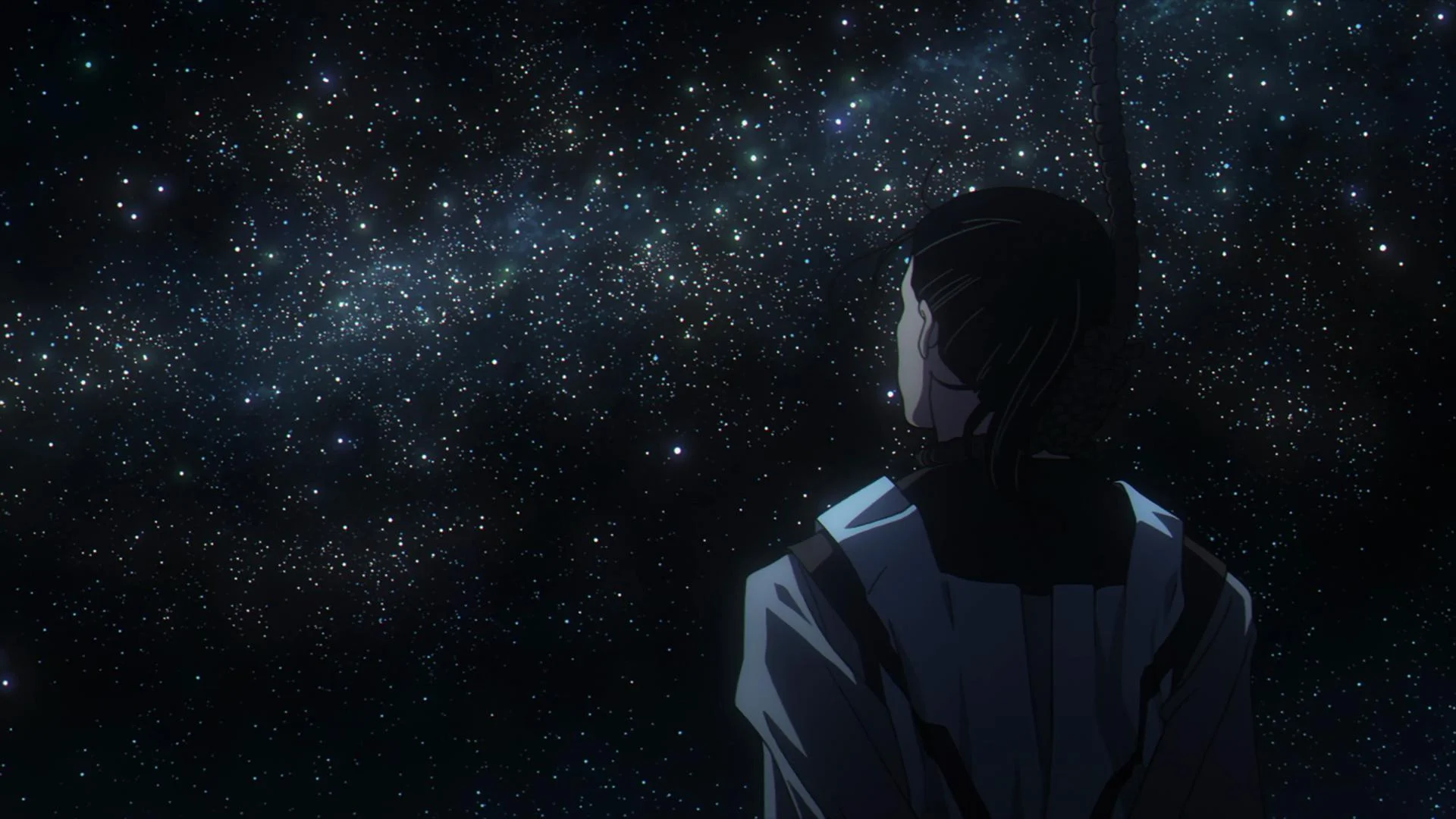

By the time Orb: On the Movements of the Earth reaches its final stretch, the story has shifted from curiosity-driven discovery to something heavier and more solemn. The closing episodes abandon any sense of safety, replacing it with irreversible choices and consequences that linger long after the last scene.
For many viewers, the ending feels quiet but unsettling, raising questions not because it is unclear, but because of how deliberately final it seems.
The point at which the struggle over forbidden knowledge reaches its resolution
In the final part of the story, the long-running conflict between scientific inquiry and institutional authority comes to a head. The pursuit of heliocentrism, which has driven multiple characters across different periods, is no longer treated as a theoretical risk but as an immediate threat to their lives. The narrative stops following experimentation and debate and instead focuses on survival and preservation.
The resolution does not arrive through public acceptance or open acknowledgment. Instead, it comes through a series of decisions that close off any remaining hope for reconciliation between truth and power. The struggle ends not because one side wins openly, but because the characters accept that knowledge must endure in secrecy rather than triumph in the present.
The final actions taken to preserve the heliocentric theory despite the danger
In the final scenes, the characters who still hold the forbidden theory take concrete steps to ensure it is not lost. Documents are hidden, passed on, or memorized rather than published. Conversations become brief and careful, stripped of earlier excitement and replaced by urgency.
On screen, this is shown through quiet exchanges rather than dramatic speeches. The theory itself is no longer debated or tested; its correctness is already accepted by those involved. What matters now is that the idea survives, even if its authors do not. These actions mark a shift from discovery to guardianship, where preservation becomes the final goal.
The fate of the scholars who chose truth over personal safety
The ending makes it clear that choosing truth comes at a severe cost. Several scholars face imprisonment, execution, or permanent erasure from public record. Their individual stories do not conclude with recognition or vindication, but with disappearance.
The anime does not linger on graphic punishment, but it does not soften the outcome either. The scholars’ fates are presented as final, emphasizing that their contributions will not be acknowledged in their lifetimes. This reinforces the idea that progress is built on unseen sacrifices rather than celebrated victories.
How the Church’s response in the ending reshapes the meaning of earlier events
The Church’s actions in the final episodes clarify the purpose behind its earlier behavior. What once appeared as isolated acts of suppression are revealed to be part of a broader effort to maintain control over knowledge itself. The response is systematic, not emotional.
By showing how easily individuals are removed and records altered, the ending reframes earlier optimism as tragically misplaced. The Church is not reacting out of fear alone, but out of a calculated understanding of how dangerous ideas can be if allowed to spread. This casts the entire story as one long exercise in containment rather than conflict.
The role of sacrifice in allowing scientific ideas to outlive their creators
After the immediate events conclude, the anime draws a clear connection between sacrifice and endurance. The people who advanced the heliocentric theory are gone, but the idea itself remains intact. Their suffering becomes the mechanism through which knowledge survives.
This is shown through transitions across time, where later characters encounter fragments of the preserved work. The anime emphasizes that ideas do not survive because of protection, but because someone was willing to risk everything to carry them forward. The ending positions sacrifice not as a tragedy alone, but as a necessary condition for progress under oppression.
What the closing moments reveal about knowledge passing across generations
The final images move away from the original characters and toward the future. The theory reappears in new hands, separated from its creators by time and circumstance. These moments are calm and understated, contrasting sharply with the danger that preceded them.
What matters here is continuity rather than resolution. The anime shows that knowledge does not belong to one person or era. It passes quietly, often anonymously, shaped by those who risked their lives without ever seeing the outcome. The closing moments suggest that truth advances not through triumph, but through persistence.
Which parts of the story are deliberately left unresolved at the end
The ending leaves several elements intentionally open. The ultimate fate of the preserved knowledge is not shown, nor is its eventual acceptance confirmed. The anime stops short of depicting historical validation, avoiding any sense of retroactive justice.
It also leaves moral questions unanswered. There is no clear statement about whether the sacrifices were worth the cost, or whether a different path could have existed. By refusing to provide emotional closure, the story reinforces its central idea: that truth does not guarantee comfort, recognition, or peace.
Instead of offering reassurance, Orb: On the Movements of the Earth ends by placing responsibility on the future. The characters’ work survives, but its meaning depends on those who come after. That unresolved tension is the final note the anime leaves behind.
