
Wes Anderson’s The Grand Budapest Hotel moves quickly, but it never feels rushed. The 2014 film is built like a perfectly packed suitcase: compact, ornamental, and full of oddly shaped compartments. At first glance, it looks like a whimsical caper about stolen art, a legendary concierge, and a pastel-colored European hotel. Spend a few minutes with it, though, and it becomes clear that the comedy works by a different set of rules than most mainstream movies.
What makes the film feel so unusual is not just its visual design or its deadpan dialogue, but the way those choices are woven into the story itself. The jokes are carefully timed, yet the movie is also genuinely sad, nostalgic, and even a little mournful. It turns comedy into a formal system, where color, symmetry, narration, and performance all pull in the same direction. That combination gives The Grand Budapest Hotel a personality that is instantly recognizable and hard to compare with anything else.
A comedy built like a storybook, not a sketch show
Many comedies are structured around setup and payoff, but The Grand Budapest Hotel feels more like a fable. The film uses a frame narrative, with an older author recalling the hotel’s history, which then opens into another layer of storytelling centered on the concierge Gustave H. and his protégé Zero. That nested structure gives the movie a storybook quality, as if the events are being remembered, filtered, and slightly polished by time.
That framing matters because the humor is never just about punchlines. The film’s jokes are folded into the act of storytelling itself, which makes them feel charmingly old-fashioned rather than disposable. A trivial detail can become important later, and a throwaway line may sound funnier because the movie has already established its own rules and rhythm. The result is a comedy that behaves more like a miniature novel than a conventional farce.
Ralph Fiennes gives the movie its comic engine
Ralph Fiennes’ performance as Gustave H. is one of the reasons the film feels so singular. Gustave is elegant, fastidious, vain, affectionate, and deeply committed to etiquette, even when the situation around him turns absurd. Fiennes plays him with complete control, which makes every interruption, misunderstanding, and scandal more entertaining. The character’s precision gives the movie a center of gravity.
What makes the performance especially effective is the contrast between Gustave’s refinement and the chaos he moves through. He delivers ornate compliments, manages hotel politics, and addresses impossible situations with the urgency of someone protecting a sacred order. The comedy comes from watching that level of discipline collide with theft, violence, and bureaucratic nonsense. Because Fiennes never plays Gustave as a joke, the character becomes funnier than if he were simply an eccentric clown.
The deadpan style makes the absurdity sharper
Anderson’s humor often depends on restraint, and The Grand Budapest Hotel may be his clearest example of that approach. People speak as if they are following a strict script of manners, even when they are making bizarre declarations or participating in outrageous events. The deadpan delivery keeps the film from tipping into broad parody. Instead of underlining the joke, it lets the joke emerge from the mismatch between tone and action.
That controlled style also keeps the movie from feeling emotionally cold. The characters may seem mannered, but the emotional stakes are real inside the film’s world. A gift, a favor, an insult, or a lost gesture of loyalty can matter deeply. Because everyone speaks so formally, even tiny expressions of care feel heightened. That is part of why the movie is funny without becoming cynical; its precision makes sincerity look more peculiar, and therefore more moving.
A pastel fantasy with shadows underneath
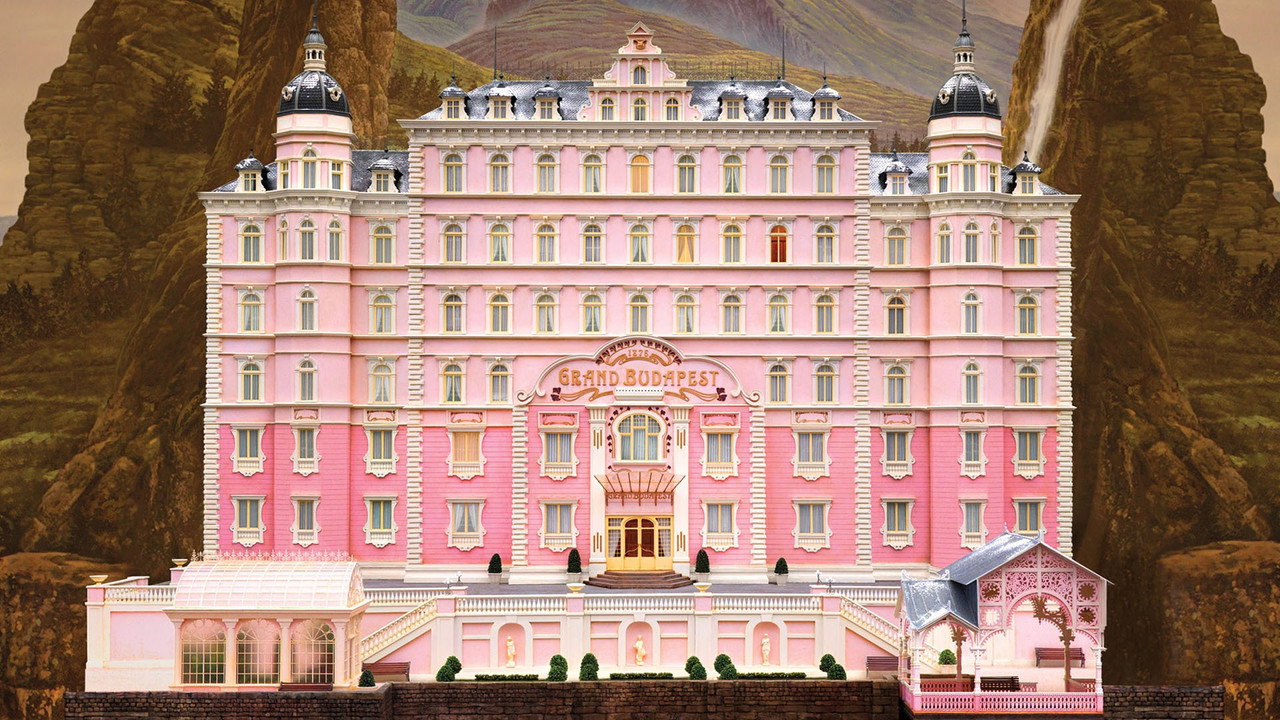
The hotel itself is one of the film’s biggest comic inventions. It is bright, symmetrical, and meticulously organized, yet it also sits in a world that is visibly sliding toward instability. The visual style is often described in terms of color and composition, but those choices are doing more than creating pretty images. The hotel’s pinks, purples, and golds give the comedy a confectionary surface that contrasts with the looming threat outside its doors.
That contrast is essential to why the movie feels unlike other comedies. A slapstick scene in a bland setting is one thing; a slapstick scene in a luxurious, fading, almost toy-like European resort is something else. The beauty of the world makes its decline more poignant, and the humor more fragile. Even the film’s visual order seems to be fighting entropy, which gives the comedy a nervous energy beneath its polished exterior.
The jokes are funny because the film cares about manners
At the heart of the movie is an almost absurdly serious belief in etiquette. Gustave treats hospitality as a moral code, not just a job, and the film keeps returning to the tiny rituals of service, greeting, and appearance. That obsession with manners becomes a comic engine because the movie never treats it as trivial. It is absolutely central to how characters understand one another.
This is one reason the film feels distinct from comedies that rely on embarrassment or improvisational looseness. The Grand Budapest Hotel gets much of its humor from precision: who stands where, how a sentence is phrased, when a door closes, or which hat belongs to whom. The movie treats civility like choreography. When that choreography is disrupted, the results are funny because the film has trained the viewer to understand how much order is at stake.
Its violence is stylized, not casual
Another reason the film stands apart is that it blends comedy with bursts of stylized violence and suspense. These moments are not presented in a grim, realistic register. Instead, they are carefully staged, almost cartoonlike, which keeps the tonal balance unusual. A chase, a prison escape, or a confrontation can feel playful even when the consequences are serious.
That balance is harder to pull off than it looks. If the film were purely whimsical, the danger would vanish. If it leaned too hard into realism, the comedy would collapse. Instead, the movie keeps shifting between delight and threat, sometimes within the same scene. That instability gives the humor extra bite, because the viewer is always aware that the film’s elegance is surrounded by collapse, corruption, and historical change.
Zero and Gustave give the comedy its emotional shape
The relationship between Gustave and Zero is more than a mentor-protégé dynamic; it is the emotional thread that keeps the film grounded. Zero begins as an employee at the hotel and becomes Gustave’s trusted companion, witness, and successor of sorts. Their bond is central to the movie’s tone, because it allows the story to move between comic sophistication and sincere feeling without breaking its own style.
Zero’s understated presence also gives the film a quieter counterweight to Gustave’s verbal fireworks. He is often the observer, absorbing the absurdity around him and helping the audience keep track of it. That contrast creates a comic rhythm of its own: Gustave performs, Zero steadies, and the film gains a surprisingly tender emotional balance. The comedy feels different because it is rooted in companionship rather than pure chaos.
A world on the edge of disappearing
Even when the movie is at its most playful, it is haunted by change. The story takes place between the wars, and the hotel stands in for a cosmopolitan order that is already beginning to crumble. That historical backdrop never overwhelms the comedy, but it gives the film a faint melancholy that lingers behind the jokes. The entire setting feels like something being remembered just as it is slipping away.
That sense of disappearance may be the deepest reason The Grand Budapest Hotel feels unlike other comedies. It is not simply trying to make fun of eccentric people in an eccentric place. It is preserving a style, a class of manners, and a whole social atmosphere in the form of a comic elegy. The result is a movie that can be airy and elaborate in one moment, then strangely sad in the next, without ever losing its playful precision.