
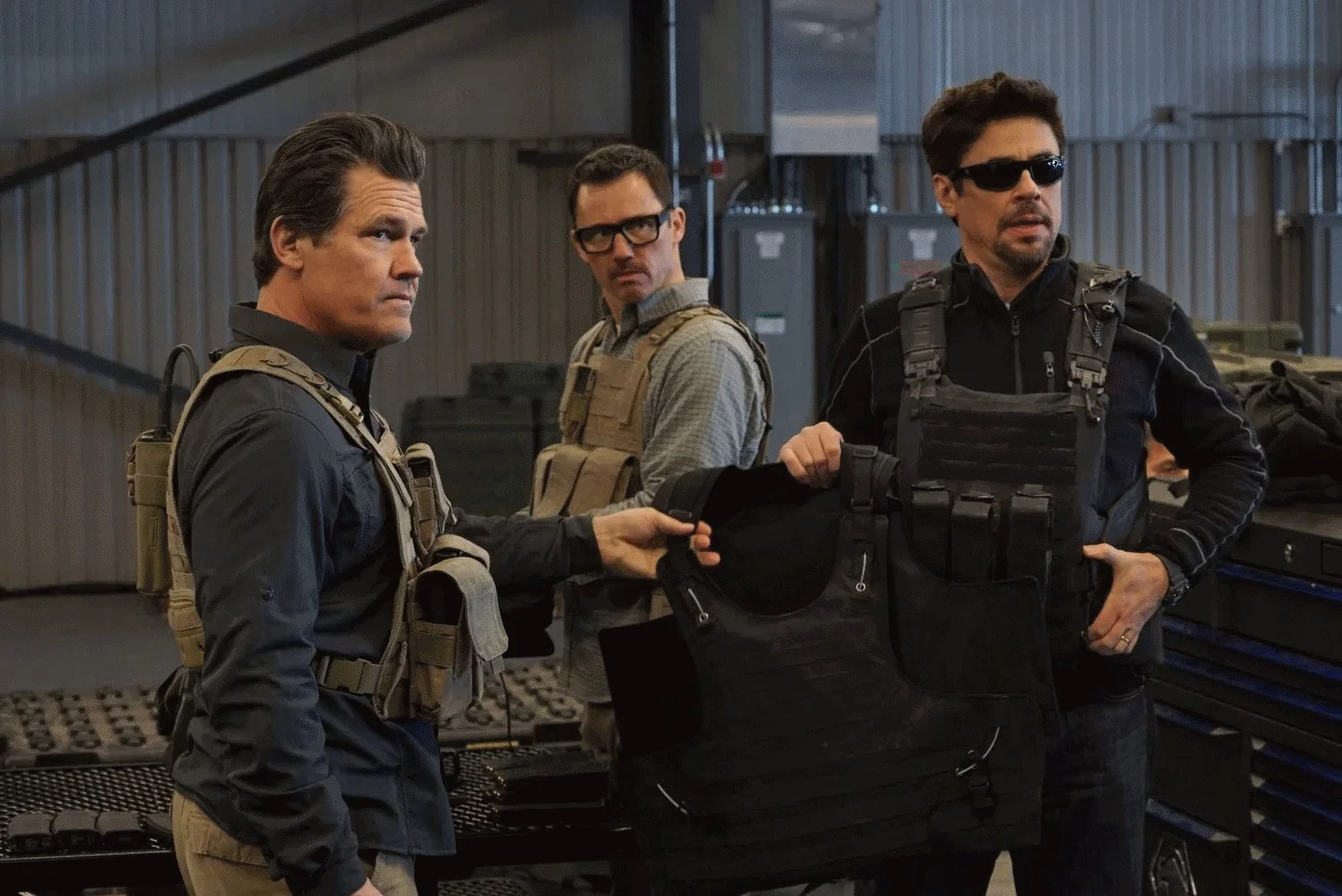

Stories about international crime and government operations often blur the line between reality and fiction. Sicario 2 places its characters in a world of drug cartels, covert missions, and escalating violence along the U.S.–Mexico border. Because the setting reflects real issues reported in the news, it is natural to wonder whether the events shown in the story are drawn from actual operations or historical cases.
The violent cartel conflict in Sicario 2 and why the story feels tied to real-world border tensions
The central conflict in Sicario 2 revolves around escalating violence connected to Mexican drug cartels and cross-border crime. The story begins after a terrorist attack inside the United States is linked to human trafficking routes controlled by criminal organizations operating along the southern border. In response, U.S. officials authorize covert actions designed to destabilize the cartels.
This premise feels believable because it reflects real-world concerns. Drug cartels in Mexico have been involved in organized crime for decades, and their activities frequently appear in international reporting. Violence between rival cartels and conflicts with government forces have also been widely documented.
However, the film uses these real tensions mainly as a dramatic setting. While cartel violence and trafficking networks are genuine problems, the specific chain of events depicted in Sicario 2—including the government’s strategy to secretly manipulate cartel rivalries—does not correspond to a documented historical operation. The story builds its tension by placing fictional characters inside a world inspired by real crime issues.
The fictional mission led by Matt Graver and Alejandro Gillick within the film’s narrative
In the film, the U.S. government assigns a covert mission to CIA operative Matt Graver. His objective is to trigger conflict between rival cartels by kidnapping Isabel Reyes, the daughter of a powerful cartel leader. The idea behind the plan is that rival groups will blame each other and weaken their organizations through internal warfare.
To carry out the mission, Graver recruits Alejandro Gillick, a former prosecutor who now operates as a skilled assassin with personal ties to cartel violence. Together, they lead a team that abducts Isabel and stages the kidnapping to look like an attack from a competing cartel.
This mission drives most of the film’s story, but it is entirely fictional. There is no public evidence that U.S. intelligence agencies have carried out a plan resembling the one depicted in the film. The operation is designed to create suspense and moral conflict rather than to depict a real government strategy.
The characters themselves also belong to the fictional world of the story. Matt Graver and Alejandro Gillick are not based on identifiable real individuals, even though their roles resemble archetypes often seen in crime dramas.
Real issues of drug cartels and human trafficking that resemble the film’s backdrop
Although the main plot is invented, the broader environment portrayed in Sicario 2 reflects real conditions along parts of the U.S.–Mexico border. Drug trafficking organizations in Mexico have long controlled smuggling routes used for narcotics, weapons, and sometimes human trafficking.
These organizations operate across multiple regions and often maintain complex networks that include transporters, recruiters, and intermediaries. Violence between rival cartels has been a recurring issue, particularly in areas where groups compete for control of profitable routes.
Human trafficking also exists as a serious international problem. Criminal networks sometimes exploit migrants attempting to cross borders illegally, forcing them into labor or other forms of exploitation.
The film incorporates these real issues to create a believable setting. However, the characters and missions involved are fictional representations rather than reconstructions of specific documented events.
The invented kidnapping operation used to spark conflict between rival cartels
The central turning point of the film occurs when Isabel Reyes is kidnapped as part of the U.S. government’s covert plan. After the abduction, the team stages evidence to make it appear that a rival cartel is responsible.
The strategy is designed to provoke retaliation and spark internal conflict between criminal organizations. In the film, this tactic begins to destabilize the cartels but also leads to unexpected consequences as the situation spirals out of control.
There is no widely documented real-life operation that mirrors this storyline. Intelligence agencies sometimes conduct covert operations against criminal networks, but the specific plan depicted in the film—kidnapping a cartel leader’s daughter to manipulate cartel warfare—appears to be a fictional invention created for dramatic effect.
The kidnapping plot allows the film to explore ethical questions about government power and the consequences of secret missions. These themes are grounded in political debates but are presented through a storyline that is not based on a real case.
Alejandro’s character as a dramatic creation rather than a real cartel enforcer or agent
Alejandro Gillick is one of the most striking characters in the story. He is introduced as a former prosecutor whose family was killed by a cartel, leading him to become deeply involved in covert operations against criminal organizations.
Throughout the film, Alejandro operates with a mix of personal revenge and professional loyalty to the mission. His actions include infiltration, interrogation, and violent confrontations with cartel members.
Characters like Alejandro often appear in crime fiction because they embody the moral ambiguity of the drug war. His background as someone personally affected by cartel violence gives the story emotional depth.
Despite the realism of his motivations, Alejandro is not based on a confirmed real figure. His character represents a fictional combination of roles seen in law enforcement and intelligence narratives rather than the biography of a documented individual.
Where the film reflects genuine border security concerns and where the plot departs from documented events
Some aspects of Sicario 2 reflect real discussions about border security and organized crime. Governments on both sides of the U.S.–Mexico border have spent years addressing cartel influence, smuggling routes, and the impact of trafficking networks.
The film also shows how these issues can intersect with national security concerns. In reality, policymakers sometimes debate whether criminal networks could exploit migration routes for broader security threats.
However, the story diverges from documented events when it portrays secret missions carried out with minimal oversight and extreme tactics. The idea that intelligence agencies would intentionally provoke cartel wars through staged kidnappings belongs to the film’s fictional narrative.
The contrast between authentic background issues and invented storylines explains why the film can feel realistic while still remaining a work of fiction.
Sicario 2 as a fictional crime thriller inspired by real cartel violence rather than a true story
Sicario 2 draws heavily on real-world issues such as drug trafficking, cartel violence, and border security tensions. These elements create a believable setting that resembles situations reported in international news.
At the same time, the characters, missions, and specific events in the film are fictional. The kidnapping plot, the covert strategy used by U.S. agents, and the personal storylines of characters like Alejandro and Matt Graver are narrative inventions designed for a crime thriller.
The film therefore reflects reality only in a broad sense. It uses genuine social and political concerns as inspiration but does not depict a documented case or historical event.
Viewed in relation to real events, Sicario 2 is best understood as a fictional story built around real-world themes rather than a dramatization of a true story.
